
Yoga can help a stiff, aching lower back, but some of the poses most often recommended for back pain are the ones a sore back finds hardest. Downward dog, pigeon and a deep standing forward bend all turn up on popular lists, and they suit some backs far better than others. This guide covers what the trials show about yoga for back pain, five gentle poses to start with, the poses to skip or change, which style of class to choose in KL (hot yoga included), and when to get your back checked first. It is written for the long drives, desk days and weekend chores that leave so many backs in Klang Valley sore by Friday.
Key takeaways
- Does yoga help back pain?
- For long standing low back pain, yoga helps about as much as other good exercise. In one trial, 12 weekly yoga classes did as well as 15 physiotherapy visits, and in another yoga did no better than ordinary stretching classes.
- Which yoga poses are good for lower back pain?
- Gentle poses that need little flexibility are a good start: supported child’s pose, sphinx, bridge, a low lunge for tight hip flexors and a lying hamstring stretch with a strap.
- Which yoga poses should I avoid with back pain?
- While your back is sore, skip or modify downward dog with straight legs, pigeon, straight leg standing forward bends, headstand, shoulder stand, lotus, deep backbends and twisting while arching.
- Is hot yoga good for back pain?
- It is not the best place to start. The heat makes it easy to stretch further than a sore back is ready for, and it adds dehydration and dizziness. A slow Hatha, gentle or chair class is safer.
- When should I get my back checked before yoga?
- If pain spreads down a leg, you have had a recent slipped disc, you have osteoporosis, the pain is new or worsening, or it started after a fall or accident.
Does yoga help back pain? What the trials show
Yoga helps long standing low back pain about as much as other good exercise, which is a useful finding rather than a disappointing one. Two large trials compared it head to head with other options.
- Yoga vs physiotherapy. In a trial of 320 adults with long standing low back pain, 12 weekly yoga classes did as well as 15 physiotherapy visits for pain and for how much the back limited daily life. The gains held at one year in both groups, and fewer people in either group were still using pain medicine than in a group given only a self-help book. Minor aches after sessions were about as common with yoga as with physio.
- Yoga vs stretching. In a trial of 228 adults, 12 weekly yoga classes did better than a self-care book but no better than 12 weekly stretching classes. The benefits lasted several months.
Put together with the larger Cochrane review, which found a small benefit over no exercise and little difference from other exercise, the message is simple. Yoga is a reasonable way to keep a sore back moving, and the class you will actually keep going to matters more than whether it is called yoga. Our guide to Pilates vs yoga goes through the Cochrane reviews in more detail.
5 yoga poses for lower back pain
These five are gentle, need little flexibility and avoid loading the back in a deep bend or twist. They are different from the moves in our lower back pain exercises guide, so you can use both. Move slowly, breathe through your nose, and stop any pose that causes sharp pain or sends pain down a leg.
Supported child's pose
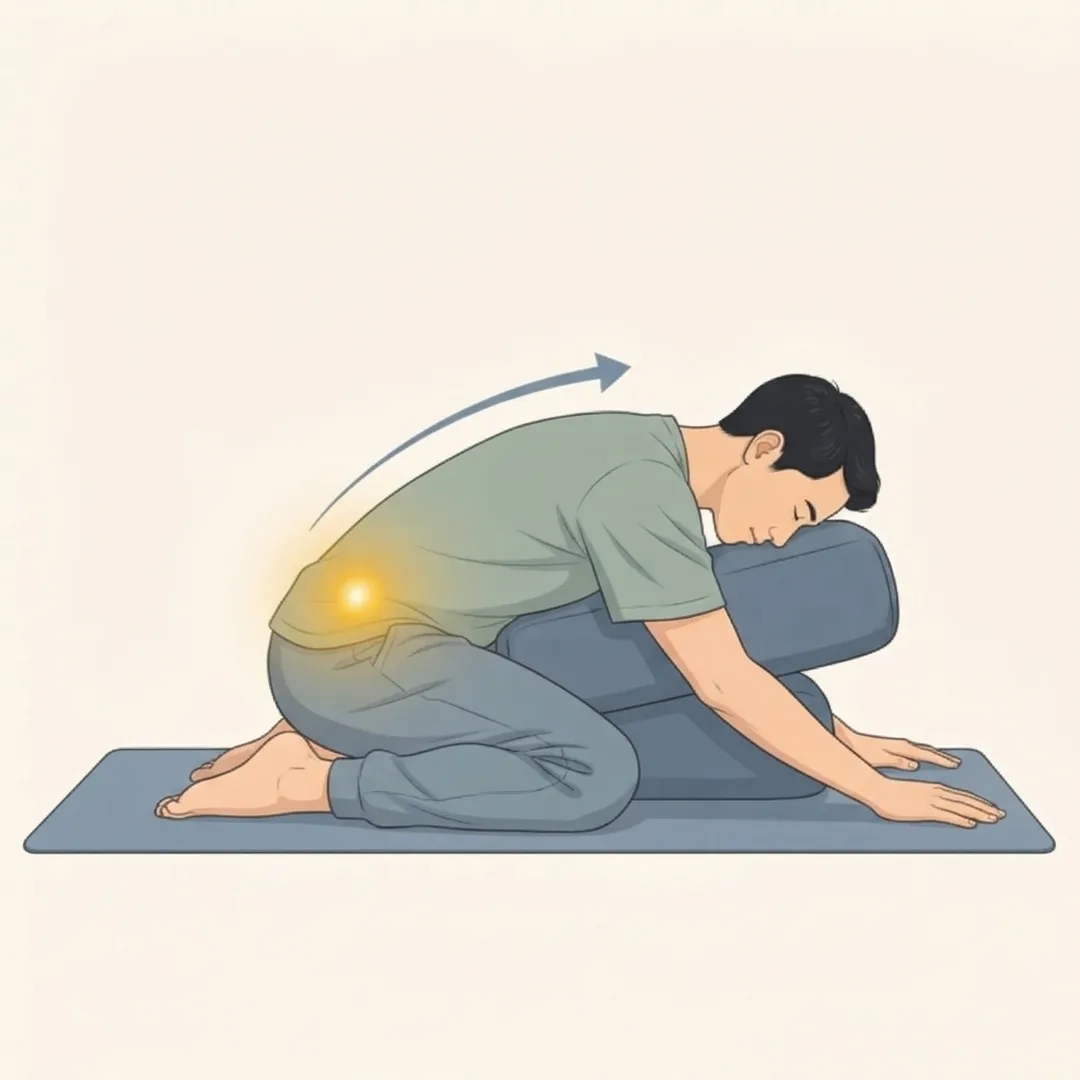
- Kneel on a mat with your knees apart and your big toes touching.
- Place a firm cushion, bolster or two stacked pillows lengthwise in front of you.
- Sit back towards your heels and lower your chest onto the cushion, turning your head to one side.
- Let your lower back widen as you breathe out.
- Stay for 1 to 2 minutes. If your knees complain, put a folded towel behind them.
Sphinx pose
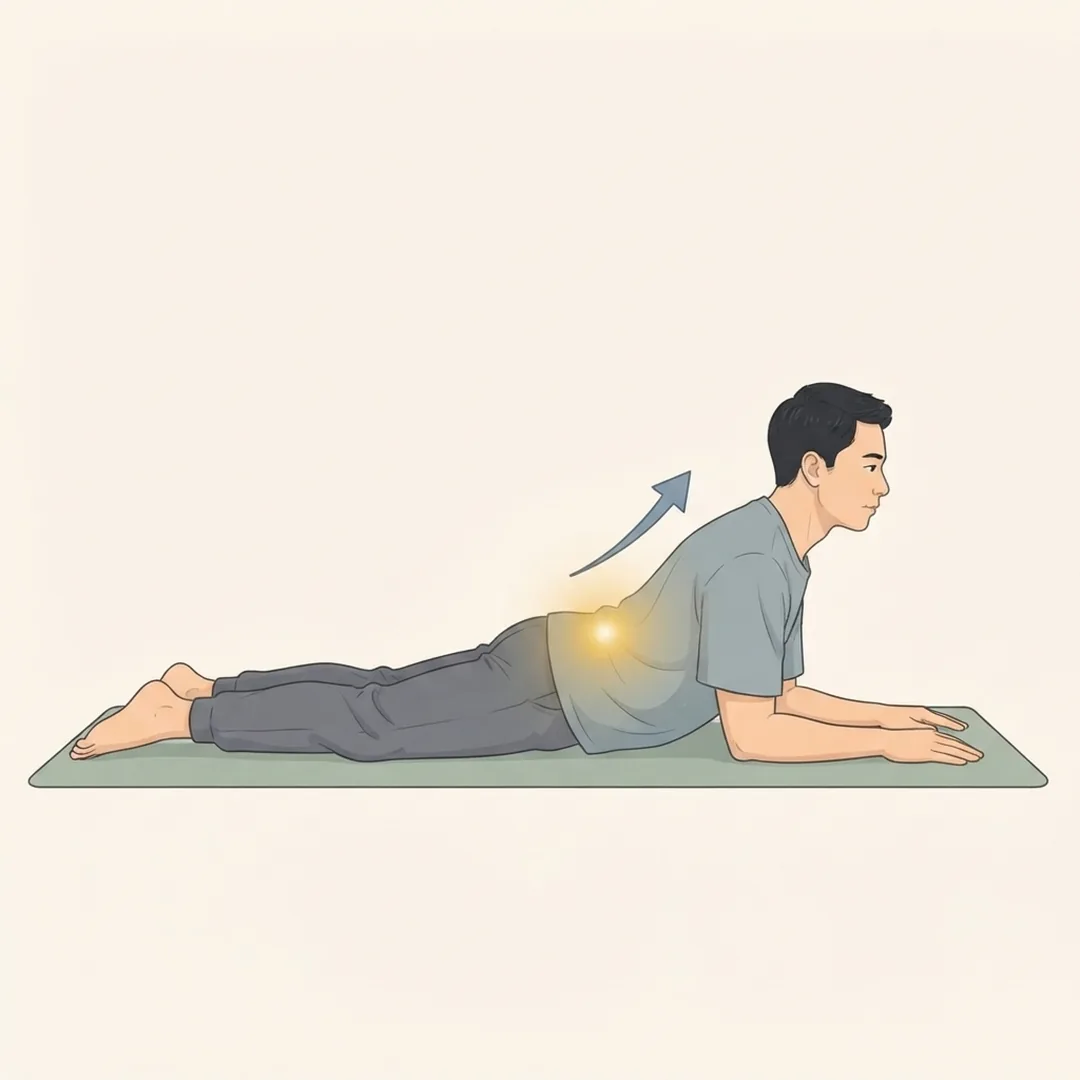
- Lie on your front with your legs straight and hip width apart.
- Bring your elbows under your shoulders with your forearms flat on the mat.
- Let your chest rise gently as you breathe in, without pushing up hard.
- Keep your neck long and your buttocks relaxed.
- Stay for 30 seconds to a minute. If it pinches in your lower back, slide your elbows further forward to lower the curve.
Bridge pose
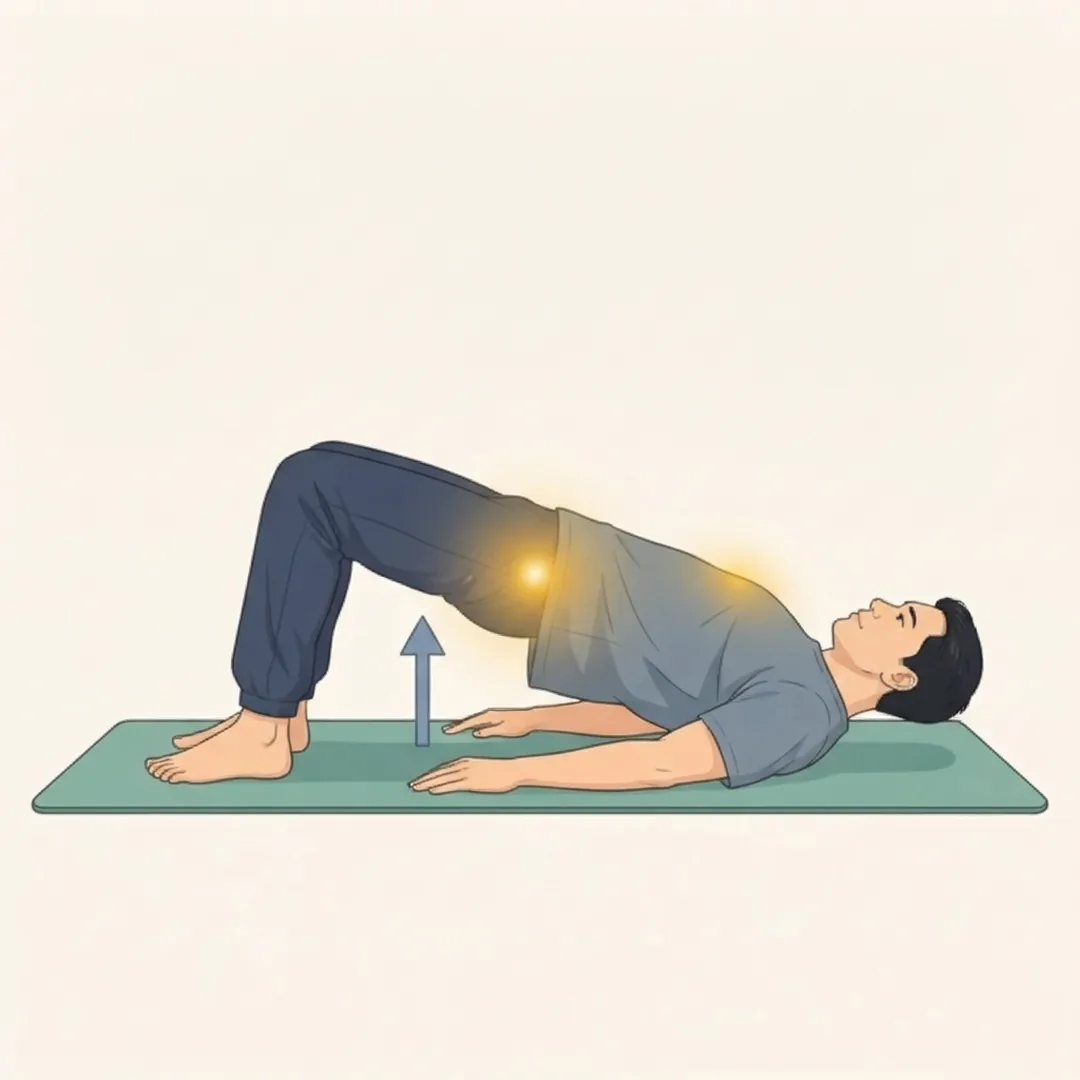
- Lie on your back with your knees bent and feet flat, hip width apart.
- Rest your arms by your sides.
- Press through your heels and squeeze your buttocks to lift your hips until your body makes a straight line from shoulders to knees.
- Hold for three slow breaths, then lower one section of your back at a time.
- Repeat 8 to 10 times. Lift only as high as stays comfortable; this is not a backbend.
Low lunge for tight hip flexors
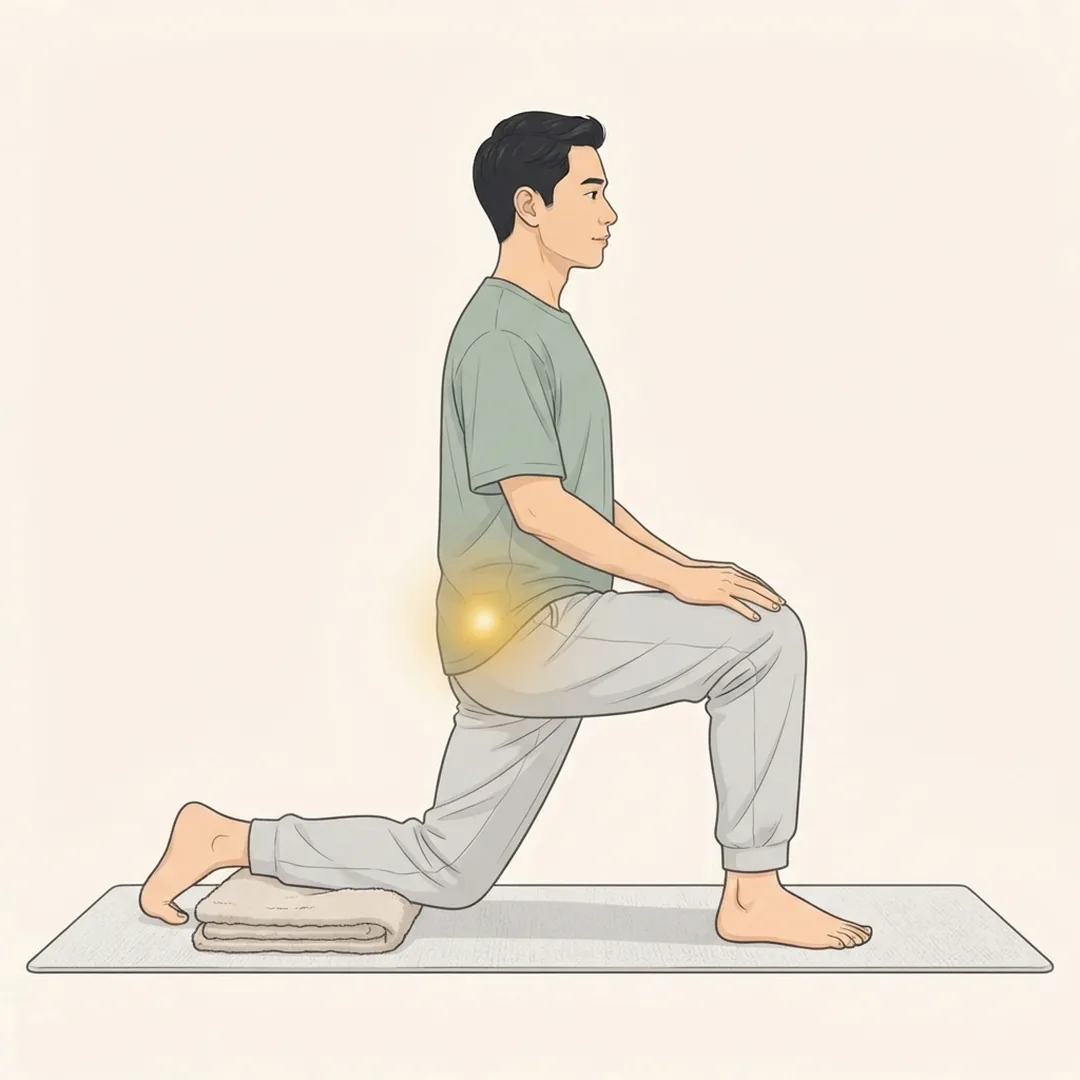
- Kneel on a folded towel and step one foot forward so the front knee is over the ankle.
- Rest your hands on your front thigh and sit tall.
- Gently tuck your tailbone under, then let your hips ease forward until you feel a stretch at the front of the back hip.
- Keep your lower back from arching. The stretch should be in the hip, not the back.
- Hold for 30 seconds on each side, twice. Long hours sitting in traffic or at a desk tend to leave these muscles tight.
Lying hamstring stretch with a strap
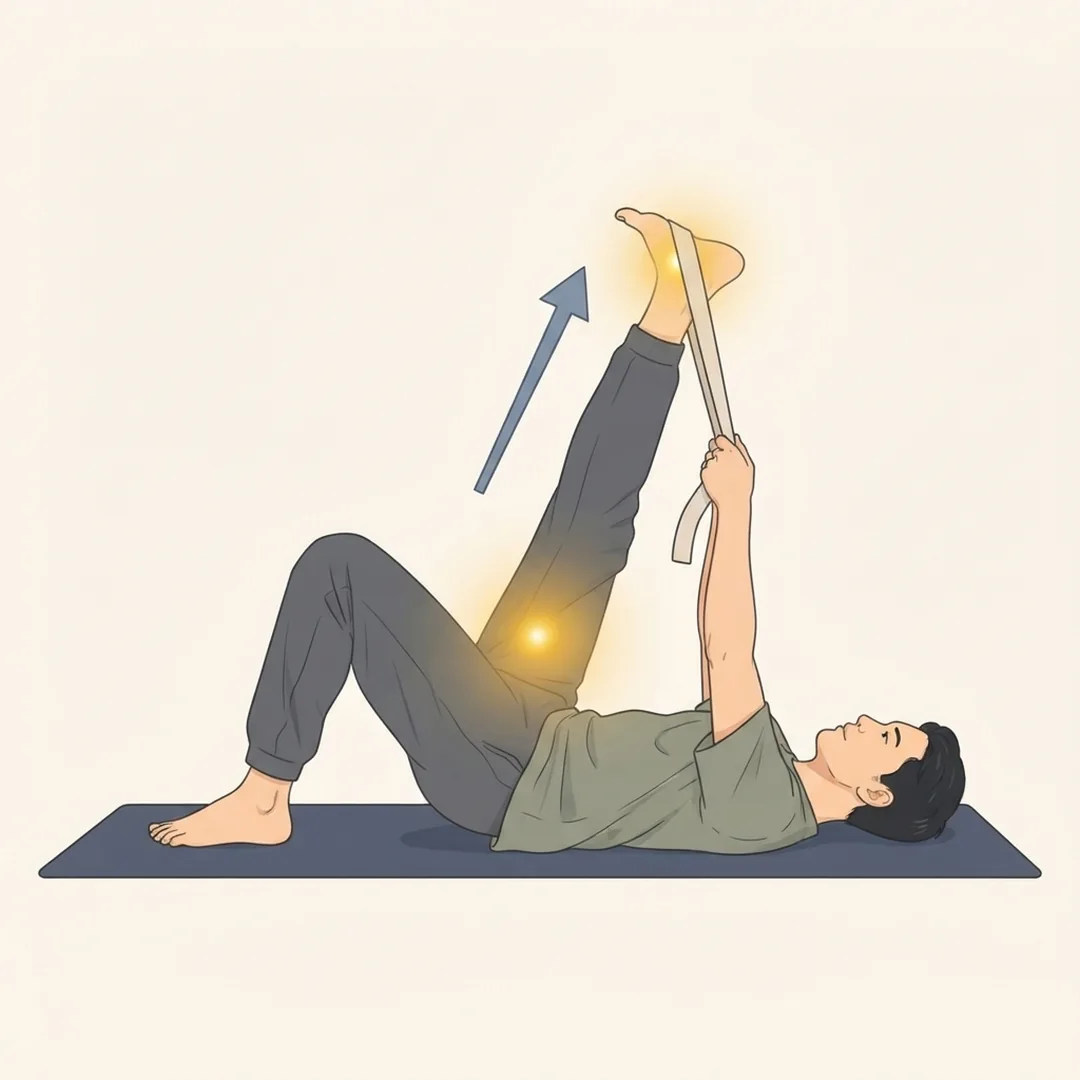
- Lie on your back with both knees bent.
- Loop a yoga strap, belt or towel around the sole of one foot.
- Straighten that leg towards the ceiling, holding the strap with both hands, until you feel a stretch behind the thigh.
- Keep your lower back resting on the mat and your shoulders relaxed. A slight bend in the knee is fine.
- Hold for 30 seconds on each side, twice. This stretches the same muscles as a standing forward bend without the load on your back.
Two or three short sessions a week is a sensible start. Ten minutes on a weekday evening counts.
Is this right for you?
Not sure if yoga classes are right for you?
Tick anything that sounds like you. We will read it back honestly and tell you where to start, even if that is somewhere else.
Opens WhatsApp with your answers filled in. Nothing is sent until you press send there.
Yoga poses to skip or modify with back pain
Some poses that appear on popular back pain lists are better left out or changed while your back is sore. A review of reported yoga injuries found that headstand, shoulder stand and lotus were among the postures most often involved, and it advised beginners to avoid them. That is a list of reported cases rather than a measure of risk, but it is a sensible place to start being careful.
| Pose | Why it can aggravate a sore back | Try instead |
|---|---|---|
| Downward dog | Tight hamstrings pull the lower back into a rounded position while it carries weight | Bend the knees well, or use supported child's pose |
| Pigeon | Loads the hip in a deep rotation and often twists the lower back with it | Lying hamstring stretch with a strap, or a gentle lying figure four |
| Standing forward bend with straight legs | A loaded forward bend of the lower back, hardest on a recent disc problem | Bend the knees and fold onto a chair, or the strap stretch lying down |
| Headstand, shoulder stand and plough | Heavy load through the neck and upper back, and easy to fall out of | Leave out entirely while you have back or neck pain |
| Lotus | Forces the knees and hips into a position many backs and knees resist | Sit cross legged on a cushion, or on a chair |
| Wheel and other deep backbends | Strong extension of the lower back joints | Bridge pose, kept low |
| Twisting while arching | Twisting and bending back at once compresses the small joints of the spine | Twist only from upright sitting, slowly and gently |
These poses are not off limits for good, and many people with healthy backs do them for years. The point is to wait until your back has settled and you have built some strength, and to do them under a teacher who knows about your back.
Hot yoga, Hatha or chair yoga for back pain?
For back pain, a slow, gentle style is the safer place to start. Look for classes called Hatha, gentle, Yin, restorative, chair or therapeutic yoga, and keep them small enough that the teacher can watch you.
Hot yoga is popular in KL, and some studios promote it for back pain. The heat makes muscles feel looser, so many people stretch further than their back is ready for, and that is when a sore back tends to flare. Hot rooms also bring dehydration and dizziness, which matter if you take blood pressure medicine or are pregnant. If you enjoy hot yoga, wait until your back has settled, stay well within your range, and drink plenty of water before and after.
Power and vinyasa classes move fast from pose to pose, which leaves little time to adjust. They suit a back that is already strong rather than one that is still sore.
Chair yoga suits older adults, beginners and anyone who finds getting down to the floor hard. Our guide to chair yoga explains how it works and who it suits.
Whatever class you choose, tell the teacher about your back before it starts, and skip anything that hurts. A good teacher will offer a change without making a fuss.
When to get your back checked before yoga
Most people with an ordinary stiff or achy back can start gentle yoga straight away. Get your back assessed first if:
- pain, numbness or tingling spreads into your buttock or down your leg, which may be sciatica
- you have had a slipped disc in the last few months
- you have osteoporosis or have had a spinal fracture, since deep forward bends and strong twists may not be suitable
- the pain is new, getting worse, or wakes you at night
- the pain started after a fall or a road accident
- you notice weakness in a leg, or changes in bladder or bowel control, which needs urgent medical care
At our clinic in Cheras, an assessment looks at how your spine moves and which joints, muscles or nerves are involved. From there we can tell you whether a yoga class is a good idea yet, which poses to leave out for now, and whether a few sessions of physiotherapy would be a better first step. You can read more about how we approach back pain.
Yoga for back pain at our Cheras clinic
We run two small yoga classes on Saturday afternoons at 4:00pm, inside our clinic at Sunway Velocity in Cheras. Posture Core Yoga suits people who sit all week and want a stronger core and better posture. Chair Yoga suits seniors, beginners and anyone easing back into movement. The two classes alternate week by week.
Because the classes run inside a chiropractic clinic, the teacher can adapt poses for your back, and a chiropractor or physiotherapist is in the building if something starts to hurt. Classes are open to anyone, not only patients. Fees, class packs and the weekly schedule are on our Chair Yoga and Posture Core Yoga classes page. If you are not sure which class suits your back, message us on WhatsApp and tell us a little about it.
Frequently asked questions
How often should I do yoga for back pain?
Two or three times a week is a sensible start. The trials that found a benefit used one weekly class plus practice at home, over about 12 weeks. Short, regular sessions tend to help more than an occasional long one.
Can yoga make back pain worse?
It can, usually when a pose goes deeper than the back is ready for or the class moves too fast. Mild aches after a session are common and settle. Sharp pain, or pain spreading into a leg, is a sign to stop that pose and get it checked.
Is yoga or physiotherapy better for back pain?
In a trial of 320 adults, 12 weekly yoga classes did as well as 15 physiotherapy visits for pain and function, with gains lasting a year in both. Physiotherapy suits a recent injury or nerve symptoms better, and yoga suits ongoing stiffness. Many people do both.
Can I do yoga with a slipped disc?
Often, once the worst pain has settled, but some poses should wait. Deep forward bends, strong twists and straight leg folds tend to aggravate a disc. Get the back assessed first so you know which poses to leave out.
Is downward dog bad for back pain?
Not for everyone, but tight hamstrings can pull the lower back into a rounded position while it carries weight. Bending the knees well takes much of that load off, or you can swap it for supported child’s pose until your back settles.
Yoga for back pain: the bottom line
Yoga can help long standing back pain about as much as physiotherapy exercise or stretching, so the best choice is the one you will keep doing. Start with gentle poses like supported child's pose, sphinx, bridge, a low lunge and a strap hamstring stretch. Leave headstands, lotus, deep backbends and straight leg forward folds until your back has settled, and choose a slow, small class over a hot or fast one. If pain spreads down your leg or you have had a recent disc injury, get it checked first. When you are ready for a class in Cheras, message us on WhatsApp and we will suggest which Saturday class suits your back.