




Does this sound like you?
Common signs
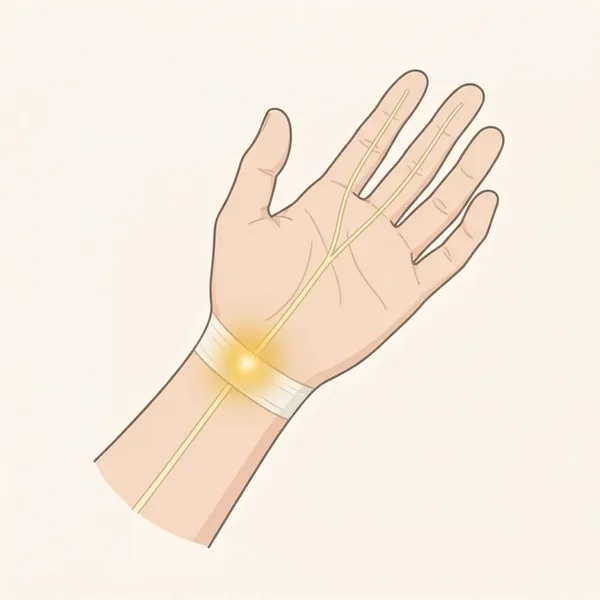
- Tingling or numbness in the thumb, index and middle fingers, with the little finger left out
- Waking at night with a numb hand and needing to shake it out
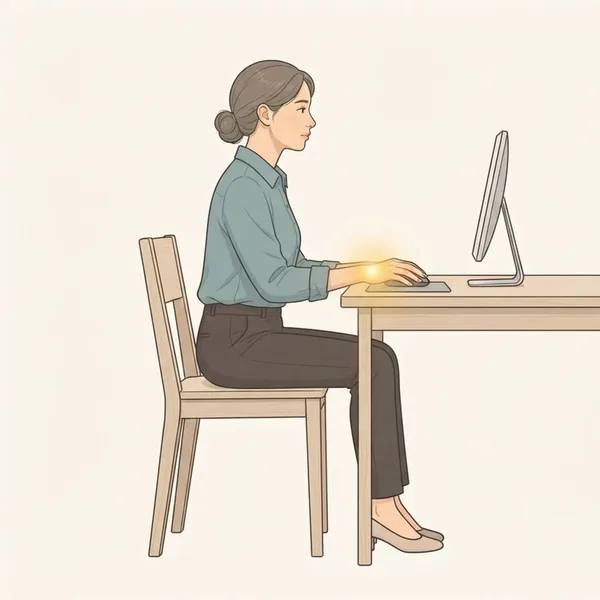
- Symptoms set off by holding a phone, a steering wheel or a mouse with the wrist bent
- Dropping things, or fumbling with buttons and small objects
- An ache in the wrist that can spread up into the forearm
- A grip that tires sooner than it used to
- A flattened, softer area at the base of the thumb
This list describes the condition in general. It is not a diagnosis. Only an in-person assessment can tell you what is causing your symptoms.
What contributes to it
Why it happens
- Pressure inside a narrow wrist tunnel
- The carpal tunnel is a tight channel of small wrist bones roofed by a ligament, and the median nerve shares it with nine tendons. There is little spare room. Bending the wrist fully in either direction raises the pressure inside it, which is why a wrist curled under a pillow at night so often sets symptoms off.
- Repeated gripping and sustained wrist positions
- Long hours with the wrist held bent on a mouse or phone, forceful gripping, and vibrating tools all load the tunnel. None of these on its own means you will develop carpal tunnel syndrome, and plenty of people do them for years without trouble. Where symptoms have started, though, they are usually part of what keeps them going, and they are the part you can change.
- Pregnancy, diabetes and other health factors
- Fluid retention in pregnancy can crowd the tunnel, and symptoms often ease after the baby arrives. Diabetes, thyroid imbalance and rheumatoid arthritis are also associated with carpal tunnel syndrome. If one of these applies to you, it is worth your doctor knowing about the hand symptoms too.
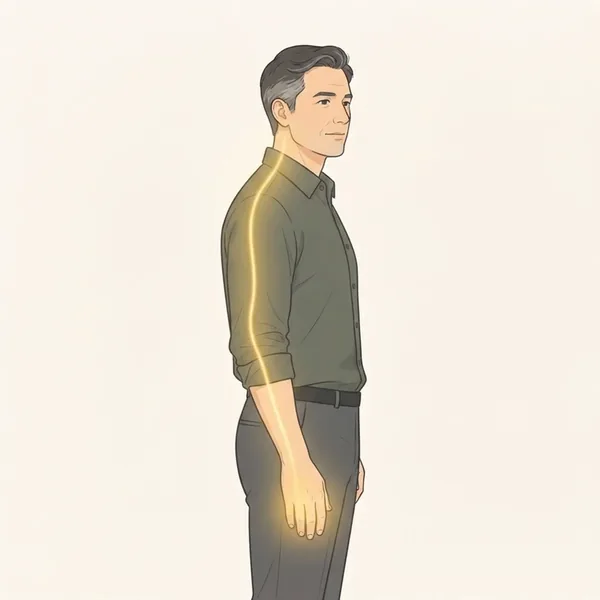
- When the wrist is not the source at all
- A nerve root irritated in the neck, or a nerve squeezed at the elbow, can produce tingling in some of the same fingers. That is why the neck is examined as well as the wrist, and why a hand that tingles is not assumed to be carpal tunnel until the pattern says so.

How we help
Our approach
Working out whether it is the wrist, the neck or both
Your first visit follows the Gonstead six-step assessment: history, visualisation, instrumentation, palpation, and X-ray analysis where indicated. For hand symptoms we add neurological testing of sensation, strength and reflexes, provocation tests at the wrist, and a screen of the neck. Which fingers are involved, and which positions bring the symptoms on, tells us a good deal about where the nerve is being squeezed.
Settling the night symptoms first
Night waking is often the most disruptive part. A splint that keeps the wrist straight while you sleep is a common first suggestion, and we will be plain that the evidence for splints is modest. Sleeping position, and how much the wrist is bent through the evening, get looked at alongside it.
Physiotherapy for the wrist, hand and forearm
Our physiotherapy side may use nerve and tendon gliding exercises, hands on work for the forearm and wrist, and a graded programme for grip and hand endurance. Your desk, mouse and phone habits are reviewed as well, because the wrist goes straight back into the same positions as soon as you leave the clinic.
The neck, and when to see a hand surgeon
If the examination finds a restricted segment in the neck contributing to the picture, an adjustment is used only where the assessment supports it. That is about the neck, and it is not a way of releasing the wrist. Where numbness has become constant, the thumb muscle is wasting, or symptoms are not changing, we will refer you to a doctor or hand surgeon, who may arrange nerve conduction studies. If your chiropractor feels another healthcare provider would better help you, you will be referred appropriately.
When to seek urgent care
See a doctor first if you have any of these
These need a medical assessment before you begin chiropractic care. If any apply to you, contact a doctor or go to the nearest emergency department.
- Wasting or flattening of the muscle at the base of the thumb
- Numbness that has become constant rather than coming and going
- Weakness in the hand that is getting worse, or dropping things more and more often
- Symptoms in both hands together with clumsiness or unsteady walking
- Sudden symptoms after a wrist injury or fall, or a hand that turns swollen, cold or pale
- Arm or hand symptoms with chest pain, breathlessness or sweating. Seek emergency care
Frequently asked questions
What patients ask us
Is carpal tunnel syndrome a pinched nerve?
In a sense, yes. It is the median nerve under pressure at the wrist. What most people mean by a pinched nerve is a nerve root irritated where it leaves the spine in the neck, which is covered on our page on a pinched nerve in the neck. The two can feel alike in the hand, which is exactly why we examine both places.
Can a problem in my neck cause carpal tunnel symptoms?
Possibly, and the honest answer is that nobody knows quite how often. A real share of people with carpal tunnel syndrome also have neck pain or nerve root findings in the neck. The idea that a nerve squeezed in two places becomes more sensitive at both, sometimes called double crush, is popular but unproven. Checking the neck as well as the wrist is still worthwhile, because it changes what the plan should focus on.
Do wrist splints help carpal tunnel syndrome?
Modestly, at best. A large review of the research could not say for certain whether splints help, and any improvement it found was small. There is some low certainty evidence that wearing one at night does better than doing nothing. Because a splint is cheap and unlikely to do harm, it is a reasonable thing to try while the rest of the plan gets going.
Will I need surgery for carpal tunnel?
Most mild and moderate cases try non surgical care first. That changes when numbness has become constant, when the muscle at the base of the thumb is wasting, or when testing shows significant nerve changes, because a nerve under pressure for too long may not fully recover. In those situations we will point you to a hand surgeon rather than keep going here.
My hands go numb at night during pregnancy. Is that carpal tunnel?
It often is. Fluid retention in pregnancy can crowd the wrist tunnel, and night tingling in the thumb and first fingers is a common pattern, particularly later in pregnancy. It frequently eases after delivery. Mention it to your obstetrician, and a neutral wrist splint at night is one of the gentler things to try in the meantime.
Do I need a nerve conduction test before coming in?
No. Most people do not need one to start with. A nerve conduction study is useful when the picture is unclear, when symptoms are severe or constant, or when surgery is being considered, and in those cases we will refer you to a doctor who can arrange it. Bring any results you already have.