




Does this sound like you?
Common signs
- A dull ache or burning between the shoulder blades that builds through the working day
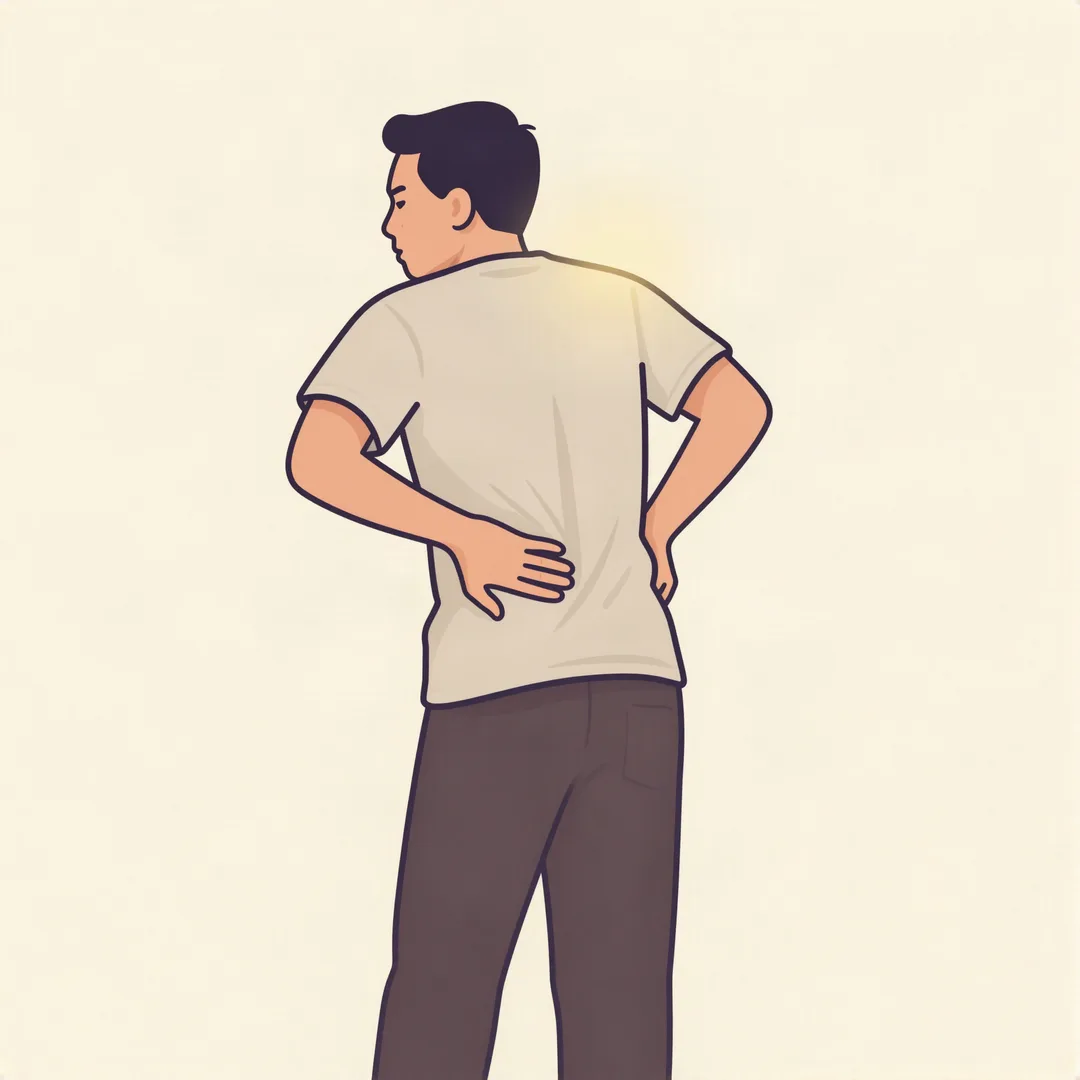
- Stiffness in the middle of the back when you twist, turn or reach
- A sharp catch beside the spine when you take a deep breath, cough or turn in bed
- A tight, knotted spot along the inside edge of one shoulder blade
- Upper back ache that travels up into the neck or across the top of the shoulders
- Pain that eases when you move around and returns after long sitting or driving
- A rounded upper back or neck hump that you have noticed getting more obvious
This list describes the condition in general. It is not a diagnosis. Only an in-person assessment can tell you what is causing your symptoms.
What contributes to it
Why it happens
- A stiff middle back from screens and long sitting
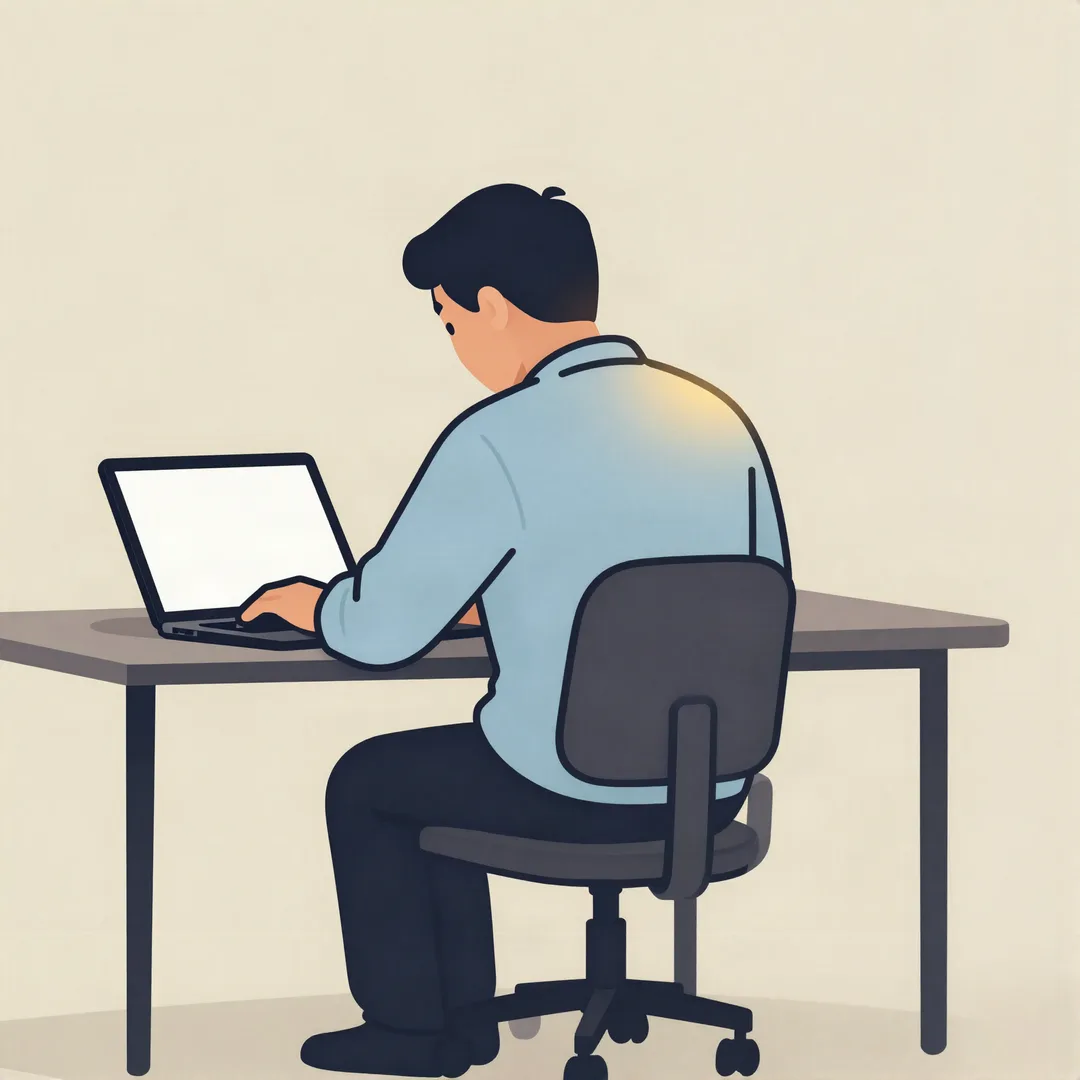
- The middle of the spine, between the shoulder blades, is built to rotate and extend. Long hours hunched over a laptop or phone ask it to do neither, so the joints there stiffen and the muscles between the shoulder blades tire from holding you up. A large review linked upper back pain with posture at work and with long spells in one position.
- Pain referred from the lower neck
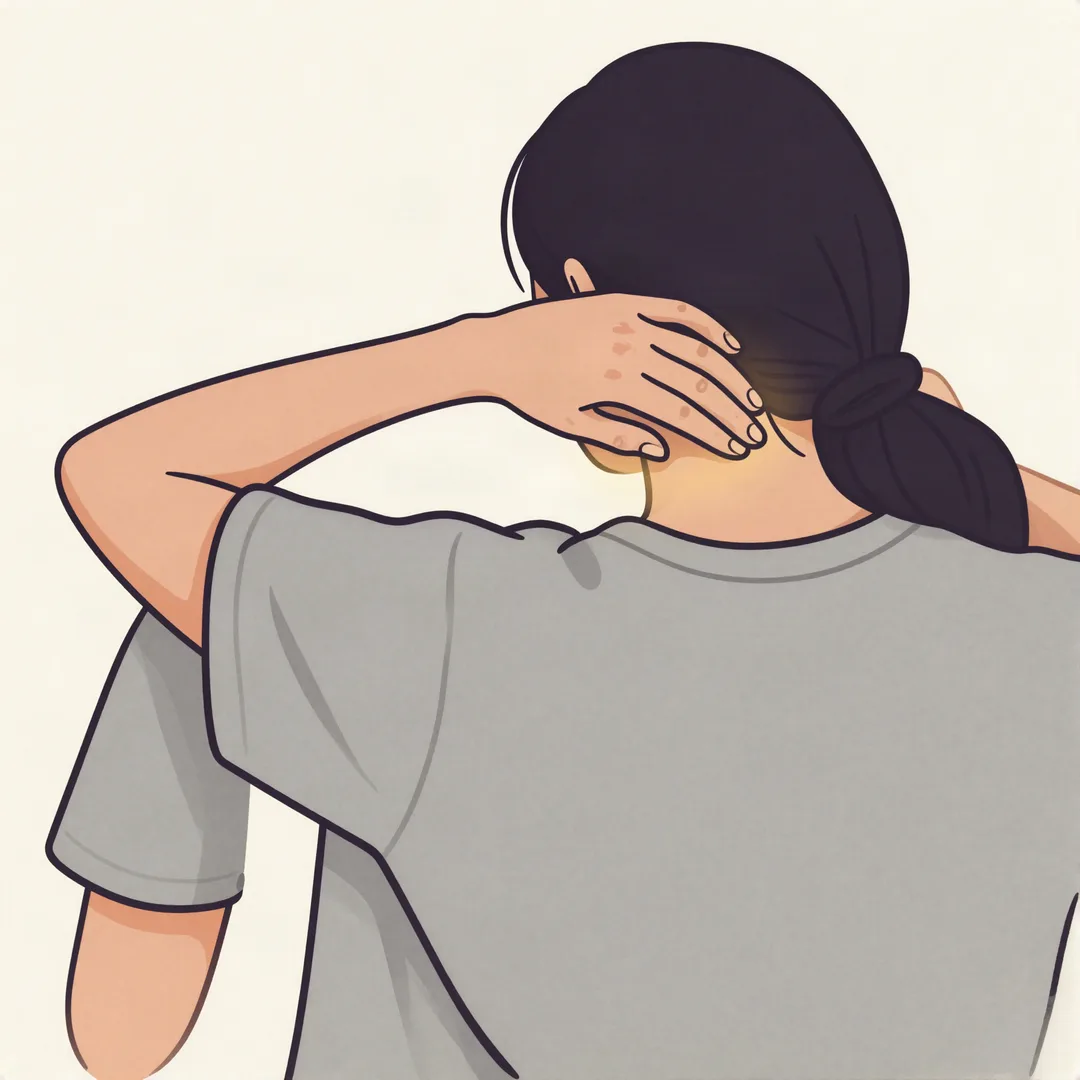
- The joints and discs of the lower neck can send pain down to the inside edge of the shoulder blade, even when the neck itself feels fine. This is why an assessment of upper back pain always checks the neck. If there is also tingling into the arm, a pinched nerve in the neck becomes more likely.
- Irritated rib joints
- Each rib joins the spine at two small joints. When one of these gets irritated, often after an awkward twist, a cough or a night on a soft sofa, it gives a sharp, very local pain beside the spine that catches on a deep breath or when turning. It is uncomfortable but usually mechanical, as long as there is no fever, cough or breathlessness with it.
- Carrying, driving and lifting
- Carrying a child on one hip, a heavy bag on one shoulder, or long hours of driving all load the upper back unevenly. A study of working adults found long drives, sustained bending of the trunk and a lack of breaks were all linked with new upper back pain.

How we help
Our approach
We check the neck and ribs, not only the sore spot
Your first visit starts with a history and the Gonstead assessment of how each level of the neck and upper back moves, including the rib joints. We also ask the questions that screen for pain coming from somewhere other than the spine, and we will tell you plainly if anything points to a doctor first.
Adjustment by hand, specific to the stiff level
Once the stiff segments are found, adjustments are delivered by hand to those levels. Your chiropractor explains what they found and what they intend to do before anything happens, and you can ask for a gentler approach at any point.
Rehab and dry needling for the muscles around the shoulder blades
Where the muscles between and around the shoulder blades stay tight or tire quickly, our physiotherapy side adds strengthening for the upper back, dry needling for stubborn knots where suitable, and practical changes to your screen setup, driving position and how you carry things.
When we send you to a doctor first
Upper back pain with chest pain, breathlessness, fever, pain linked to meals or a recent injury is not ours to manage first. In those cases we will refer you to a doctor or the emergency department before any chiropractic care, and pick things up afterwards if it turns out to be mechanical.
When to seek urgent care
See a doctor first if you have any of these
These need a medical assessment before you begin chiropractic care. If any apply to you, contact a doctor or go to the nearest emergency department.
- Upper back pain with chest pain or pressure, breathlessness, sweating, nausea, or pain into the jaw or arm. Call 999
- Sudden, severe tearing pain between the shoulder blades. Call 999
- Pain that is worse on a deep breath and comes with fever, cough or breathlessness
- Pain under the right shoulder blade that comes in waves after meals, with pain under the right ribs, nausea, or yellowing of the skin or eyes
- Upper back pain after a fall, or new pain with osteoporosis, long term steroid use or loss of height
- Unexplained weight loss, a history of cancer, fever, or constant night pain that nothing eases
- Weakness or numbness in the legs, unsteady walking, or a change in bladder or bowel control
- A band of burning pain or a rash around one side of the chest
Frequently asked questions
What patients ask us
Why do I get pain between my shoulder blades?
Most often it is the middle back joints stiffening and the muscles between the shoulder blades tiring after long hours at a laptop or phone. Raising the screen and moving every half hour usually helps, and our guide to tech neck covers the setup and four simple exercises. Pain from the lower neck or a rib joint can feel similar, which the assessment sorts out.
Can a problem in my neck cause upper back pain?
Yes, and it is common. The lower neck can refer pain to the inside edge of the shoulder blade without the neck feeling sore. If you also have tingling, numbness or weakness in an arm, read our page on a pinched nerve in the neck, because that changes what we look at first.
Could upper back pain be my heart or gallbladder?
Occasionally. Heart pain can be felt in the back, especially with chest pressure, breathlessness or sweating, and gallbladder pain often sits under the right shoulder blade and comes on after meals. Mechanical back pain usually changes with movement and position, while organ pain tends to follow exertion, breathing or eating. If you are unsure, see a doctor first. For chest pain, call 999.
Is my rounded upper back or neck hump causing my pain?
It can add to it, though plenty of people with a rounded upper back have no pain at all. Our neck hump guide explains the posture, bone and fat types and the exercises that tend to help. A curve that is changing, or one that runs sideways, is worth checking against our scoliosis page.
Should I rest, use heat, or keep moving with upper back pain?
For most mechanical upper back pain, keep moving gently. Short walks, shoulder rolls and breaks from sitting tend to help more than lying still. Heat is fine for comfort. Avoid heavy lifting and long spells in one position for a few days, and get it checked if it is not easing after a week or two.