
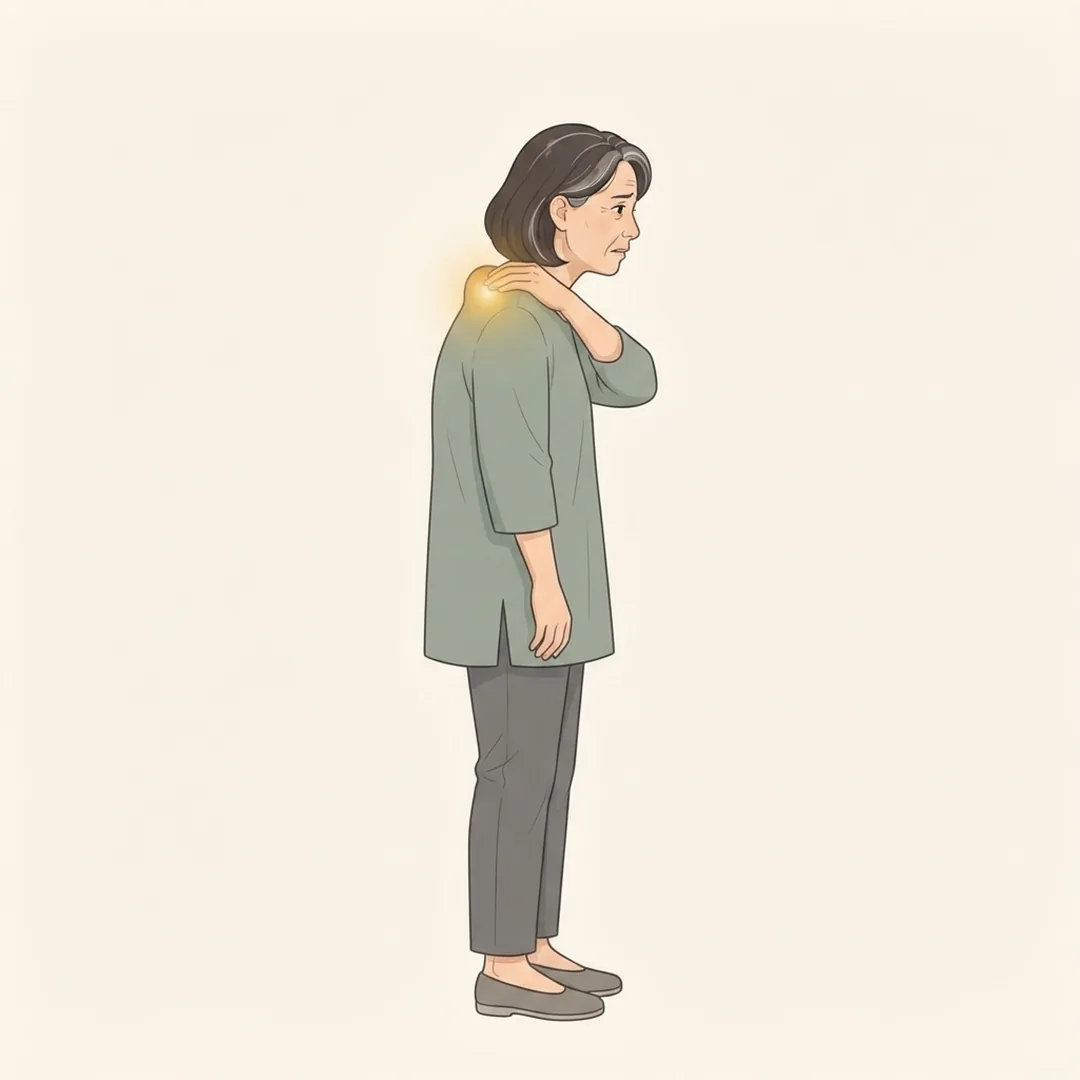
A neck hump is a rounded bump where the back of your neck meets your upper back, and you may also hear it called a dowager's hump. Most neck humps come from the way the upper back has settled after years of leaning forward. Some come from changes in the bones, and a few are a pad of fat rather than anything to do with the spine. Which kind you have decides what is likely to help, so that is where this guide starts.
Key takeaways
- What is a neck hump?
- A neck hump, also called a dowager’s hump, is a rounded bump where the neck meets the upper back. It usually comes from an exaggerated forward curve at the top of the spine, which doctors call hyperkyphosis.
- What causes a neck hump?
- Most often posture, from years of leaning forward over desks and phones. Changes in the bones, such as compression fractures from osteoporosis, and a pad of fat known as a buffalo hump are less common causes.
- How can I tell if my neck hump is from posture?
- Stand with your back against a wall and try to rest the back of your head on it with your chin level. If the hump flattens easily, posture is probably a big part of it. It is a rough home check, not a diagnosis.
- Do neck hump exercises work?
- They can help, slowly. In a six month trial in older adults, supervised strength and posture training reduced the curve by about 3 degrees. Posture related humps tend to respond better than curves from bone changes.
- When should a neck hump be checked?
- When it is new or growing, comes with height loss or sudden upper back pain, or causes arm symptoms. A soft hump that comes with weight gain or a rounder face should go to a doctor first.
What is a neck hump (dowager's hump)?
A neck hump is an exaggerated forward curve at the top of the upper back, usually around the bony knob at the base of your neck. Your upper back (the thoracic spine) is meant to curve gently forward. When that curve grows larger than usual, the medical name is hyperkyphosis, and the top of it shows as a hump, often with the head sitting forward of the shoulders.
"Dowager's hump" is the older name, from how often it was seen in older women. "Neck hump" is what most people search for after noticing it in a photo or the mirror. They usually mean the same thing.
It is common. Studies put an excessive upper back curve at roughly 20% to 40% of older adults, men and women alike, and it tends to increase with age. Younger people get a milder version too, usually from long hours bent over a phone or laptop.
Posture, bone or fat: three kinds of neck hump
Not every neck hump is the same thing, and the difference matters more than anything else in this post. The two pictures below show the first two kinds side by side.
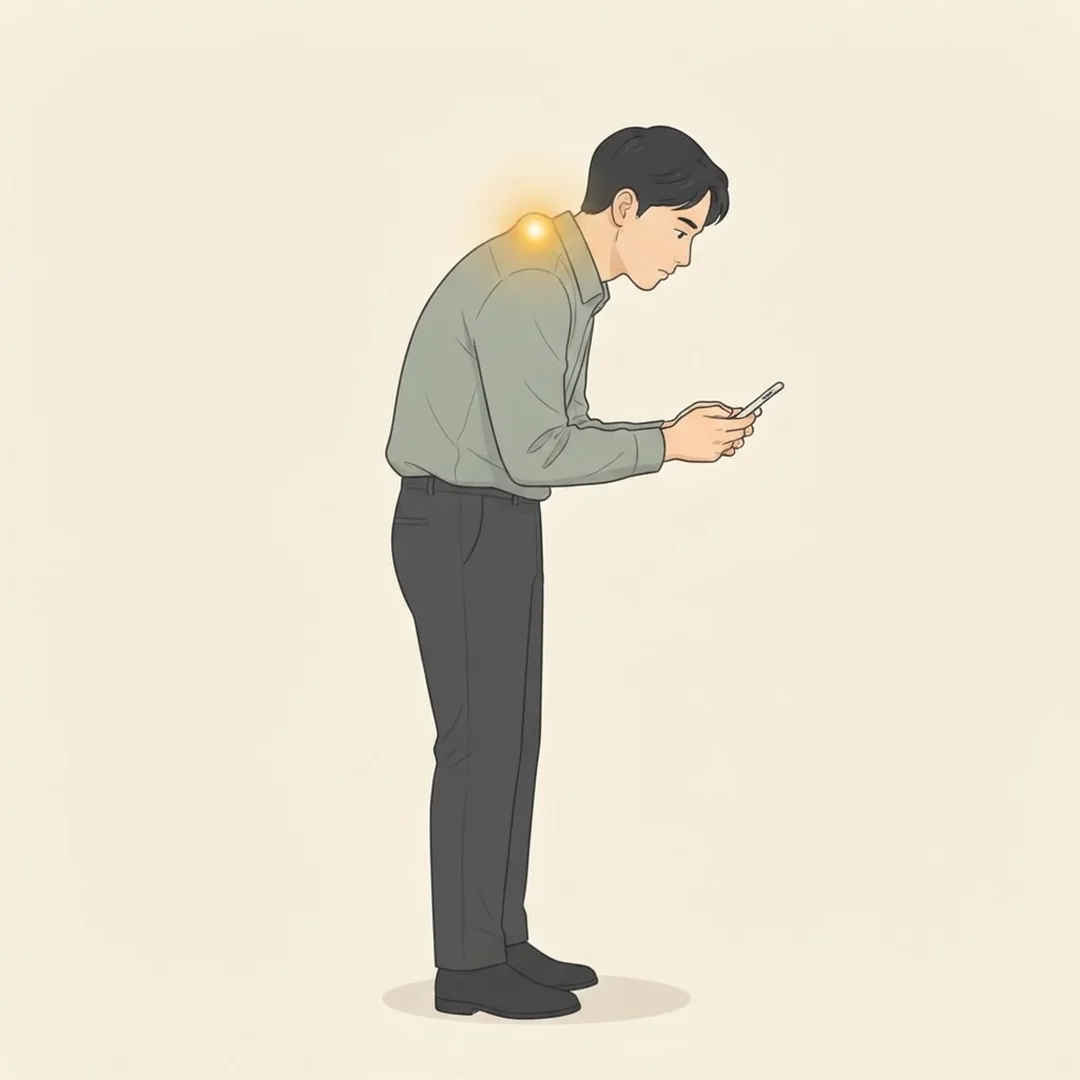
Posture hump
Head and shoulders drift forward over a phone or desk. It usually eases when you stand tall.
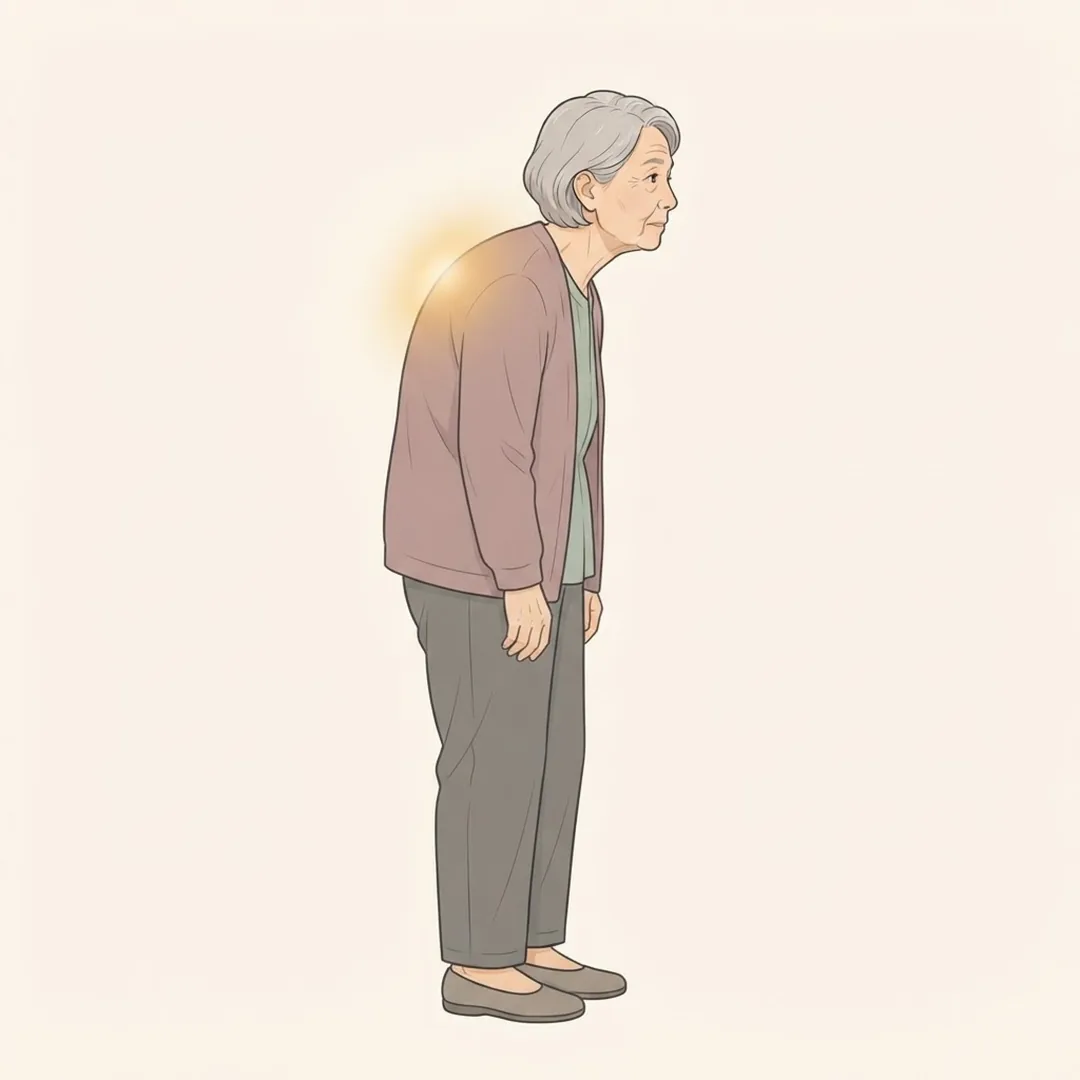
Fixed curve
The upper back stays rounded even when she stands as tall as she can.
This table is a rough guide to the three kinds you are most likely to come across.
| Posture hump | Fixed curve from bone changes | Fatty hump (buffalo hump) | |
|---|---|---|---|
| What it is | The neck and upper back have settled into a forward, rounded position | The vertebrae have changed shape, for example wedged after a compression fracture, or with worn discs | A soft pad of fat over the base of the neck |
| How it feels | Firm, the shape of your spine | Firm and bony | Soft and squashy, sitting on top of the spine |
| When you stand tall | Usually gets smaller | Changes little | No change |
| Who tends to get it | Desk workers and heavy phone users, at any age | Older adults, especially women after menopause or anyone with low bone density | People with significant weight gain, long term steroid medicine, or a hormone condition such as Cushing's syndrome |
| What to do first | More movement, strength work and a better setup; book in if it bothers you | Get assessed, and ask your doctor about bone health | See a doctor first |
Many people have a bit of two columns at once, such as a posture hump sitting on top of some age related change in the bones. If screens are a big part of your day, our guide to tech neck covers setting up your phone, laptop and desk.
The fatty hump deserves a special word because it is the one we would send straight to a doctor. A soft hump that appears along with weight gain around the middle, a rounder face, purple stretch marks or easy bruising can be a sign of too much cortisol in the body. That needs blood tests, not exercises, and it is not something chiropractic or physiotherapy is for.
Is your neck hump from posture? A simple wall check
A quick wall test can hint at how much of your neck hump is posture and how much is fixed.
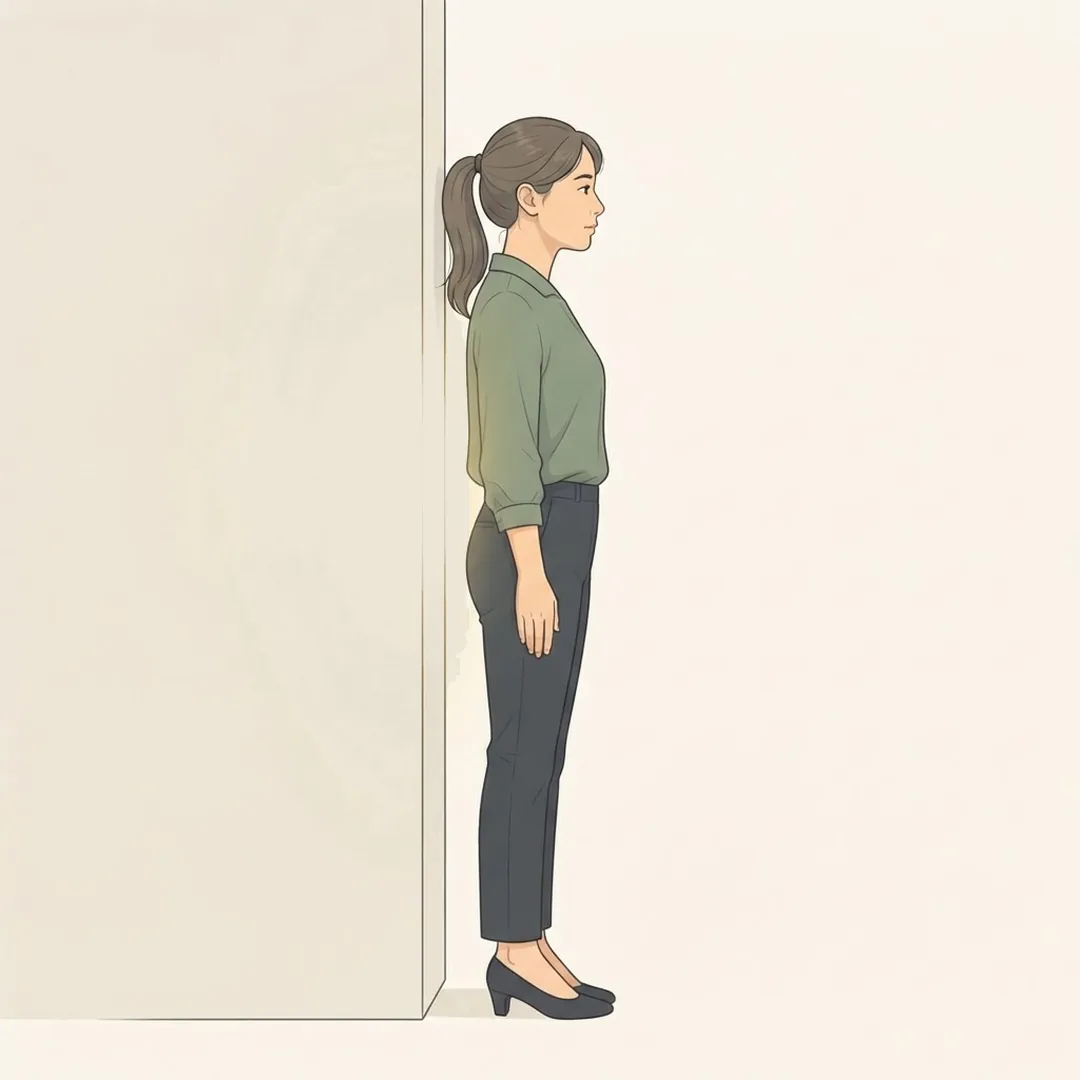
- Stand with your heels close to a wall and your bottom and shoulder blades touching it.
- Look straight ahead with your chin level, not tipped up.
- Try to rest the back of your head on the wall.
If your head reaches the wall easily and the hump flattens, a good part of it is probably posture, which tends to respond to the exercises below. If you can only reach the wall by tipping your chin up, or there is a gap of several finger widths, the curve is stiffer and may include changes in the bones.
This is a home check, not a diagnosis. Clinicians use a measured version of the same idea, and an X-ray is the only way to see the bones themselves.
Can a neck hump go away? What the research shows
Sometimes it gets smaller, but rarely as much as the videos online suggest. The honest answer depends on how much of the hump is posture and how much is bone.
The best evidence comes from older adults with a marked curve. In a randomised trial of 99 people aged 60 and over, six months of spine strengthening and posture training, three times a week with a physiotherapist, reduced the curve by about 3 degrees more than in a group that attended health talks instead. People in the exercise group also felt better about how they looked. Three degrees is real but small, and it took six months of steady work. An earlier review of 13 studies found most showed some improvement in posture with exercise, but the studies were too few and too varied to say by how much.
What this means in practice:
- A hump that is mostly posture often softens with regular strength work and fewer hours bent in one position.
- A curve from bone changes tends to change much less. The aim then shifts to keeping it from getting worse, staying strong, and easing the neck and shoulder ache that often comes with it.
- Any change takes months, not weeks. Be wary of anything that claims to flatten a neck hump in seven days.
5 neck hump exercises to try at home
These work the muscles that hold your head and upper back up, and stretch the chest muscles that tend to pull you forward. Do them once or twice a day, aim for gentle effort and never pain, and stop any that make your neck or arm worse. If you have osteoporosis or have had a spinal fracture, check with your doctor or clinician before starting, and skip the upper back extension.
Chin tuck for a neck hump
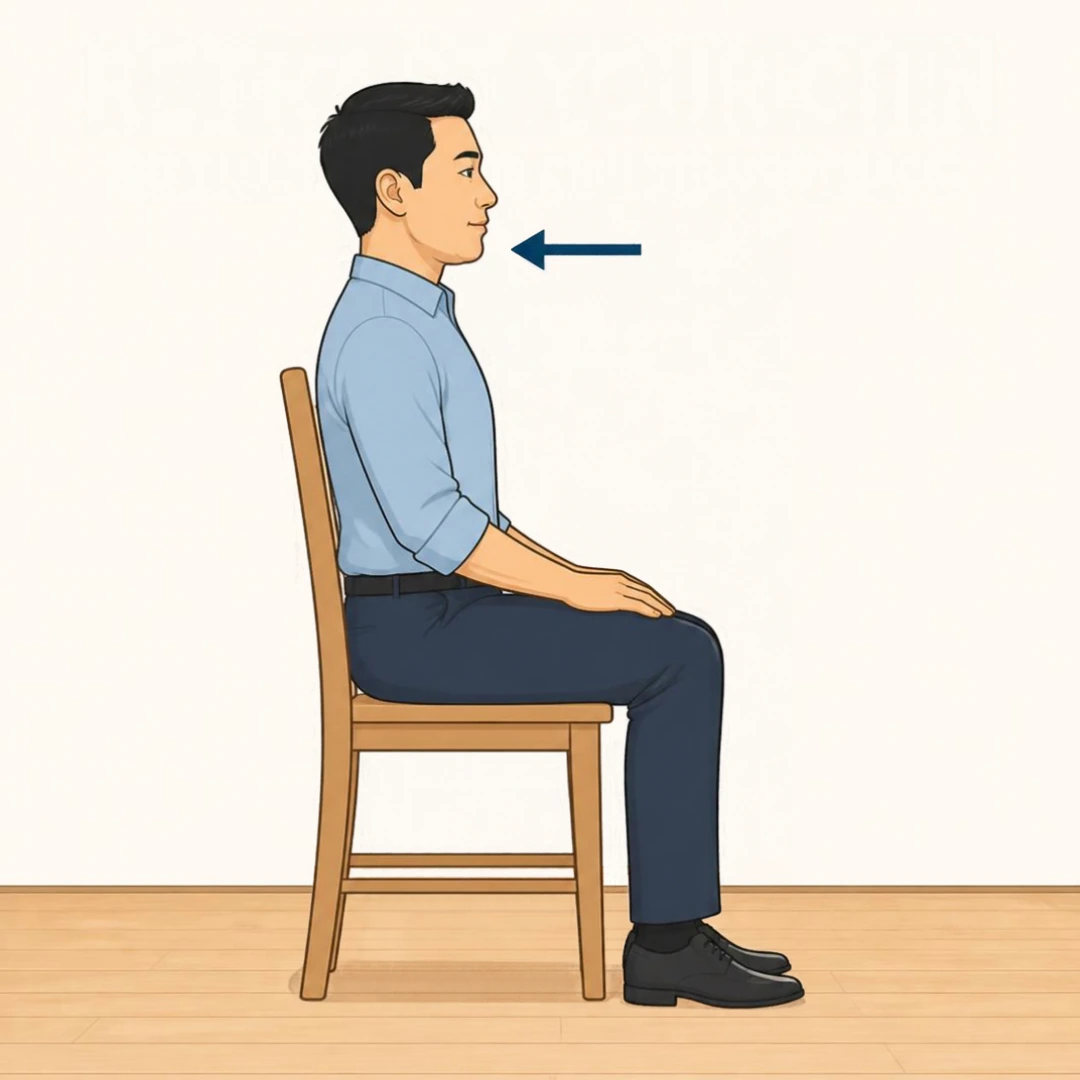
- Sit or stand tall and look straight ahead.
- Gently draw your chin straight back, as if making a double chin, without tipping your head down.
- Hold for five seconds, then relax.
- Repeat ten times.
Shoulder blade squeeze
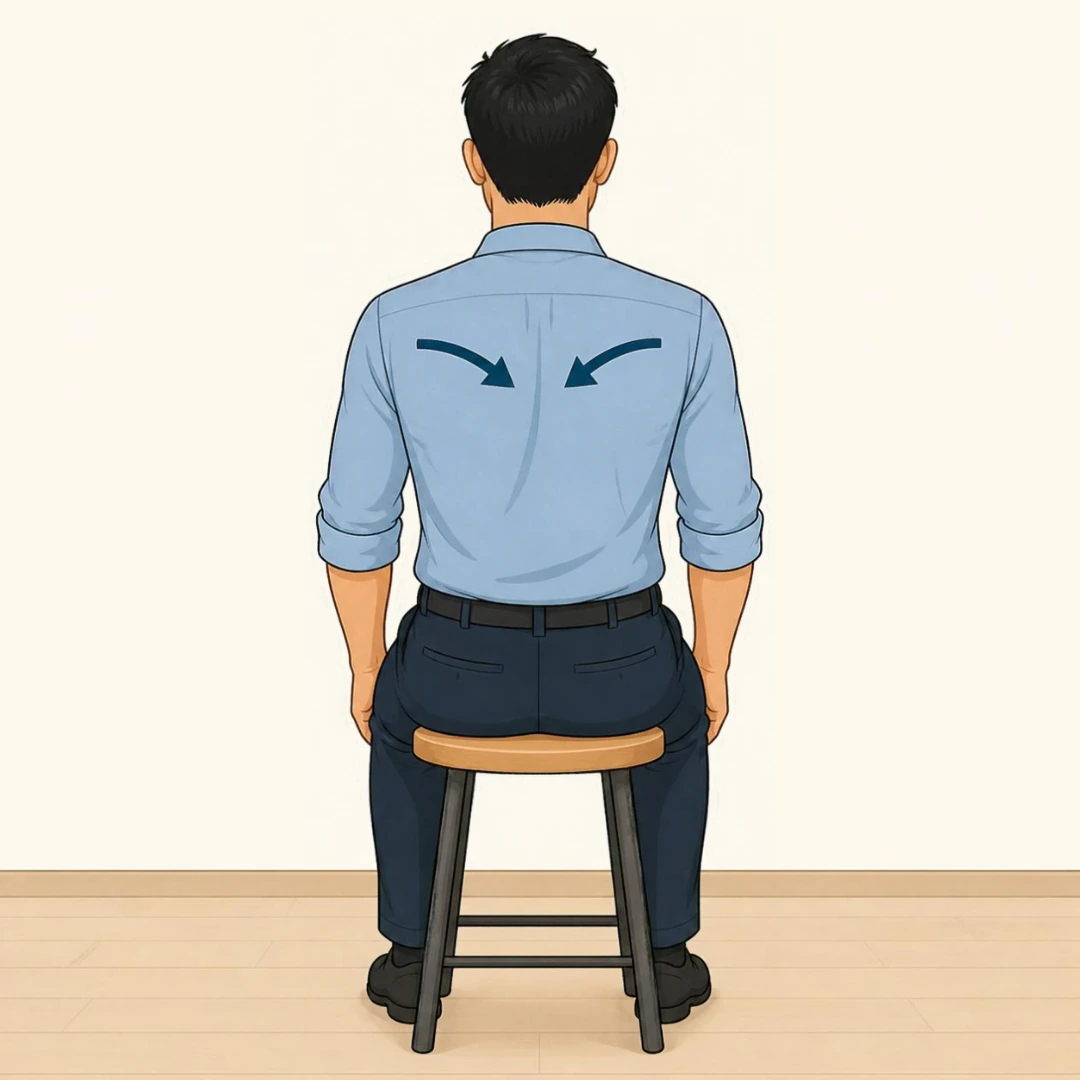
- Sit tall with your arms relaxed by your sides.
- Draw your shoulder blades back and slightly down, as if tucking them into your back pockets.
- Hold for five seconds without shrugging, then relax.
- Repeat ten times.
Doorway chest stretch
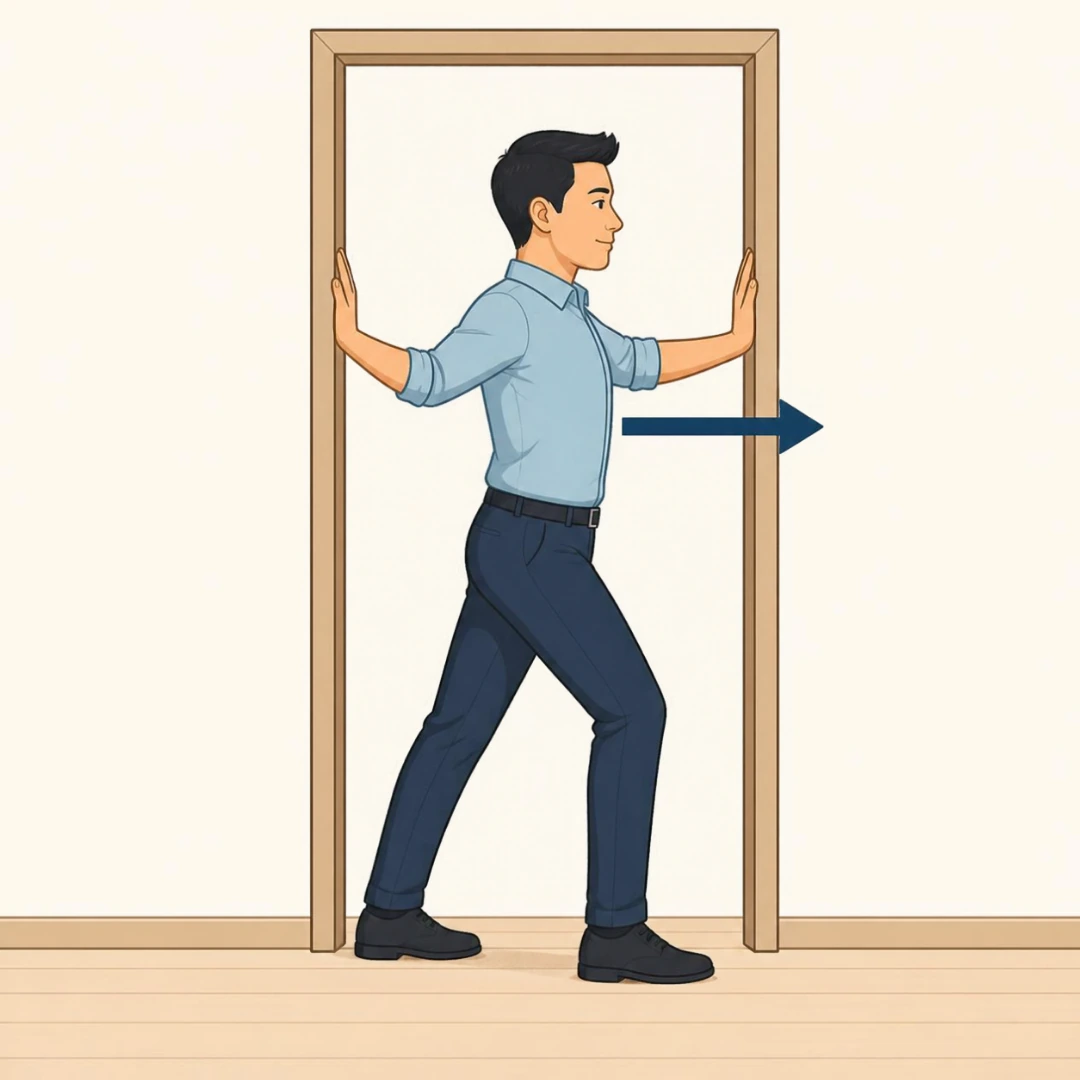
- Stand in a doorway and rest your hands or forearms on the frame, elbows at about shoulder height.
- Step one foot forward and lean gently through the doorway until you feel a stretch across your chest.
- Hold for 20 to 30 seconds.
- Repeat three times.
Upper back extension over a chair
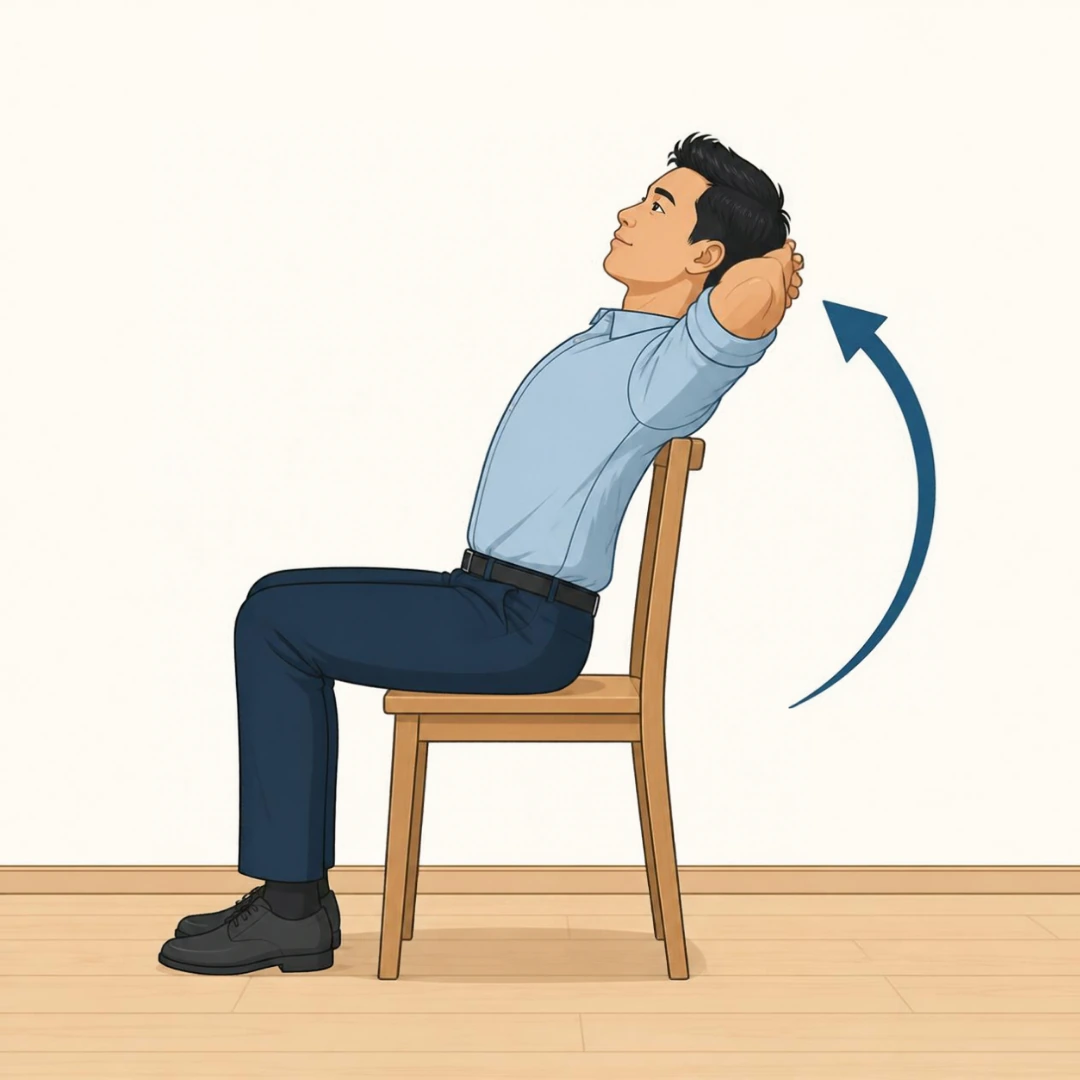
- Sit on a chair with a backrest that comes up to around your shoulder blades.
- Support your head with your hands, elbows forward.
- Lean back gently over the top of the backrest, letting your upper back arch, then return.
- Repeat ten times, slowly. Skip this one if it hurts your lower back.
Wall angels
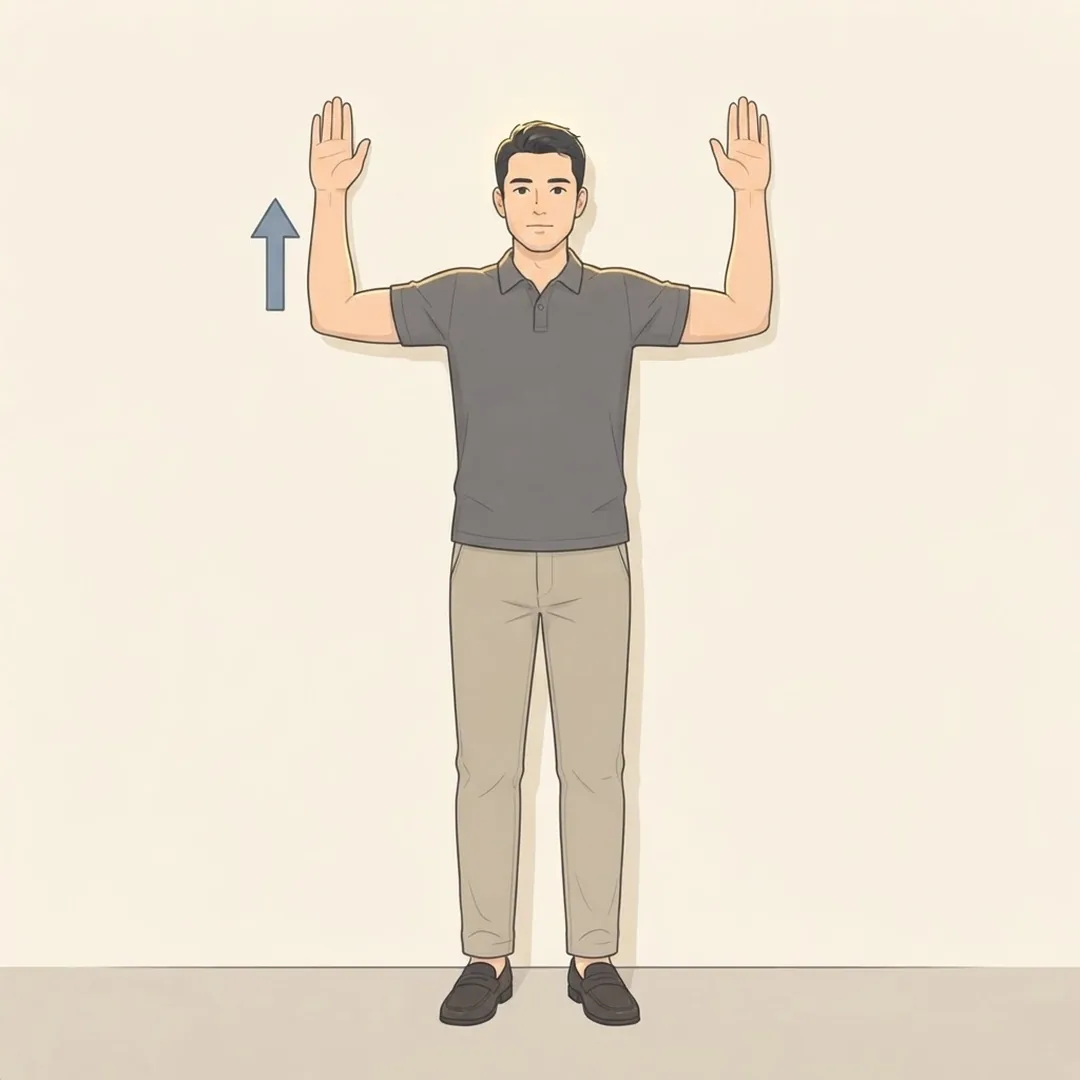
- Stand with your back against a wall, feet a small step away from it, and your bottom, upper back and head touching the wall if you can.
- Raise your arms into a goal post shape, elbows bent at shoulder height, with the backs of your arms and hands against the wall as far as is comfortable.
- Slowly slide your arms up the wall, keeping them in contact, then slide back down.
- Repeat ten times. If your hands lift off the wall, only go as high as you can while keeping contact.
Is this right for you?
Not sure if posture correction is right for you?
Tick anything that sounds like you. We will read it back honestly and tell you where to start, even if that is somewhere else.
Opens WhatsApp with your answers filled in. Nothing is sent until you press send there.
When a neck hump needs checking
Get a neck hump looked at if it bothers you, keeps growing, or comes with any of these:
- it appeared or grew over weeks or months rather than years
- you have lost height, or your clothes have started to hang differently
- sudden sharp pain in the upper back, especially after a small knock, a cough or lifting something, which can be a sign of a compression fracture
- you are over 50 with a higher chance of low bone density, such as early menopause, long term steroid medicine or osteoporosis in the family
- the lump is soft and growing, or comes with weight gain, a rounder face or new stretch marks (see a doctor first)
- pain, tingling, numbness or weakness in an arm or hand
At our clinic in Cheras, an assessment starts with how your neck and upper back actually move and where the stiffness sits, including the upper back pain between the shoulder blades that often comes with a hump. We use X-ray analysis where your history and examination point to it, and if a bone health question comes up, we will refer you to your doctor for a bone density scan rather than guess. The plan that follows usually combines hands-on care for stiff joints with strength work you can keep up at home.
Our posture correction programme is built for the posture side of this and looks at how you actually sit and work. If neck ache is the main complaint, our page on neck pain care in Cheras explains the assessment in more detail.
Frequently asked questions
Is a neck hump permanent?
Not always. The part that comes from posture often softens with months of regular strength work and changes to how you sit and use your phone. A curve from changes in the bones tends to stay, though keeping strong can help stop it getting worse and ease the ache around it.
Can a chiropractor help with a neck hump?
A chiropractor can assess which kind of hump you have, help with stiff joints in the neck and upper back, and give you an exercise plan. What chiropractic cannot do is reshape bone, and a soft fatty hump is a matter for your doctor. We would rather tell you which group you are in than promise a result.
Do neck hump pillows or posture correctors work?
A pillow or brace may make you more aware of your position for a while, but neither builds the strength needed to hold a better posture on its own, and there is little good evidence that either flattens a hump. Exercise and fewer hours in one position are a better bet.
Is a neck hump dangerous?
Usually not. A posture hump on its own is mostly a matter of comfort and appearance. It is worth checking when it appears quickly, comes with height loss or sudden back pain, which can point to a compression fracture, or is a soft lump that comes with other changes in your body.
Can young people get a neck hump?
Yes. A milder, posture related version is common in students and office workers who spend long hours over phones and laptops. At that age it tends to be flexible, which is good news, and regular movement breaks and strength work usually matter more than any gadget.
Neck hump: the bottom line
A neck hump is common, usually harmless, and most often a mix of posture and age. The useful question is which kind you have. A posture hump tends to soften with months of strength work and fewer hours hunched in one position, a bony curve changes less but still benefits from staying strong, and a soft fatty hump belongs with your doctor. If yours is new, growing or sore, or you just want to know what it is, an assessment is a sensible next step, and you can book online or message us on WhatsApp.