




Does this sound like you?
Common signs
- A deep ache in the shoulder that is often worse at night or when lying on that side
- Being unable to reach behind your back, to a back pocket or a bra strap
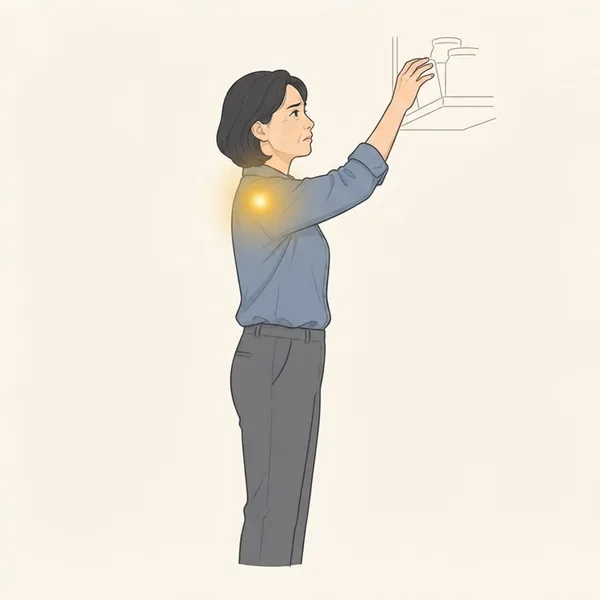
- Difficulty reaching overhead or out to the side
- The arm will not turn outward, even when someone else moves it for you
- Stiffness that has crept in over weeks, often with no injury to explain it
- A sharp catch of pain at the end of a reach
- Being in your 40s to 60s, or living with diabetes or a thyroid condition
This list describes the condition in general. It is not a diagnosis. Only an in-person assessment can tell you what is causing your symptoms.
What contributes to it
Why it happens
- A thickened, tight shoulder capsule
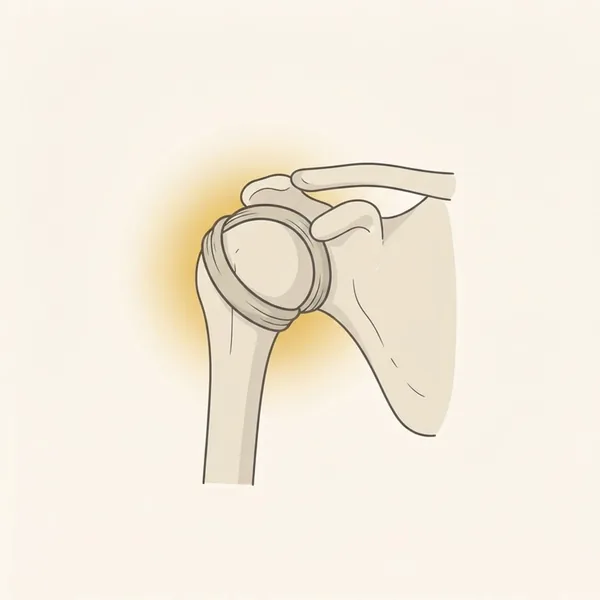
- The shoulder joint sits inside a capsule of connective tissue that normally has plenty of slack. In frozen shoulder that capsule becomes inflamed, then thickens and tightens, so the joint has less room to move in every direction. It is the capsule that limits you, rather than weak muscle or a torn tendon.
- Diabetes and thyroid conditions
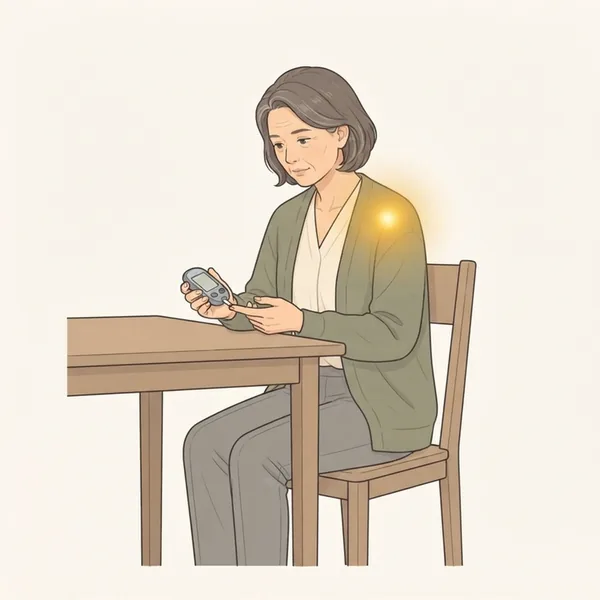
- People with diabetes are around five times more likely to develop frozen shoulder, and it tends to be stiffer and slower to ease in them. Thyroid conditions are also linked. If you have diabetes, talk to your doctor about how well controlled it is, because that is part of the picture as well.
- A period of holding the arm still
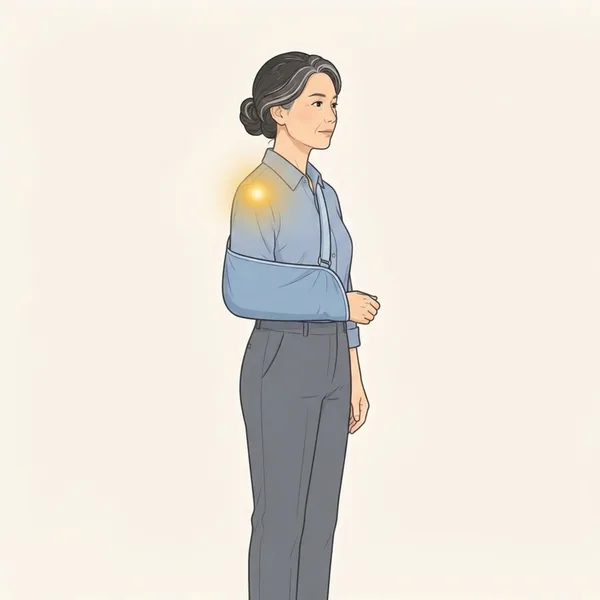
- Frozen shoulder sometimes follows an injury, surgery or an illness that kept the arm still for a while. Keeping the shoulder gently moving within comfort during recovery from something else is one of the few things that may lower the chance of it developing.
- Often no clear reason at all
- In many people it simply starts, with no injury and no obvious trigger. That can be frustrating to hear. It does not mean anything was done wrong, and it does not change how the shoulder is looked after.
How we help
Our approach
Confirming it is frozen shoulder, not the rotator cuff or your neck
Your first visit starts with a history and an examination of how the shoulder moves on its own and when it is moved for you, which is the key test. The neck is screened too, because pain referred from the neck can sit in the shoulder. X-ray analysis is used only where it would change the plan, mainly to rule out arthritis in the joint.
Calming the painful stage
When the shoulder is at its most painful, forcing it tends to make things worse. Care at this stage is gentle range of movement within comfort, advice on sleeping positions and supporting the arm at night, and keeping the rest of the arm, neck and upper back moving.
Restoring movement as the shoulder stiffens and eases
As the pain settles, our physiotherapy side moves towards joint mobilisation, stretching and strengthening matched to what the shoulder will tolerate, plus a short home programme you do most days. Progress is often slow and uneven, and we will tell you honestly how your shoulder is responding rather than promise a date.
When a doctor should be involved
If night pain is severe or movement is not changing, a doctor may offer a steroid injection or hydrodilatation, where the joint capsule is stretched with fluid. The research suggests an injection may ease pain more than physiotherapy alone in the early months, and we will refer you to a doctor for it rather than hold on to you. If your practitioner feels another healthcare provider would better help you, you will be referred appropriately.
When to seek urgent care
See a doctor first if you have any of these
These need a medical assessment before you begin chiropractic care. If any apply to you, contact a doctor or go to the nearest emergency department.
- Shoulder pain with chest tightness, breathlessness, sweating, or pain into the jaw or left arm. Seek emergency care
- Shoulder pain after a fall or injury, especially if you cannot lift the arm at all
- A hot, red or swollen shoulder, or shoulder pain with a fever
- Unexplained weight loss, a history of cancer, or constant pain at night that nothing eases
- Numbness, tingling or weakness spreading down the arm into the hand
- Sudden loss of the ability to raise the arm
Frequently asked questions
What patients ask us
Will my frozen shoulder go away on its own?
Usually it improves, but slowly. Most frozen shoulders get better over time without surgery, though full recovery can take up to around three years, and some people keep a degree of stiffness afterwards. Care cannot promise to shorten that, and anyone who quotes you a fixed number of weeks is guessing. What it aims at is less pain and more usable movement along the way.
Can physiotherapy help a frozen shoulder?
It may help with pain and movement, and it is the approach most guidance starts with, but the honest picture is that the research is limited. A large review found that physiotherapy on its own may not ease pain as much as a steroid injection in the short term. That is why we combine an exercise programme with a referral to a doctor when pain is severe, so you get the benefit of both.
Should I push through the pain when stretching a frozen shoulder?
No, particularly in the early painful stage. Stretching hard into pain tends to flare the shoulder and set you back. Gentle movement within comfort suits the painful stage, and firmer stretching comes later once the shoulder will tolerate it. Your physiotherapist will tell you which stage you are in and adjust the programme as it changes.
Does diabetes cause frozen shoulder?
It does not cause it directly, but the link is strong. People with diabetes are around five times more likely to develop frozen shoulder, and roughly one in seven people with diabetes has it at some point. It can also be stiffer and slower to ease. If you have diabetes, keep your doctor in the loop about the shoulder and about your blood sugar control.
Is it frozen shoulder or a rotator cuff problem?
The quickest clue is whether someone else can move your arm further than you can. With a rotator cuff problem the joint itself is free, so the arm usually goes further when moved for you. With frozen shoulder the capsule is tight, so it is stiff whoever moves it, especially when turning the arm outward. The examination confirms which one it is.
Who looks after frozen shoulder at your clinic?
Mostly our registered physiotherapists, since exercise and mobilisation make up most of the care, with a chiropractor screening the neck where the pain pattern suggests it is involved. Our physiotherapist profiles are not published yet, so if you would like to know more before booking, ask us on WhatsApp. You can read how we work on our physiotherapy page.