



Does this sound like you?
Common signs
- Legs that ache, feel heavy or tingle after walking a certain distance
- Relief within a few minutes of sitting down or bending forward
- Walking is easier leaning on a shopping trolley, and cycling is easier than walking
- Standing still in a queue brings the leg symptoms on
- Lower back stiffness that is milder than what you feel in the legs
- Symptoms in one leg or in both
- A walking distance that has been shrinking over months
This list describes the condition in general. It is not a diagnosis. Only an in-person assessment can tell you what is causing your symptoms.
What contributes to it
Why it happens
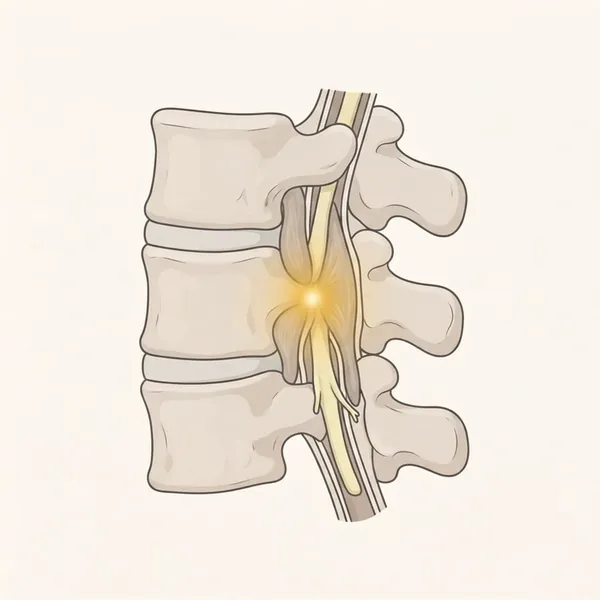
- Thickening of the ligament inside the spinal canal
- A ligament runs along the back of the spinal canal. Over the years it thickens and loses some of its elasticity, and when you stand upright it folds inward into the space the nerves need. This is one reason symptoms come on with standing and walking rather than sitting.
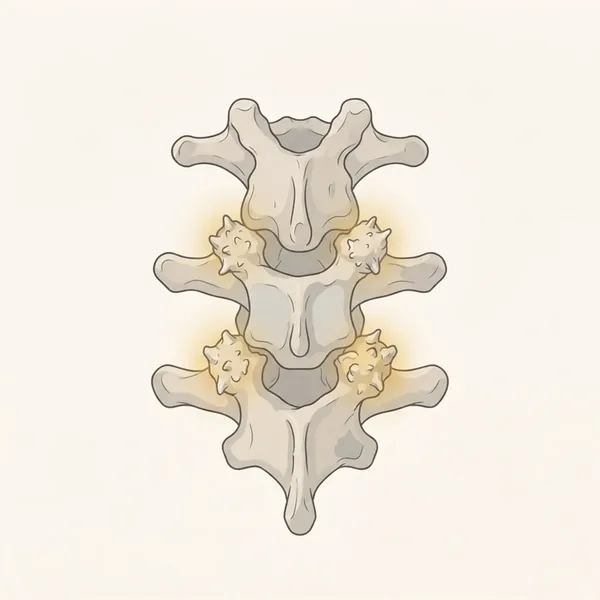
- Arthritis in the facet joints of the lower back
- The small joints at the back of each vertebra wear and enlarge with age, sometimes forming bone spurs. They sit right beside the openings the nerve roots pass through, so as they grow they can crowd the nerves on one or both sides.
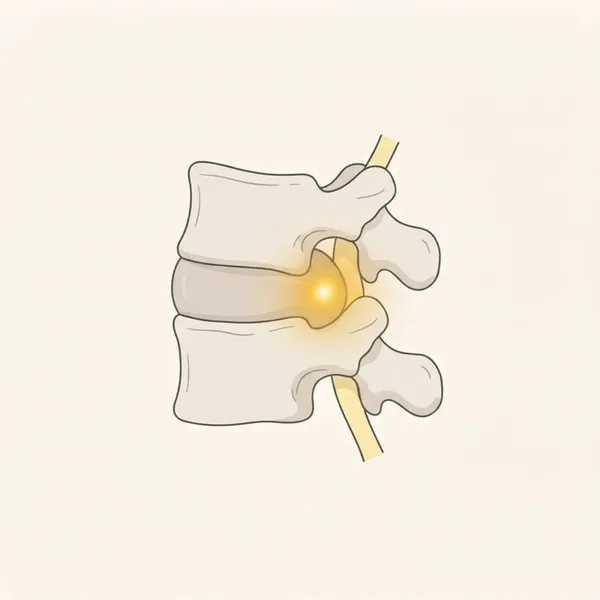
- A bulging disc narrowing the canal further
- Discs lose height and bulge a little with age. On their own they rarely cause stenosis, but a bulge at the front of a canal that is already crowded by ligament and joint changes can be what tips the space from tight to symptomatic.
- A vertebra slipped forward
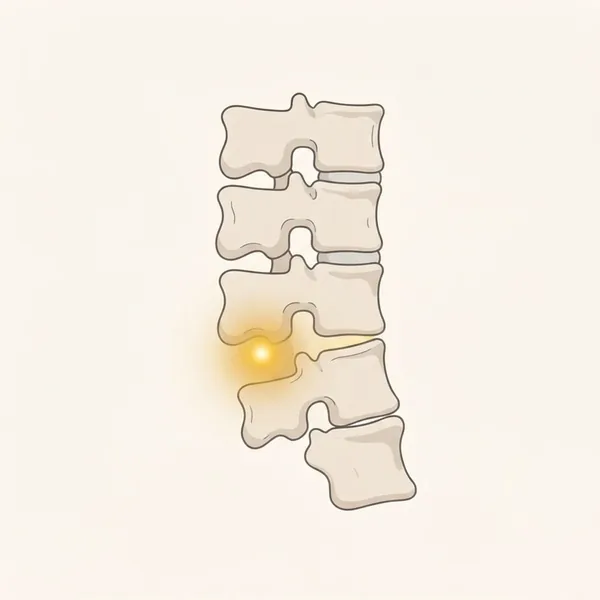
- When one vertebra has shifted forward on the one below, a condition called spondylolisthesis, the canal at that level is narrowed by the step. The two often turn up together in people over 50, which is why the assessment looks at both.
How we help
Our approach
Telling spinal stenosis apart from a circulation problem
Your first visit follows the Gonstead six-step assessment: history, visualisation, instrumentation with the nervoscope, palpation, and X-ray analysis where indicated. On this presentation your chiropractor adds a neurological examination of reflexes, strength and sensation in the legs, checks the pulses in your feet, and looks at how posture and walking change your symptoms. Poor circulation in the legs can produce a very similar walking pattern, and it needs a doctor rather than us.
Manual care as part of an exercise plan
Where the assessment supports it, restricted segments above and below the narrowed level may be adjusted by hand, and some presentations are not adjusted at all. Adjustment does not widen a narrowed canal. Its job is to help the spine move better so the exercise work is easier to do, and guidelines recommend manual care for back pain only alongside exercise, which is how we use it.
Walking tolerance as the measure of progress
Our physiotherapy side builds a programme around positions that open the canal: bending forward, cycling and walking in intervals with planned sitting breaks, along with strength work for the hips and trunk. How far you can walk before the legs tire is re-tested over time, because it says more about stenosis than how the back feels on a given day.
Knowing when spinal stenosis is not ours to treat
Weakness that is getting worse, any change in bladder or bowel control, or a walking distance that keeps shrinking despite consistent work all mean a referral to an orthopaedic or neurosurgical specialist. A surgical opinion is a legitimate step for spinal stenosis, and we will tell you plainly if we think you need one.
When to seek urgent care
See a doctor first if you have any of these
These need a medical assessment before you begin chiropractic care. If any apply to you, contact a doctor or go to the nearest emergency department.
- Loss of bladder or bowel control, or numbness around the groin, buttocks and inner thighs
- Weakness in a leg that is getting worse, or a foot that drags when you walk
- Leg symptoms that suddenly get much worse in both legs
- Calf pain on walking with cold, pale or discoloured feet, pain in the legs at rest, or sores on the feet that do not heal
- Clumsy hands, difficulty with buttons or handwriting, or unsteadiness on your feet
- Fever, unexplained weight loss, or a history of cancer alongside new back or leg pain
- New back pain after a fall in someone with osteoporosis
Frequently asked questions
What patients ask us
Can a chiropractor help with spinal stenosis?
Partly, and it is worth being honest about which part. A narrowed canal is a structural change, and no adjustment makes it wider. What the evidence does support is a combined programme of manual care and exercise, which has been shown to improve symptoms and function in the short term for many people with lumbar spinal stenosis. The goal is that you can walk further and stand longer, and the assessment tells us whether you are a good fit for that or would be better served by a specialist.
Do I need surgery for lumbar spinal stenosis?
Not necessarily. In one large trial of people over 50 who were already candidates for surgery, those given physiotherapy had similar physical function at two years to those who had decompression surgery. The same trial is also a reminder of its limits: 57% of the physiotherapy group crossed over to surgery during the study. Surgery is a reasonable choice when weakness is progressing, when bladder or bowel control changes, or when walking keeps getting harder despite consistent conservative care.
Why can I walk further when I lean on a shopping trolley?
Bending forward opens up the spinal canal and the openings the nerves pass through, and standing upright narrows them again. Leaning on a trolley, pushing a pram or riding a bicycle keeps you slightly bent, so the nerves get more room. It is a useful sign during the assessment, and something to use on purpose day to day rather than fight against.
What exercises help spinal stenosis?
Movements that bend the lower back forward tend to suit stenosis better than ones that arch it backward. Knee to chest stretches, cycling and walking in short stretches with sitting breaks are common starting points, along with strength work for the hips and trunk. Our guide to sciatica exercises has a column for a narrowed spinal canal showing which of its exercises tend to suit it. Drop anything that sends symptoms further down your legs.
Can spinal stenosis happen in the neck?
Yes. Stenosis of the neck behaves differently from the lower back version. Narrowing that presses on a single nerve root tends to send pain or tingling into one arm, which is covered on our page on a pinched nerve in the neck. Narrowing that presses on the spinal cord itself shows up as clumsy hands, trouble with buttons or handwriting, and unsteady walking, and that needs prompt medical review rather than an appointment with us.
My MRI report says severe stenosis. Will it keep getting worse?
Not necessarily. How narrow a canal looks on a scan and how much it bothers you do not line up closely, and narrowing is found in a large share of people over 60 who have no symptoms at all. Many people with lumbar spinal stenosis stay stable for years. What matters more is how far you can walk, whether there is any weakness, and how that changes over time, which is what we track.
Is spinal stenosis the same as a slipped disc?
No. A slipped disc is disc material bulging or herniating, which is more common between 30 and 50 and tends to hurt with sitting and bending. Spinal stenosis is a narrowing of the whole canal from several changes at once, more common after 50, and it tends to hurt with standing and walking. A disc bulge can be one part of the narrowing, so the two do overlap, and our slipped disc page covers the disc side in full.