
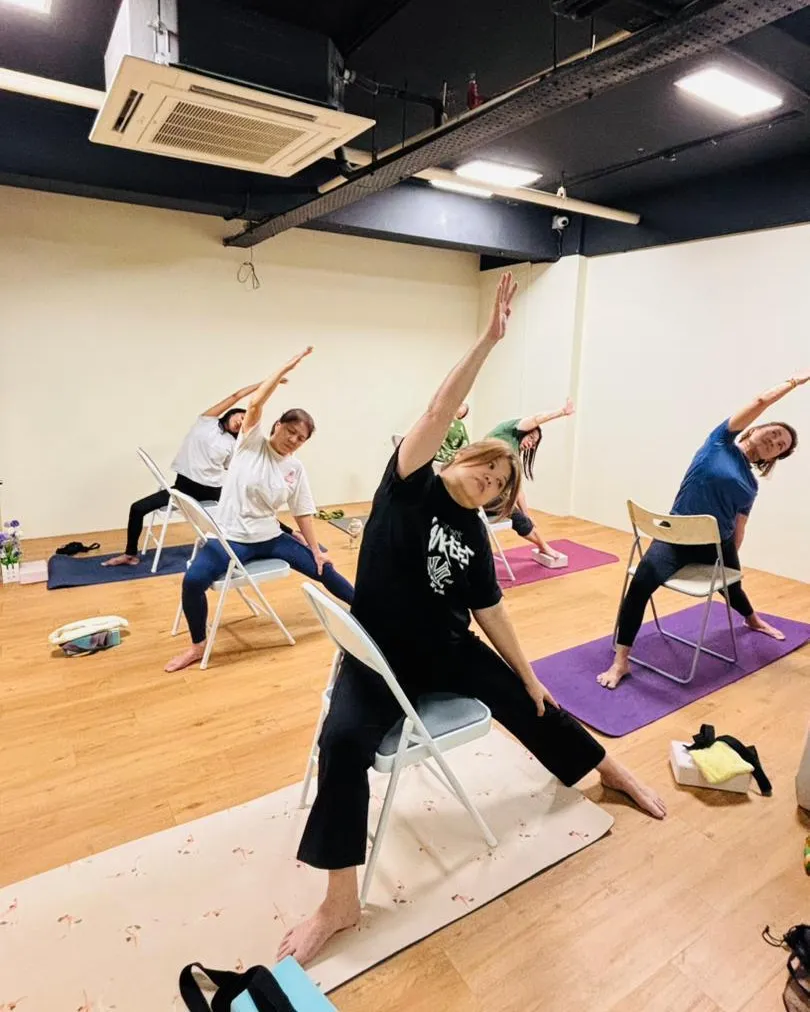
Chair yoga is yoga done sitting on a chair, or standing with a chair beside you to hold. The poses, the stretching and the slow breathing are the same as in any yoga class. The chair simply takes away the need to balance on one leg or get down to the floor and back up again. That makes it a good fit for older adults, beginners and anyone whose knees, hips or back make a mat class hard work. This guide covers who chair yoga suits, what the research honestly shows, five poses to try at home, and how a class runs at our clinic in Cheras.
Key takeaways
- What is chair yoga?
- Chair yoga is yoga done sitting on a chair, or standing with a chair to hold for support. The poses, stretches and slow breathing are the same as in a mat class, without the need to get down to the floor.
- Who is chair yoga for?
- Older adults, beginners, people with stiff knees, hips or backs, pregnant women with their doctor’s go ahead, people easing back after an injury, and desk workers who want a stretch between meetings.
- Is chair yoga real exercise?
- Yes. A review of 25 studies found chair based exercise improved grip strength, arm strength and how often older adults could stand up from a chair in 30 seconds. How hard a class feels depends on how much strength work it includes.
- Do the benefits of chair yoga last?
- Mostly while you keep going. In an eight week trial in older adults with knee or hip arthritis, most improvements faded after the classes ended, and chair yoga did not change balance. A routine you stick with matters most.
- How do I start chair yoga?
- Use a sturdy chair with no wheels and no armrests, try a few simple seated poses slowly, and stop anything that hurts. A small group class makes it easier to keep going, and an instructor can adapt each pose.
What is chair yoga?
Chair yoga is ordinary yoga adapted so that every pose is done from a chair or with a chair for support. You stretch, twist, lift your arms and legs and breathe slowly, as you would on a mat. The difference is where your weight sits.
In some poses you stay seated the whole time. In others you stand and rest a hand on the chair back, which lets you work on your legs and balance without worrying about a wobble. A class usually mixes the two, along with a few minutes of slow breathing at the start or end.
A chair yoga class can be gentle or surprisingly hard work, depending on how much strength work the instructor builds in. The chair removes the part that stops many people from trying yoga at all, which is getting down to the floor.
Who chair yoga suits
Chair yoga suits anyone who finds a standard mat class hard to get into, and plenty of people who simply prefer it.
- Older adults, especially anyone a little unsteady on their feet or worried about falling.
- People who find the floor difficult, because of stiff knees or hips, back pain or simply getting older.
- Beginners who would rather start somewhere slow and supported.
- Pregnant women, once their doctor has said exercise is fine, since getting down and up gets harder as the weeks go on.
- People coming back from an injury or illness, as a gentle way to start moving again after the plan has been agreed with their doctor or physiotherapist.
- Desk workers, who can do a few of the seated poses at their desk between meetings.
If you are deciding between styles more broadly, our guide to Pilates vs yoga compares the two for back pain, posture and beginners.
What the research says about chair yoga
Chair yoga can build strength and ease some joint pain, but the gains tend to last only as long as you keep going. That is the honest reading of the research so far, and most of it is in older adults.
A review of 25 studies on chair based exercise in adults aged 50 and over found improvements in grip strength, arm strength and the number of times people could stand up from a chair in 30 seconds. Those are the kinds of strength that matter for getting out of a car, carrying shopping and rising from a low sofa.
The best known chair yoga trial took 112 older adults with arthritis in their knees or hips who could not manage standing exercise. After eight weeks of chair yoga, twice a week, they had less pain, less tiredness and walked a little faster than a group who attended health talks instead. Two things in the same trial are worth knowing:
- Most of the gains faded once the classes stopped. Only the drop in how much pain got in the way of daily life lasted three months later.
- Chair yoga made no difference to balance in that trial. Balance needs specific practice, often standing with the chair for support rather than sitting.
The researchers also found that fewer than half of the yoga group kept practising at home with a guidebook, and that people much preferred doing it in a group. For older adults, the World Health Organization recommends activity that works on balance and strength on three or more days a week. The practical lesson is to find a format you will stick with, whether that is a weekly class, a routine with a friend, or both.
5 chair yoga poses to try at home
These five cover the breath, the spine and the legs. Use a sturdy chair without wheels, move slowly, and stop any pose that causes pain. Breathe through your nose if you can, and never hold your breath.
Seated mountain with slow breathing
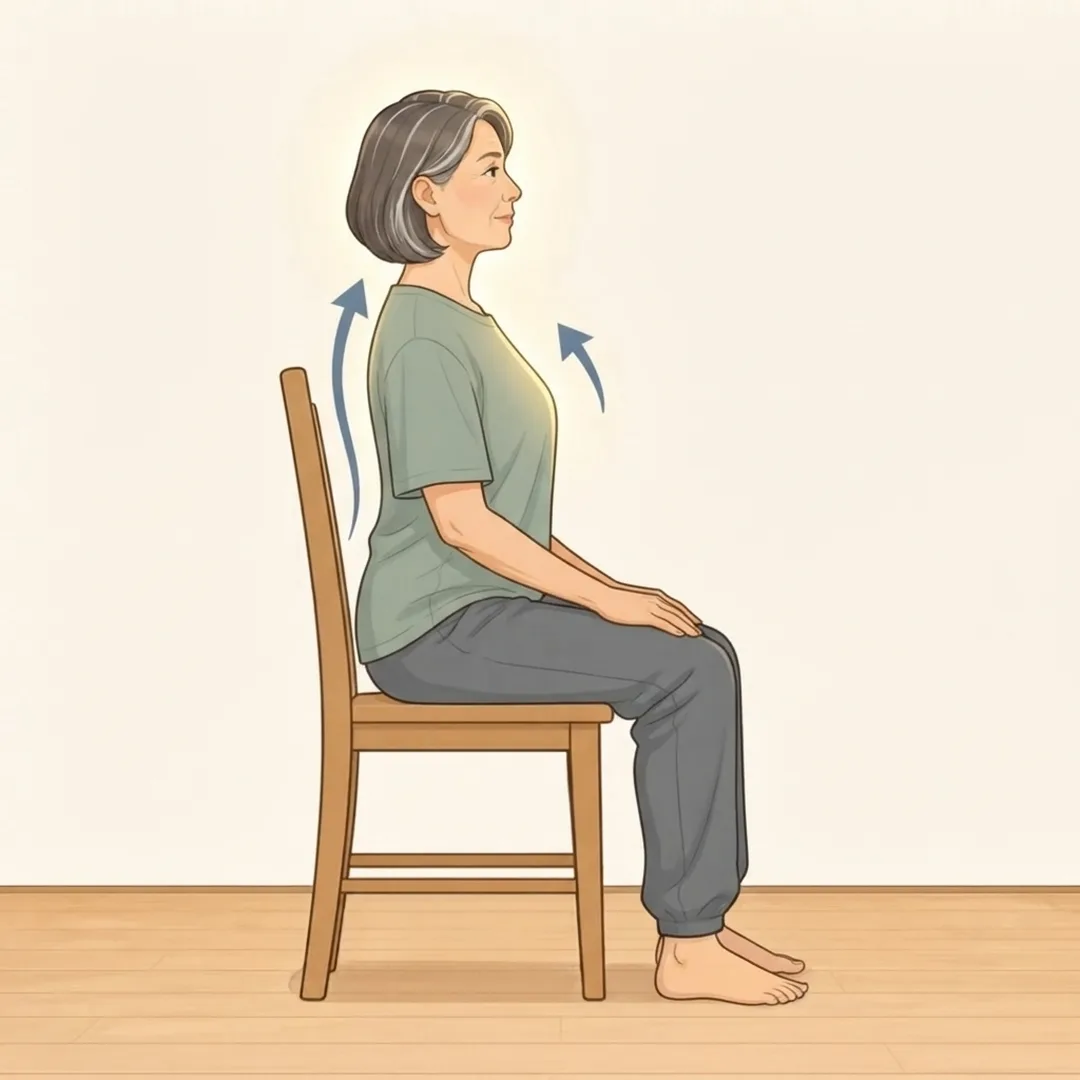
- Sit towards the front of the chair with your feet flat on the floor, hip width apart.
- Rest your hands on your thighs and let your shoulders drop away from your ears.
- Grow tall through the crown of your head without tipping your chin up.
- Breathe in slowly through your nose for a count of four, and out for a count of six.
- Repeat for five to ten breaths.
Seated side stretch
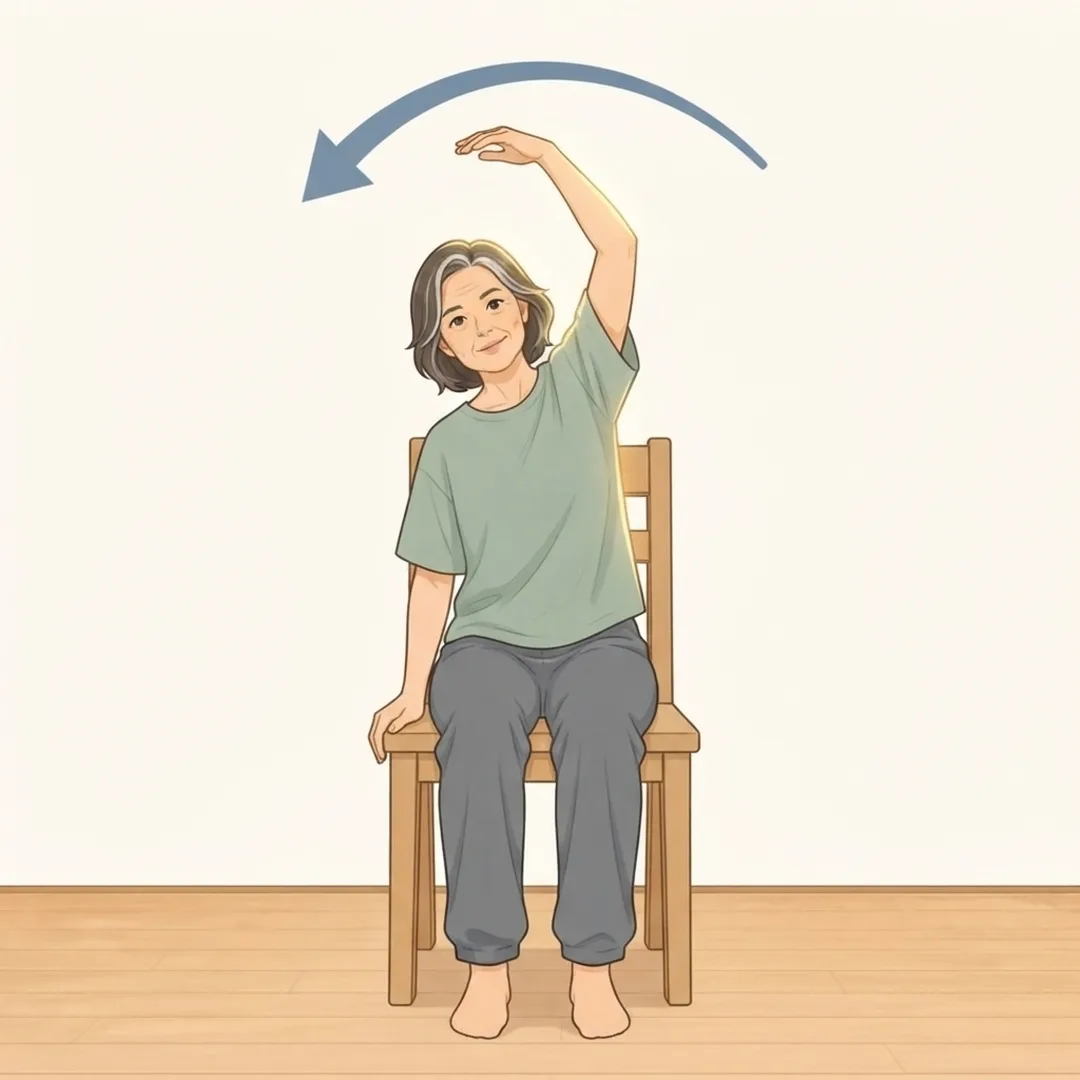
- Sit tall with both feet flat on the floor.
- Rest one hand on the seat beside you.
- Breathe in and reach the other arm up towards the ceiling.
- Breathe out and bend gently to the side, away from the raised arm, only as far as feels comfortable.
- Hold for three breaths, come back up, then change sides. Do three on each side.
Seated twist
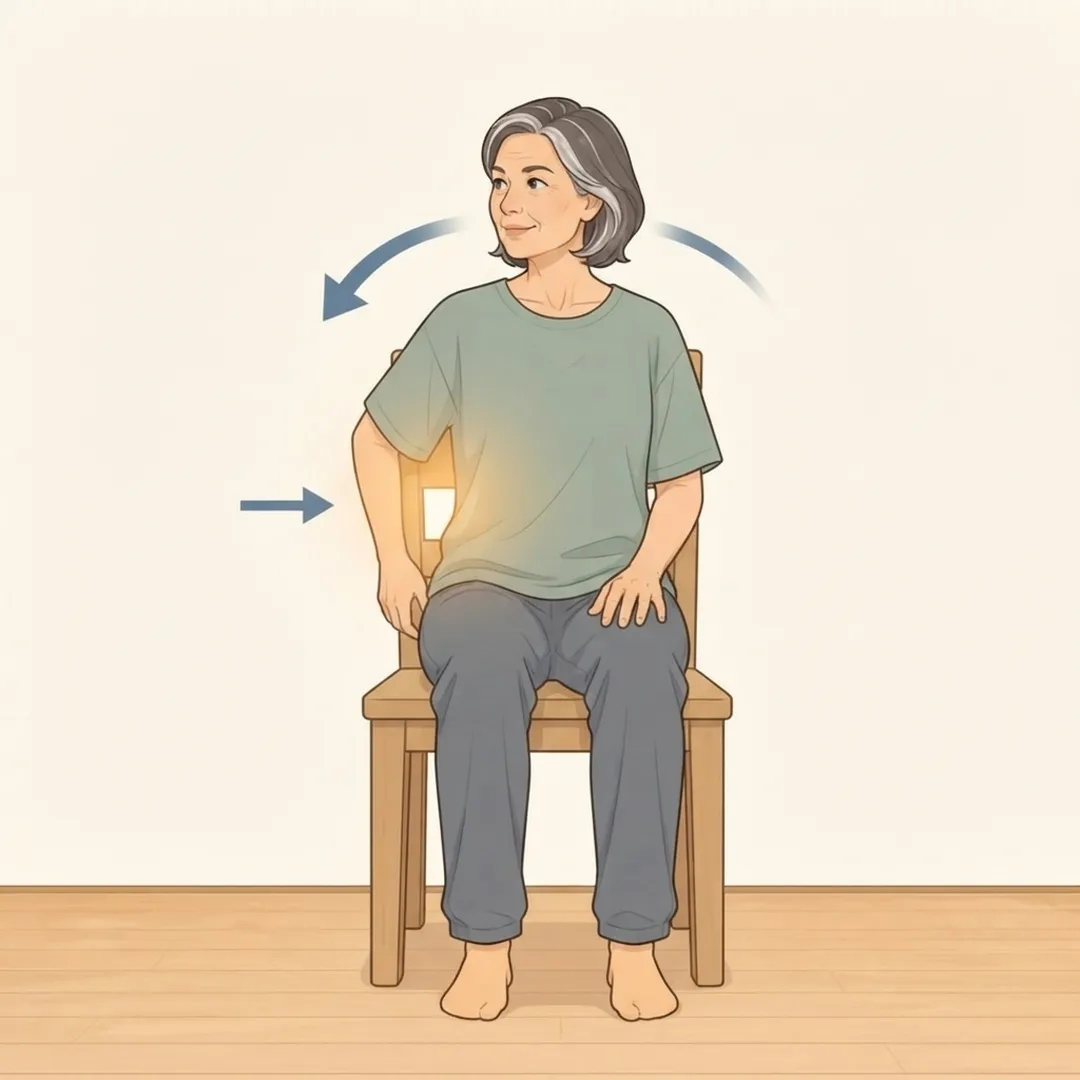
- Sit tall with your feet flat and your knees pointing forward.
- Place one hand on the opposite knee and the other hand on the chair back or the side of the seat.
- Breathe in to sit tall, then breathe out and turn your shoulders gently towards the chair back.
- Let your head follow last, and keep the turn small and easy.
- Hold for three breaths, return to the middle, and repeat on the other side. Skip this one if you have osteoporosis and have been told to avoid twisting.
Seated knee lift
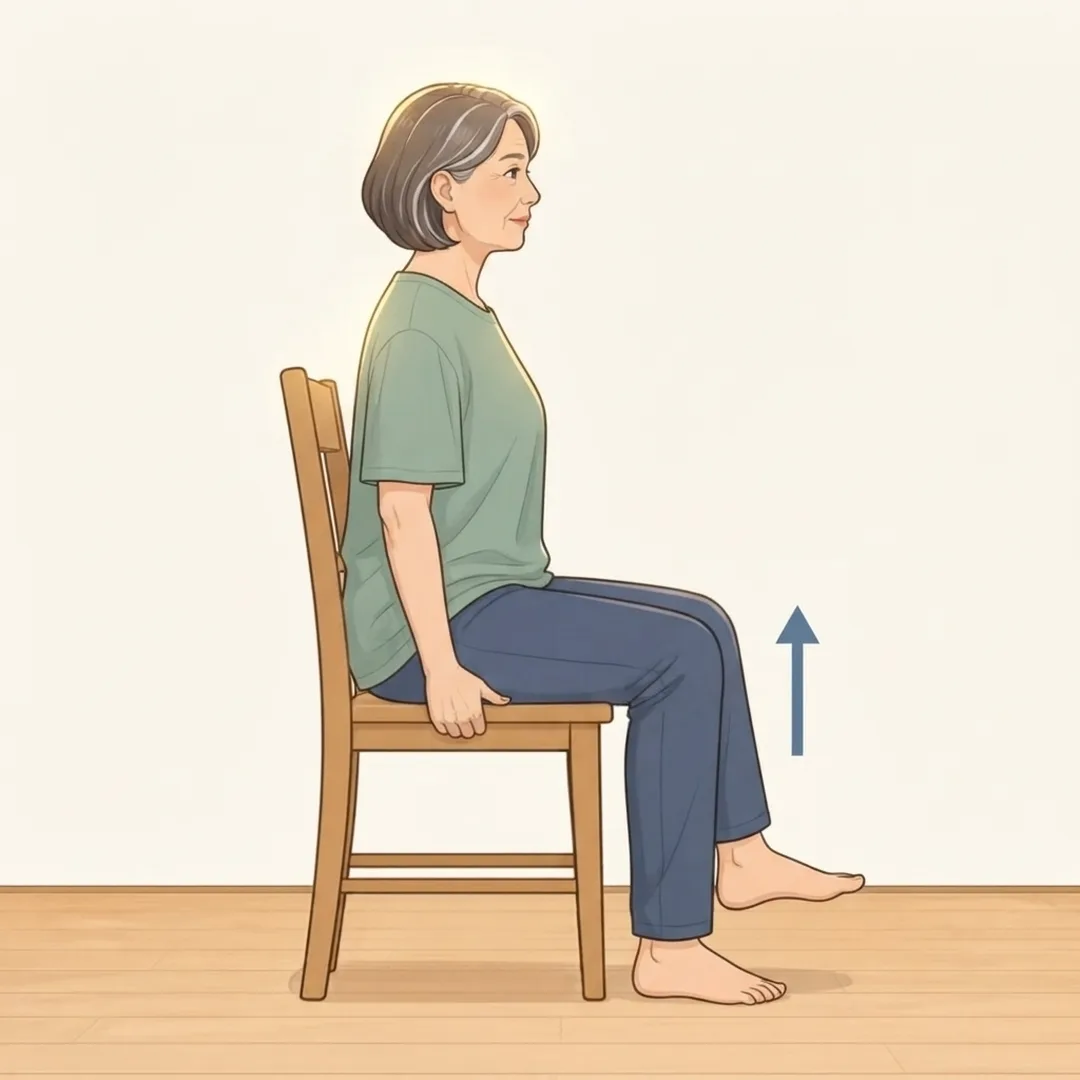
- Sit tall and hold the sides of the seat lightly.
- Lift one knee a few centimetres so the foot leaves the floor, without leaning back.
- Hold for a slow count of three, then lower it with control.
- Alternate legs, eight to ten on each side.
- To make it easier, slide the foot along the floor instead of lifting it.
Sit to stand
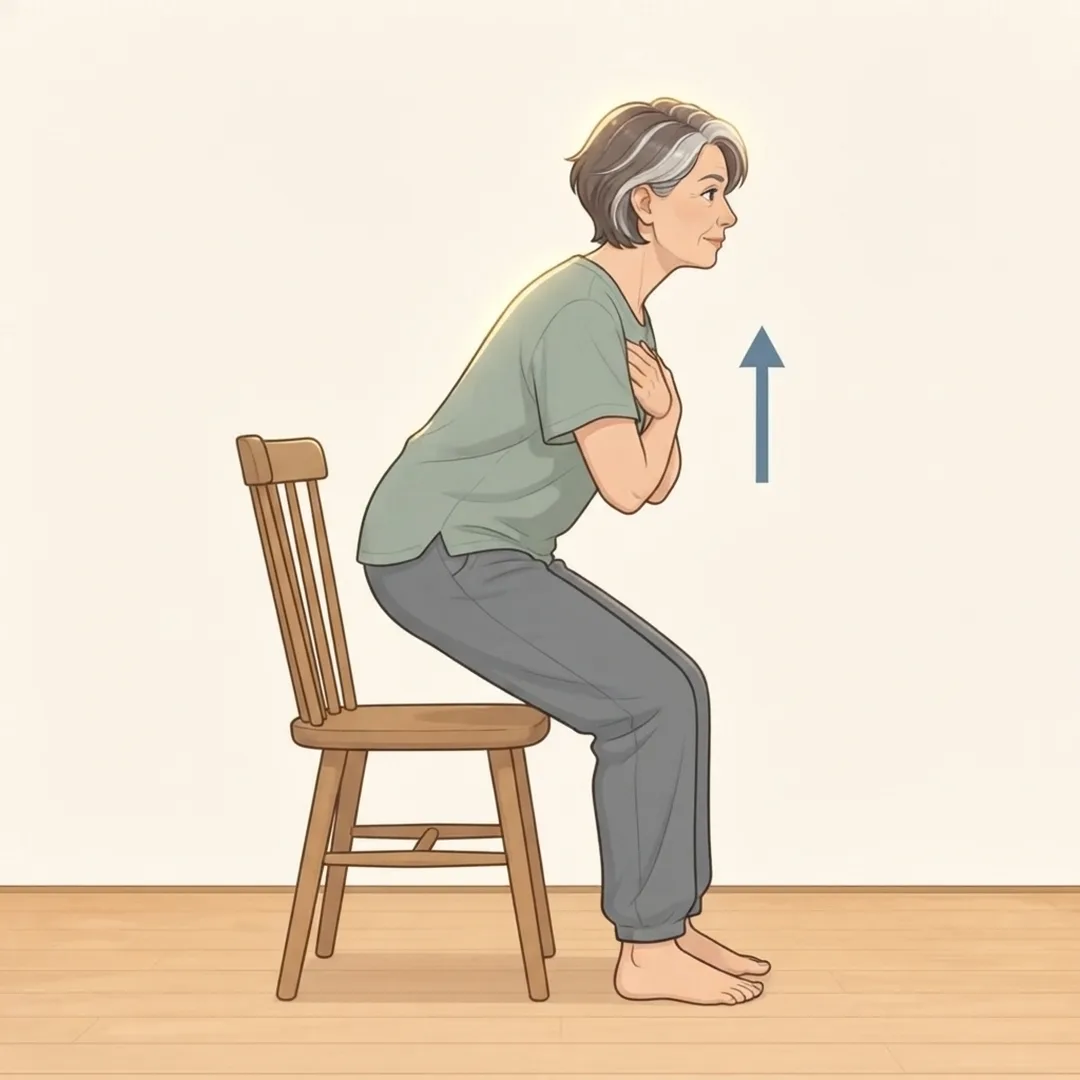
- Sit near the front of the chair with your feet flat and a little behind your knees.
- Cross your arms over your chest, or rest your hands on your thighs if you need help.
- Lean forward so your nose comes over your toes, then push through your heels to stand up.
- Stand tall for a moment, then sit back down slowly, as if the chair were further away than it is.
- Repeat five to ten times. Put the chair against a wall so it cannot slide.
The sit to stand is the closest of the five to the chair stand test the research measured, so it is worth keeping even on days you skip the rest.
Is this right for you?
Not sure if yoga classes are right for you?
Tick anything that sounds like you. We will read it back honestly and tell you where to start, even if that is somewhere else.
Opens WhatsApp with your answers filled in. Nothing is sent until you press send there.
Choosing a chair and staying safe in chair yoga
The right chair matters more than any other piece of kit. Look for:
- a sturdy chair with no wheels that does not wobble or tip
- no armrests, so your arms and hips have room to move
- a seat height that lets your feet rest flat on the floor with your knees roughly level with your hips
- the chair placed against a wall for the standing and sit to stand moves
Stop and rest if you feel dizzy, short of breath, or have chest pain, or if a pose causes sharp or new joint pain. Mild stretching discomfort is normal; pain is not.
Check with your doctor before starting if you have had recent surgery on your back, hip, knee or shoulder, have osteoporosis or a past spinal fracture, have blood pressure that is not well controlled, or are pregnant. If pain in your back, neck or a joint is the reason you are looking at chair yoga, it can help to have it assessed first so you know which movements to leave out for now. At our clinic that assessment is done by a chiropractor or a physiotherapist, and you can read more about how we approach back pain.
Chair yoga classes at our Cheras clinic
We run a Chair Yoga class on Saturday afternoons at 4:00pm, inside our clinic at Sunway Velocity in Cheras. It alternates week by week with Posture Core Yoga, a stronger class done on the mat.
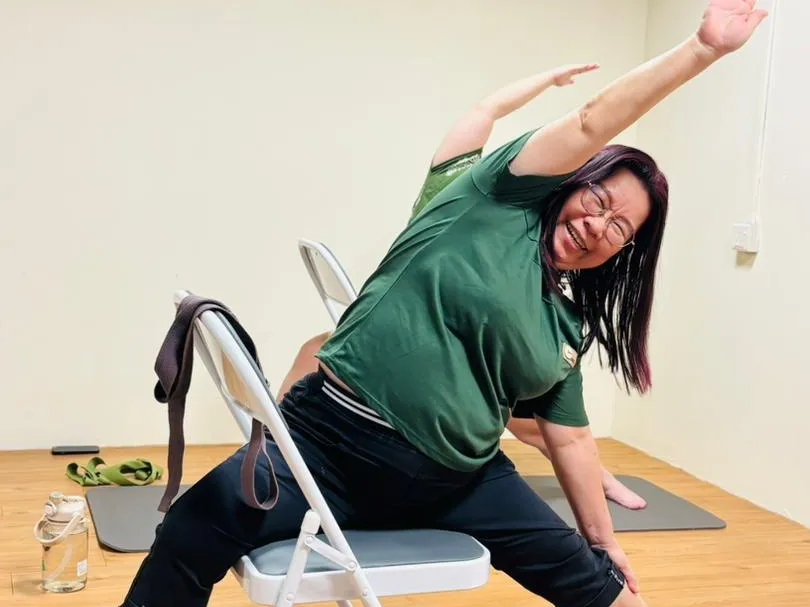
The class is small, so the instructor can adapt each pose for you. Everything is done seated or with the chair for support, and nobody has to get down to the floor. It is open to anyone, not only patients of the clinic, and a chiropractor or physiotherapist is in the building if something starts to hurt. Plenty of people come with a family member, which suits the research finding that chair yoga sticks better when it is done together.
Fees, class packs and which Saturday each class runs are on our Chair Yoga and Posture Core Yoga classes page. If you are booking for a parent, or are not sure the class suits you, message us on WhatsApp with a little about age, mobility and anything that hurts, and we will tell you honestly whether to start with Chair Yoga.
Frequently asked questions
Is chair yoga only for seniors?
No. It is popular with older adults, but beginners, pregnant women, people with joint pain and office workers all use it. Anyone who would rather not get down to the floor can join a chair yoga class.
How often should I do chair yoga?
Two or three times a week is a sensible aim. The World Health Organization suggests adults aged 65 and over do activity that works on balance and strength on three or more days a week, and chair yoga can be one of those days.
Can chair yoga help with weight loss?
Only a little on its own. Chair yoga burns fewer calories than brisk walking or swimming. It is better thought of as a way to build strength and stay mobile, alongside eating well and moving more through the day.
Can I do chair yoga with knee pain?
Often, yes, because the chair takes weight off the knees. Keep movements within a comfortable range and skip any pose that makes the knee worse. If the knee is swollen, locking or giving way, get it assessed first.
Can I do chair yoga at home?
Yes, with a sturdy chair placed against a wall. The catch is keeping it up: in one trial fewer than half of older adults kept practising alone at home, so a class or a friend to practise with can help.
Chair yoga: the bottom line
Chair yoga is yoga with a chair for support, so the floor is never a barrier. It suits older adults, beginners and anyone with stiff joints, and it can build useful strength and ease some joint pain while you keep it up. The benefits fade when you stop, and balance needs its own practice, so choose a routine you will actually keep, ideally with other people. Try the five poses above at home, and if you would like a class in Cheras, message us on WhatsApp and we will tell you which Saturday Chair Yoga runs.