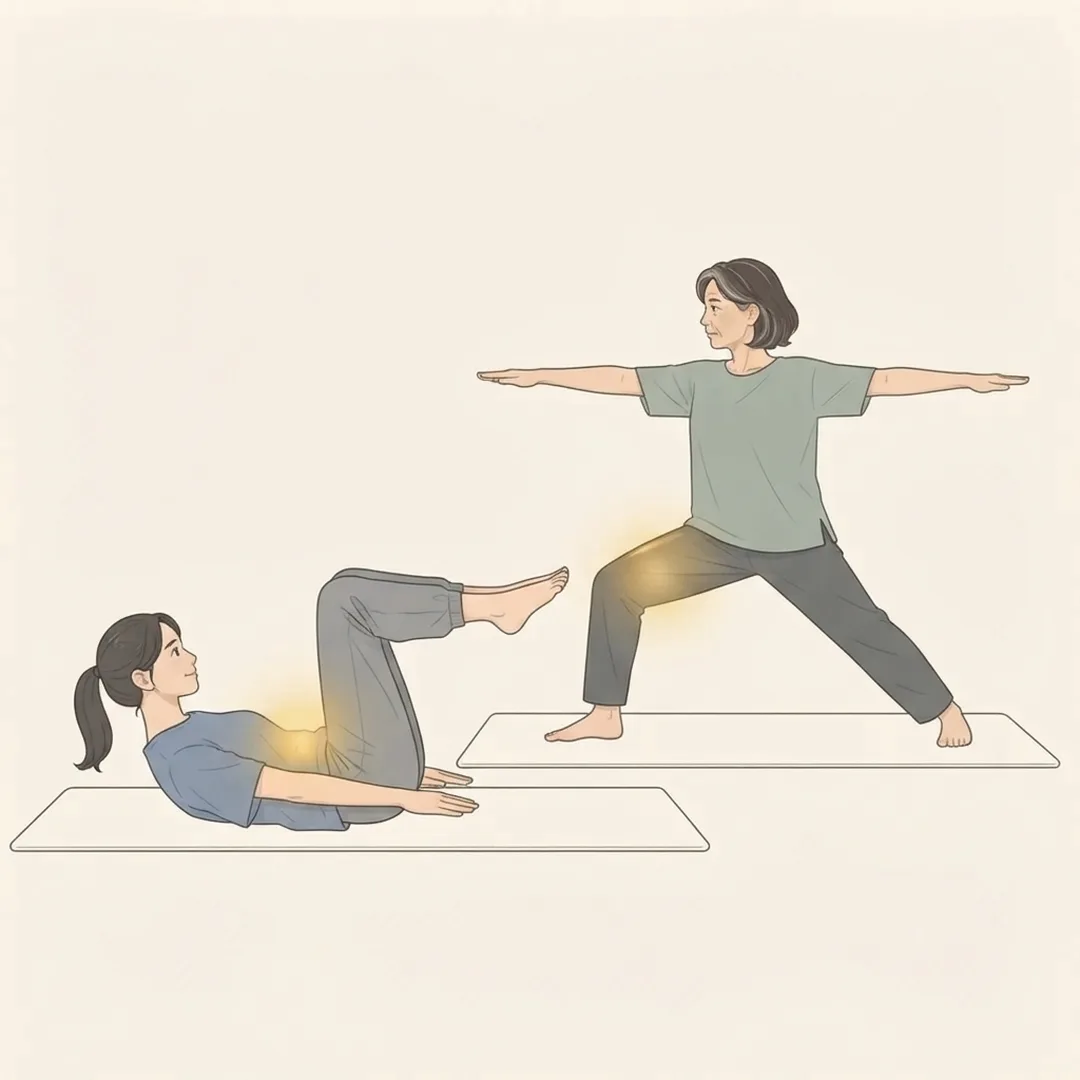
Pilates and yoga both happen on a mat and both promise a stronger, looser body, so it is easy to think of them as two names for the same class. They are not. Pilates builds control of your core through slow, repeated movements. Yoga holds and flows through poses, with more stretch and more attention on the breath. If your back is the reason you are asking, the research does not crown either one, so the better pick is the one you will actually keep going to. We run yoga classes at our clinic in Cheras, not Pilates, and this guide tries to be fair to both.
Key takeaways
- What is the main difference between Pilates and yoga?
- Pilates builds control of your core through slow, repeated movements with the trunk held steady. Yoga moves into poses and holds them for a few breaths, or flows between them, with more stretch and more focus on the breath.
- Is Pilates or yoga better for back pain?
- Neither has a clear lead. Reviews of the research found both help long standing low back pain a little compared with no exercise, and neither did clearly better than other kinds of exercise. The one you keep doing matters most.
- Is Pilates or yoga better for posture and core strength?
- Pilates is built around core control, so it leans that way, but a strength focused yoga class works the core too. If posture is the goal, how you sit and work all day matters as much as either class.
- Which is better for a beginner who is not flexible?
- Pilates usually asks for less range of movement at the start. A beginner or chair yoga class is also a fair place to begin, because poses can be adapted with a block or a chair.
- Can I do Pilates and yoga together?
- Yes. Many people do Pilates for strength on one day and yoga for stretch on another. Tell each instructor about any back, neck or joint problem before the class starts.
What is the difference between Pilates and yoga?
The main difference is how a movement is done. In Pilates you repeat a small, controlled movement several times while holding your trunk steady. In yoga you move into a pose and stay there for a few breaths, or flow from one pose into the next.
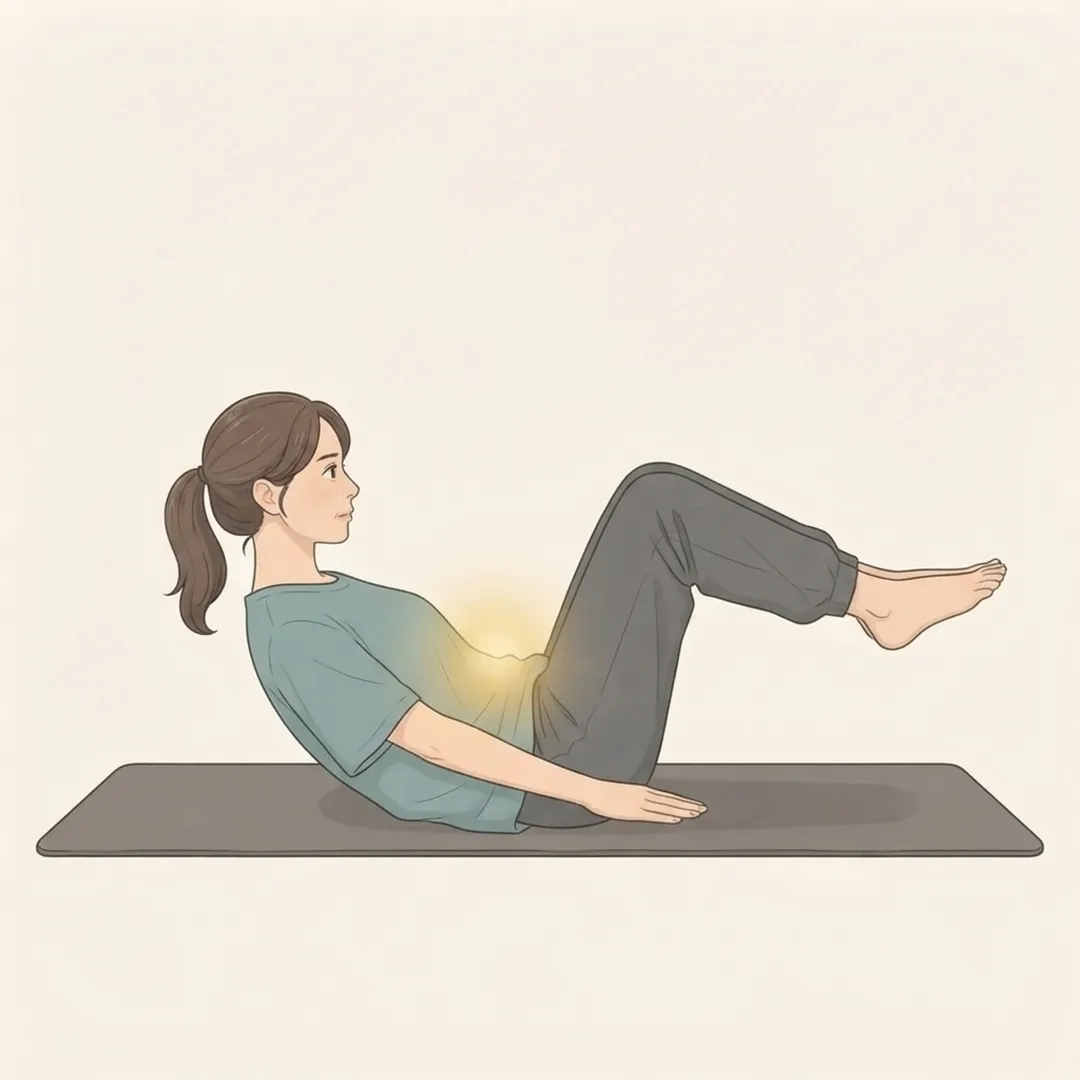
Pilates
Small, controlled movements repeated with the trunk held steady.
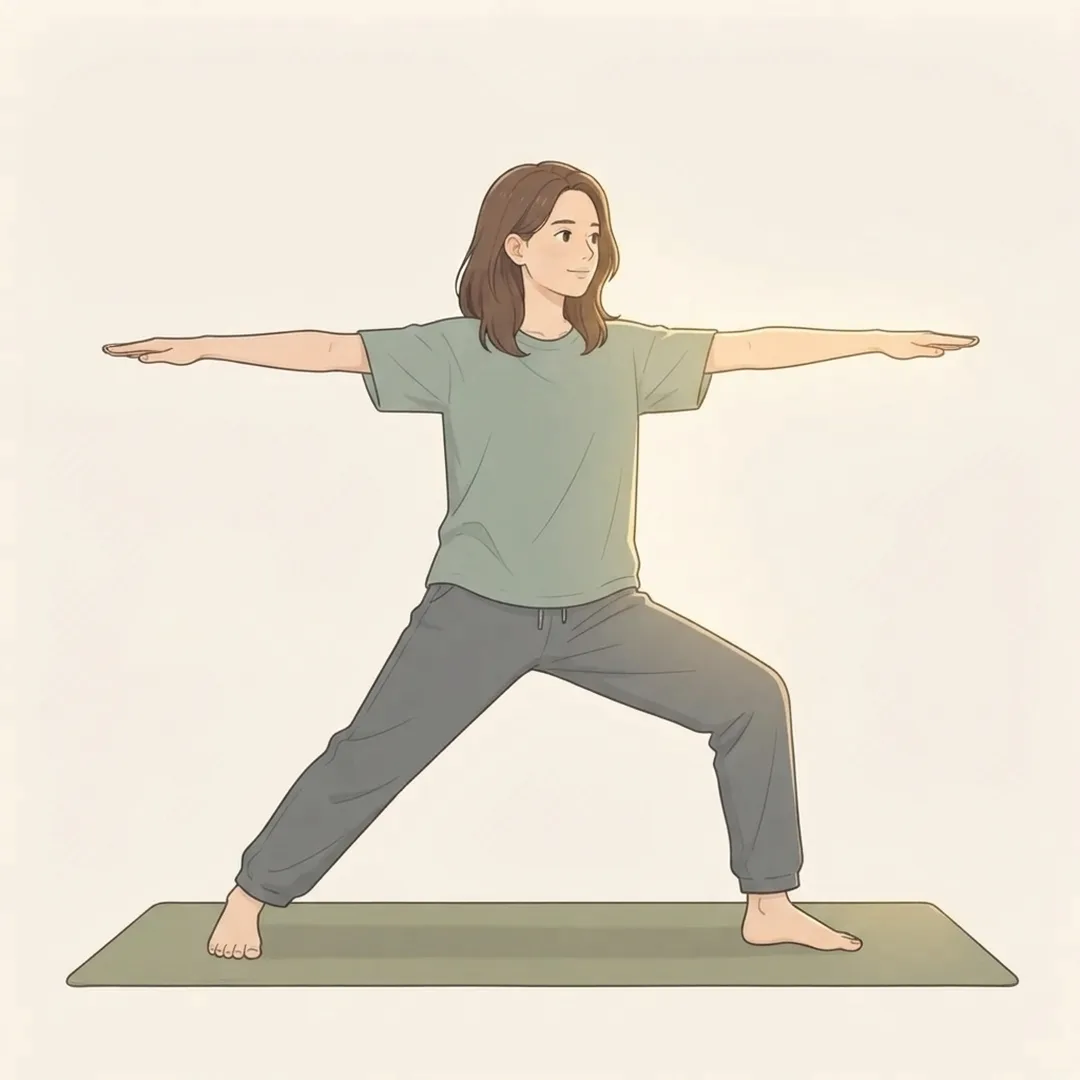
Yoga
A pose held for a few slow breaths, or flowed into the next.
The rest of the differences follow from that.
| Pilates | Yoga | |
|---|---|---|
| Where it comes from | Developed by Joseph Pilates, a German trainer, in the early 20th century | An ancient practice from India; most gym and studio classes today are modern styles built on its poses |
| What a class works on | Core control, a steady spine and precise movement | Flexibility, strength and balance, often with time to slow down and relax |
| How a movement works | Five to ten slow repetitions, then on to the next exercise | Holding a pose for several breaths, or moving through a sequence |
| The breath | Timed to each repetition to help brace the core | Slow and steady, often a focus of the class in itself |
| Equipment | A mat, or a reformer, which is a sliding machine with springs and straps | A mat, with blocks, straps or a chair for support |
| How it tends to feel | A deep burn in the stomach and hips from small movements | A stretch that builds as you hold, with a pace that depends on the style |
There is plenty of overlap too. A strength focused yoga class will work your core hard, and a good Pilates class will leave you more flexible. Both are low impact, both can be scaled for beginners, and both ask you to pay attention to how you move rather than how much you lift.
Pilates vs yoga for back pain: what the research shows
For long standing low back pain, both Pilates and yoga do better than doing nothing, and neither has been shown to beat other kinds of exercise. That is the honest summary of the two best reviews on the question, and it is more useful than it sounds.
A Cochrane review of Pilates for low back pain pooled ten trials. Compared with little or no exercise, Pilates reduced pain by a small to medium amount in the following weeks and months, but the evidence was rated low to moderate quality. When Pilates was compared with other exercise, there was no clear difference in how much people's back pain limited their day.
A Cochrane review of yoga for chronic low back pain found much the same. Yoga improved pain and function a little compared with no exercise, small enough that the authors judged it clinically unimportant, and there was probably little or no difference between yoga and other back exercise.
What this means for you:
- Either one is a reasonable choice for a back that aches from too little movement.
- Neither is a fix on its own. Think of them as ways to keep moving and get stronger.
- The exercise you keep doing every week matters more than which one you pick. If you dread a class, it will not help your back from the sofa.
If your back pain is the main thing you want to work on at home, our lower back pain exercises guide splits the moves by how bad the pain is today.
Pilates or yoga: which suits you, by situation
The right answer depends less on which is better and more on what you want and what your body can do right now. This table is a starting point, not a rule.
| Your situation | Leans towards | Why |
|---|---|---|
| Stiff back and neck after a week at a desk | Either | Both get you moving after long hours in one position. Yoga gives more stretch, Pilates more strength through the trunk |
| You want a stronger core and better posture | Pilates, or a strength focused yoga class | Pilates is built around core control; some yoga classes are too |
| You are not very flexible | Pilates, or a beginner yoga class | Pilates asks for less range of movement at the start. Many yoga poses can be adapted with a block or a chair |
| You are older, or getting down to the floor is hard | Chair yoga, or chair or reformer Pilates | Both keep you off the floor and give you something steady to hold |
| You are pregnant | A class made for pregnancy, in either | Check with your doctor first, and tell the instructor how far along you are so lying and twisting positions can be adapted |
| You are coming back from an injury | Pilates with a well trained instructor, after an assessment | Pilates is widely used in rehab, but the plan should start from what was injured |
| Stress, tight shoulders and poor sleep | Yoga | Slow breathing and time to relax are part of most classes |
Many people do both, Pilates for strength on one day and yoga for stretch on another, and that is a sensible mix. If posture is the real goal, our posture correction programme looks at how you actually sit and work, which a class cannot see.
Is this right for you?
Not sure if yoga classes are right for you?
Tick anything that sounds like you. We will read it back honestly and tell you where to start, even if that is somewhere else.
Opens WhatsApp with your answers filled in. Nothing is sent until you press send there.
Mat Pilates, reformer Pilates and yoga styles for beginners in KL
Both Pilates and yoga come in very different versions, so the class name tells you more than the word Pilates or yoga on its own.
Pilates comes in two main forms. Mat Pilates uses your own body weight, sometimes with a small ball, ring or band. It is the cheaper way in and you can carry it home. Reformer Pilates uses a sliding machine with springs that can add resistance or help you through a movement, which makes it easier to adjust for beginners and harder for the experienced. Reformer classes usually cost more because of the equipment and smaller groups. You may also see clinical Pilates, which is usually run by a physiotherapist and aimed at people coming back from injury.
Yoga comes in many styles, and the pace varies a lot.
- Hatha is usually slower, with poses held and explained. A good first class.
- Vinyasa or flow links poses together with the breath and can feel like a workout.
- Yin holds poses for minutes at a time and is mostly about stretch and stillness.
- Hot yoga is done in a heated room. If you are new, have a heart or blood pressure condition, or are pregnant, start somewhere cooler.
- Chair yoga is done seated or beside a chair, for anyone who prefers not to get down to the floor.
Whichever you choose, tell the instructor you are new and mention any back, neck or joint problem before the class starts. A good instructor will offer a different version of a move rather than let you push through it.
When to get your back checked before starting Pilates or yoga
Most people with an ordinary stiff back can start either class straight away. Get your back assessed first if any of these apply:
- pain, numbness or tingling that spreads into a leg or an arm
- back pain that is new, getting worse, or wakes you at night
- pain after a fall, a knock or a road accident
- weakness in a leg, or changes in bladder or bowel control, which needs urgent medical care
- osteoporosis or a past spinal fracture, since deep forward bends and loaded twists may not be suitable
- a recent slipped disc, until the worst of the pain has settled
At our clinic in Cheras, an assessment looks at how your spine moves, which joints and muscles are involved and whether a nerve is irritated. From there we can tell you whether a class is a good idea yet, what to leave out for now, and whether a few sessions of physiotherapy would be a better place to start. You can read more about how we approach back pain at the clinic.
How yoga classes run at our Cheras clinic
We run yoga, not Pilates. Two small group classes alternate on Saturdays at 4:00pm, in a room inside the clinic at Sunway Velocity.
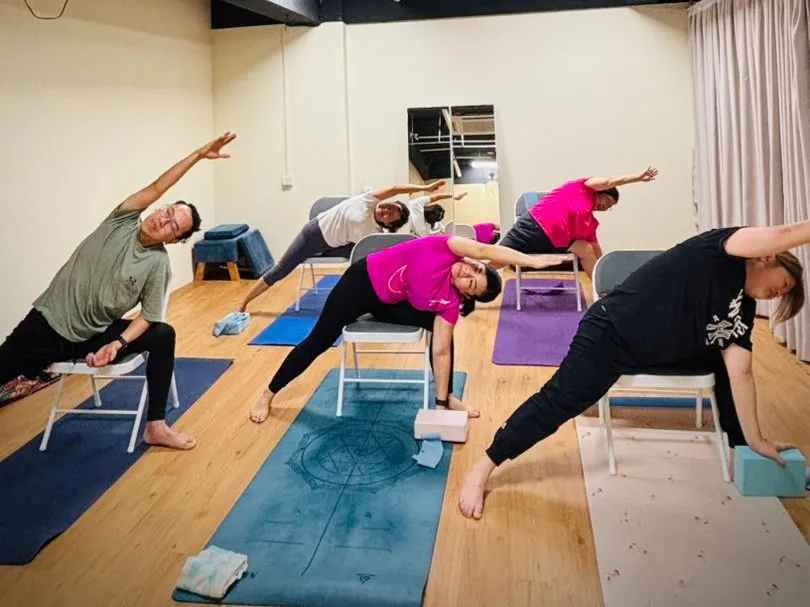
- Posture Core Yoga is the stronger of the two, built around the core, the hips and the muscles that hold your spine upright. If core strength is what draws you to Pilates, this is the closer match.
- Chair Yoga is gentle and done from or beside a chair, for seniors, beginners, pregnant women and anyone easing back into movement.
Both are small enough for the instructor to adjust poses for you, and a chiropractor or physiotherapist is in the building if something starts to hurt. Our yoga classes in Cheras page has the fees, the class packs and which Saturday each class runs. If you are unsure which suits you, send us your age, what you do all day and anything that hurts, and we will tell you which class to try first.
Frequently asked questions
Is Pilates harder than yoga?
It depends on the class. Pilates often feels harder on the stomach and hips because of the repeated small movements, while a fast flow or hot yoga class can feel harder overall. A beginner class in either should feel manageable.
Which is better for weight loss, Pilates or yoga?
Neither burns as many calories as brisk walking, cycling or swimming. Both can support weight loss as part of a wider routine, mainly by building strength and helping you stay active, but diet and overall movement matter more.
Can I do yoga or Pilates with a slipped disc?
Often yes, once the worst of the pain has settled and the movements are chosen with care. Deep forward bends and loaded twists may need to wait. If pain spreads down a leg or you notice numbness or weakness, get assessed before starting a class.
Is reformer Pilates better than mat Pilates?
Not better, just different. The reformer machine can add resistance or help you through a movement, which makes it easy to adjust. Mat Pilates costs less and can be done at home. Both train the same core control.
Does your clinic run Pilates classes?
No. We run two yoga classes on Saturday afternoons in Cheras: Posture Core Yoga, which focuses on the core and the spine, and Chair Yoga, which is gentler and done from a chair. If you want Pilates, choose a studio with well trained instructors and tell them about any back problem.
Pilates vs yoga: the bottom line
Pilates trains control of your core through small, repeated movements. Yoga holds and flows through poses with more stretch and more breath. For an ordinary aching back the research gives neither a clear lead, so choose the one that fits your body and your week, and keep going. If your back pain is new, spreading or getting worse, get it checked first. If you would like to try yoga in Cheras, message us on WhatsApp and we will tell you which Saturday to come.