
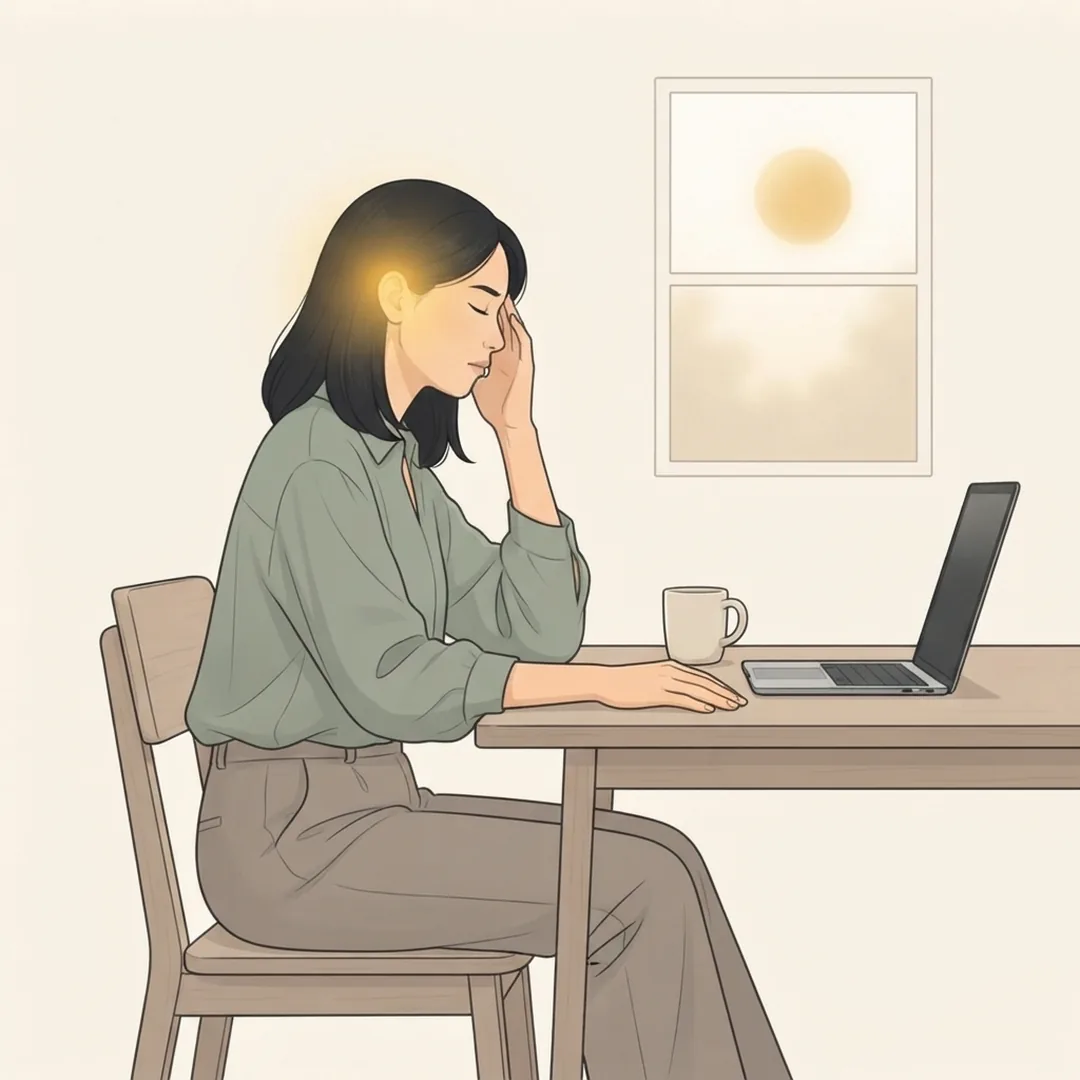
A migraine trigger is anything that makes an attack more likely to start: a short night, a skipped lunch, a stressful week, a hot afternoon. Most people with migraine can name one or two, but triggers are less straightforward than the usual top ten lists make them look. They tend to add up rather than act alone, they differ a lot from person to person, and some of what feels like a trigger is really the attack already beginning. This guide covers the most common migraine triggers and how often people report them, what is different about living with migraine in Malaysia, why neck pain is a confusing one, and how to find your own triggers with a simple diary.
Key takeaways
- What are the most common migraine triggers?
- Stress, hormonal changes, skipping meals, weather changes and disturbed sleep are the triggers people with migraine report most often. Strong smells, neck pain, bright light, alcohol, smoke and heat are also common.
- Do migraine triggers act alone?
- Usually not. Triggers tend to add up until they cross your personal threshold, which is why the same coffee or late night can be fine one week and set off an attack the next.
- Can a trigger actually be a warning sign?
- Yes. Food cravings, light sensitivity and a stiff neck can be early symptoms of an attack that has already started, so the thing you ate or saw before the headache may get blamed unfairly.
- Is neck pain a migraine trigger?
- It can be a trigger, an early warning sign, or a sign of a different headache that starts in the neck. A diary shows when it appears, and an assessment can check whether the neck is involved.
- How do I find my own migraine triggers?
- Keep a daily diary for six to eight weeks covering sleep, meals, drinks, stress, surroundings and warning signs, then look for what comes before attacks more often than before headache free days.
What is a migraine trigger?
A migraine trigger is a factor that pushes your brain past the point where an attack starts. Doctors often explain it as a threshold. Everyone with migraine has a level they can tolerate, and each trigger raises how close you are to it.
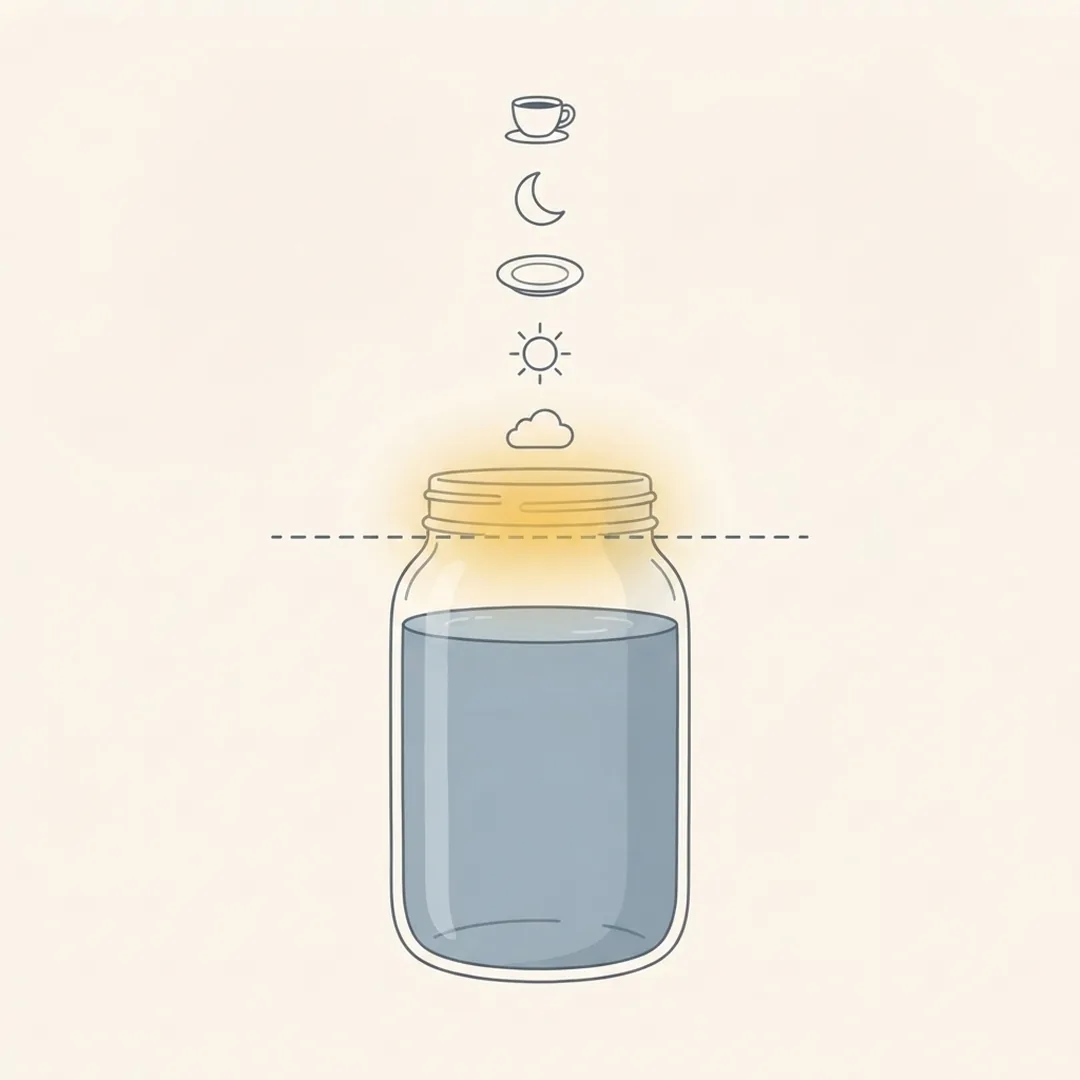
Picture a jar with a line near the top. A poor night's sleep adds some water. A missed meal adds more. A hot, glaring afternoon adds a little more. None of those alone may be enough, but together they reach the line and the attack starts. This is why the same cup of coffee or the same late night can be fine one week and set off a migraine the next.
The threshold also moves. Around a period, during a stressful month or while you are unwell, it can sit lower, so it takes less to reach it.
The most common migraine triggers, by how often people report them
Stress, hormonal changes and not eating are the triggers people with migraine report most often. In one study of 1,207 people with migraine, about three in four said at least one trigger played a part in their attacks. This is how often each trigger was reported:
| Trigger | People who reported it |
|---|---|
| Stress | 80% |
| Hormonal changes (women) | 65% |
| Not eating or skipping meals | 57% |
| Weather changes | 53% |
| Disturbed sleep | 50% |
| Perfume or strong smells | 44% |
| Neck pain | 38% |
| Bright or flickering light | 38% |
| Alcohol | 38% |
| Smoke | 36% |
| Sleeping in late | 32% |
| Heat | 30% |
| Particular foods | 27% |
| Exercise | 22% |
A few notes on reading this table:
- Stress often hits after it ends. Many people get their migraine on the first day of a holiday or the weekend after a deadline, when the pressure drops.
- Sleep works both ways. Too little sleep and sleeping in late both appear on the list. A regular wake time tends to matter more than the total hours.
- Hormonal migraine usually follows the menstrual cycle, most often in the days around a period, when oestrogen levels fall.
- Food is lower down than most people expect. Only about a quarter linked attacks to a particular food, and some of those links may be cravings rather than causes (more on that below).
Migraine triggers in Malaysia's heat, haze and routine
Several of the most reported triggers are part of daily life in Klang Valley, which is worth knowing when you try to read your own pattern.
- Heat and dehydration. A midday walk from the LRT, a car that has sat in the sun, or a long day outdoors can leave you more dehydrated than you realise. Carrying water and drinking before you feel thirsty is a simple habit to start with.
- Haze and smoke. Smoke was a trigger for about a third of people in the study above. During haze season, keeping windows closed, using an air purifier if you have one, and checking the Air Pollutant Index before planning outdoor time are reasonable steps.
- Missed or late meals. A meeting that runs into lunch, eating late after work, or the fasting month can all leave long gaps between meals. If you fast, a filling sahur and steady fluids at buka may help, and it is worth talking to your doctor about your migraine plan before Ramadan starts.
- Kopi and teh. Caffeine is complicated. A regular amount is fine for many people, but a sudden change can set off an attack. The person who drinks three cups on weekdays and none on Saturday morning may get a weekend headache from the drop, not from the coffee.
- MSG. Many people in Malaysia blame MSG. The research on this is weak and mixed, so it is better to check it in your own diary than to cut it out on reputation alone.
Trigger or warning sign? Why the two get confused
Some things that feel like migraine triggers are actually early symptoms of an attack that has already begun. Before the headache, many people go through a warning stage, sometimes called the prodrome, that can last hours or even a day.
Common warning signs include tiredness, yawning, trouble concentrating, mood changes, food cravings, a stiff neck and being more sensitive to light or smells. In a diary study of people who noticed warning signs, they predicted their headache correctly from about 72% of those warning entries.
This is how the mix up happens:
- You crave something sweet, eat chocolate, and get a migraine a few hours later. The craving was part of the attack, so the chocolate gets blamed.
- Light starts to feel harsh in the afternoon, and by evening you have a migraine. The sensitivity was an early symptom, so the office lighting gets blamed.
Telling the two apart matters. If you avoid something that was never a trigger, you give up a food or an activity for nothing. If you learn your warning signs, you can act early, for example by taking the medicine your doctor has prescribed sooner, resting, or cancelling something stressful.
Is neck pain a migraine trigger or an early warning sign?
Neck pain can be either, which is why it confuses so many people. Neck pain was reported as a trigger by 38% of people in the large trigger study. In the diary study, a stiff neck was among the most common warning signs, showing up in half of the attacks that came with a warning.
So when your neck gets tight before a migraine, there are a few possibilities:
- It is part of the migraine itself, and the neck stiffness is an early symptom of an attack that has already started.
- Your neck adds to your threshold, so a stiff, overloaded neck makes an attack more likely on days when other triggers are around.
- It is a different headache altogether. A cervicogenic headache starts in the joints and muscles of the upper neck and is felt in the head. It tends to stay on one side, comes on with certain neck positions or long hours at a desk, and usually comes with a restricted neck turn. A tension headache is another common lookalike.
Plenty of people have more than one of these. A diary helps you notice whether the neck pain comes before attacks, during them, or on its own days. An assessment can then check whether the neck is involved at all. That is the part a chiropractor can look at. Migraine itself is a neurological condition, and its diagnosis and medical management belong with your doctor. You can read more about how we approach this on our migraine and neck headache page.
Is this right for you?
Not sure if we can help with migraine headache and neck headache?
Tick anything that sounds like you. We will read it back honestly and tell you where to start, even if that is somewhere else.
Opens WhatsApp with your answers filled in. Nothing is sent until you press send there.
How to find your own migraine triggers with a diary
A migraine diary is the most reliable way to find your own triggers, because your pattern is unlikely to match anyone else's. When researchers looked at 90 day diaries from 326 people with migraine, they found an average of four factors linked to each person's attacks, and in 85% of people with at least one link, that combination was unique to them.
Keep a diary for six to eight weeks, or for at least two or three menstrual cycles if your migraines seem linked to your period. Write it at the same time each day, including the days with no headache, because those are what you compare against.
| What to log | Examples |
|---|---|
| Sleep | Time you went to bed and woke up, and how well you slept |
| Meals | Times you ate, and any long gaps |
| Drinks | Cups of kopi, teh or other caffeine, alcohol, and water |
| Stress | A simple score out of 10, and anything unusual that day |
| Surroundings | Heat, haze, bright screens, strong smells, long drives |
| Body | Your period, neck stiffness, how much you moved |
| Warning signs | Tiredness, cravings, yawning, light sensitivity |
| The attack | Start time, how bad it was, how long it lasted, any medicine you took |
When you look back over the weeks, check what came before your attacks more often than it came before your headache free days. A factor that shows up once is a coincidence. One that shows up again and again is worth discussing with your doctor. Some people find that a suspected trigger does not hold up at all once it is written down.
Managing migraine triggers without avoiding everything
The aim is to keep your threshold high rather than to avoid every possible trigger. Trying to cut out every food, smell and late night on a list can make life smaller and add stress, which is itself the most common trigger.
Habits that tend to help include:
- A steady routine. Waking, eating and sleeping at roughly the same times, weekends included.
- Regular meals and water. No long gaps, especially on busy or hot days.
- Steady caffeine. If you drink it, keep the amount similar every day. If you want to cut down, do it slowly over a couple of weeks.
- Regular, moderate exercise. Walking, swimming or yoga a few times a week. If hard exercise sets off attacks, build up gradually and warm up well.
- Ways to come down from stress. Slow breathing, a walk, or simply protecting your sleep during busy weeks.
- Care with painkillers. Taking headache medicine on many days a month can make headaches more frequent over time. If you need it on most days, speak to your doctor rather than cutting down on your own.
Working on triggers may mean fewer or milder attacks for some people, but it rarely stops migraine completely. Many people also need medicine from their doctor, and there is no failure in that.
When a headache needs a doctor, not a trigger diary
Some headaches need medical attention the same day. See a doctor or go to an emergency department if you have:
- a sudden, severe headache that reaches its worst within seconds or a minute
- headache with fever, a stiff neck and feeling unwell, or a rash
- headache with weakness, numbness, slurred speech, confusion or loss of vision
- a headache after a fall or a knock to the head
- a new kind of headache after the age of 50, or one that keeps getting worse over days or weeks
The full list is on our migraine page. If your attacks come in short, very severe bursts around one eye at the same time each day, that pattern points away from migraine, and our guide to migraine vs cluster headache explains the difference.
Frequently asked questions
Can stress alone trigger a migraine?
It can, and it is the trigger people report most often. Many people also notice attacks when stress drops suddenly, such as the first day of a holiday or the weekend after a deadline, so keeping sleep and meals steady during busy weeks may help.
Is chocolate a migraine trigger?
Probably less often than people think. A craving for sweet food is a common early warning sign of an attack, so the chocolate eaten during that craving often gets the blame. A diary can show whether it is a real trigger for you.
Does coffee trigger migraines?
For some people a lot of caffeine does, but a sudden drop is often the bigger problem. Keeping your daily amount steady, and cutting down slowly over a couple of weeks if you want to, tends to work better than stopping overnight.
Can hot weather or haze trigger a migraine?
For many people, yes. Heat, weather changes and smoke are all commonly reported triggers. Drinking water before you feel thirsty, avoiding the hottest part of the day and keeping indoor air clean during haze season are reasonable steps.
Does neck stiffness before a migraine mean my neck is causing it?
Not necessarily. A stiff neck is one of the most common early symptoms of a migraine attack, so it may be part of the migraine itself. It can also add to your threshold, or point to a headache that starts in the neck. An assessment can help tell these apart.
Migraine triggers: the bottom line
Migraine triggers are real, but they are personal and they usually add up rather than act alone. Stress, hormones, missed meals, weather and poor sleep top the list, and heat, haze and long gaps between meals are worth watching in Malaysia. Some apparent triggers, including neck stiffness and food cravings, may be the first signs of an attack. A six to eight week diary is the clearest way to see your own pattern, and steady habits usually help more than avoiding everything. If your neck is often part of the picture, message us on WhatsApp and we can arrange an assessment at our Cheras clinic to check whether it is involved.