

Cluster headache and migraine are two different headache disorders, and the quickest way to tell them apart is the clock. A cluster headache attack usually lasts between 15 minutes and three hours, sits in or around one eye, and tends to arrive at the same time of day, day after day, for weeks at a stretch. A migraine attack usually lasts from a few hours to three days, often throbs, and tends to bring nausea or a dislike of light and noise. During a cluster headache most people cannot keep still. During a migraine most people want to lie still in a dark room. Both get mistaken for sinus trouble surprisingly often, which is part of why cluster headache can take years to be diagnosed.
Cluster headache is a condition for your doctor, not a chiropractor, and we say that up front. This post is here to help you recognise the pattern and get to the right person sooner. If you are trying to sort out how migraine differs from tension and neck headaches instead, that comparison lives on our migraine page.
Key takeaways
- What is the main difference between cluster headache and migraine?
- Attack length and timing. A cluster headache attack usually lasts 15 minutes to 3 hours and often comes at the same time each day for weeks. A migraine attack usually lasts 4 hours to 3 days and has no fixed clock.
- Is cluster headache as common as migraine?
- No. Cluster headache affects roughly 1 in 1,000 people over a lifetime, mostly men, while migraine is far more common and affects more women than men.
- How can I tell them apart during an attack?
- Restlessness plus a red or watering eye or a blocked nostril on the side of the pain points towards cluster headache. Wanting to lie still in a dark, quiet room, often with nausea, points towards migraine.
- Can a chiropractor help with cluster headache?
- No. Chiropractic does not treat cluster headache. It is a neurological condition that needs a doctor, often with a neurologist involved, and the main options are prescribed.
- When should I see a doctor?
- For any headache that might be cluster headache. Go to an emergency department for a first ever drooping eyelid or smaller pupil, or a sudden, severe headache unlike any before.
Cluster headache vs migraine at a glance
Here are the two side by side, with a third column for a headache caused by a genuine sinus infection, because that is what both get mistaken for most often.
| Cluster headache | Migraine | Headache from a sinus infection | |
|---|---|---|---|
| How long one attack lasts | 15 minutes to 3 hours | 4 hours to 3 days | Days, for as long as the infection lasts |
| When it comes | Often the same time each day or night, in bouts lasting weeks or months | No fixed clock | During or just after a cold |
| Where it hurts | One side only, in or around the eye or temple | Often one side, sometimes both | Cheeks, forehead and around the nose |
| What you do during it | Pace, rock or fidget, unable to settle | Lie still somewhere dark and quiet | Carry on, feeling generally unwell |
| Eye and nose signs | Red or watering eye, drooping eyelid, blocked or runny nostril, all on the side of the pain | Less typical. Nausea and sensitivity to light and sound are more usual | Thick, discoloured nasal discharge, sometimes with fever |
| Who it mostly affects | About 1 in 1,000 people, mostly men, usually starting between 20 and 40 | Far more people, more often women | Anyone with a sinus infection |
| Who to see first | Your doctor, who may refer you to a neurologist | Your doctor, for the diagnosis | Your doctor |
Real headaches do not always read like a textbook, and some people have both cluster headache and migraine. Use the table to describe your headaches clearly to a doctor, not to diagnose yourself.
How cluster headache timing differs from migraine
Cluster headache keeps time in a way migraine almost never does. Attacks tend to come at the same hour, often at night, and can wake you from sleep. During an active period they range from one every other day to as many as eight in a day. These active periods, called bouts or cluster periods, usually run for weeks or months and are followed by a break that can last months or years. That pattern of attacks clustering together is where the name comes from. For about 10 to 15% of people the breaks never come, which doctors call chronic cluster headache.
Alcohol is a well known trigger, but mostly during a bout. A drink that sets off an attack in the middle of a cluster period usually does not during the break.
Migraine works differently. An attack builds over time, lasts hours or days, and rarely comes more than once a day. Triggers vary from person to person (sleep, hormones, missed meals and stress are common ones), and there is usually no seasonal or clockwork rhythm to it.
Pacing or lying still: how a cluster headache and a migraine feel during an attack
The clearest difference during an attack is what you do with your body. Cluster headache pain is severe, often described as sharp, burning or boring into the eye, and it makes people restless. Many pace the floor, rock, or press on the eye, because lying down makes it feel worse. A migraine headache is usually throbbing, gets worse with movement, and makes most people want to lie still in a dark, quiet room.
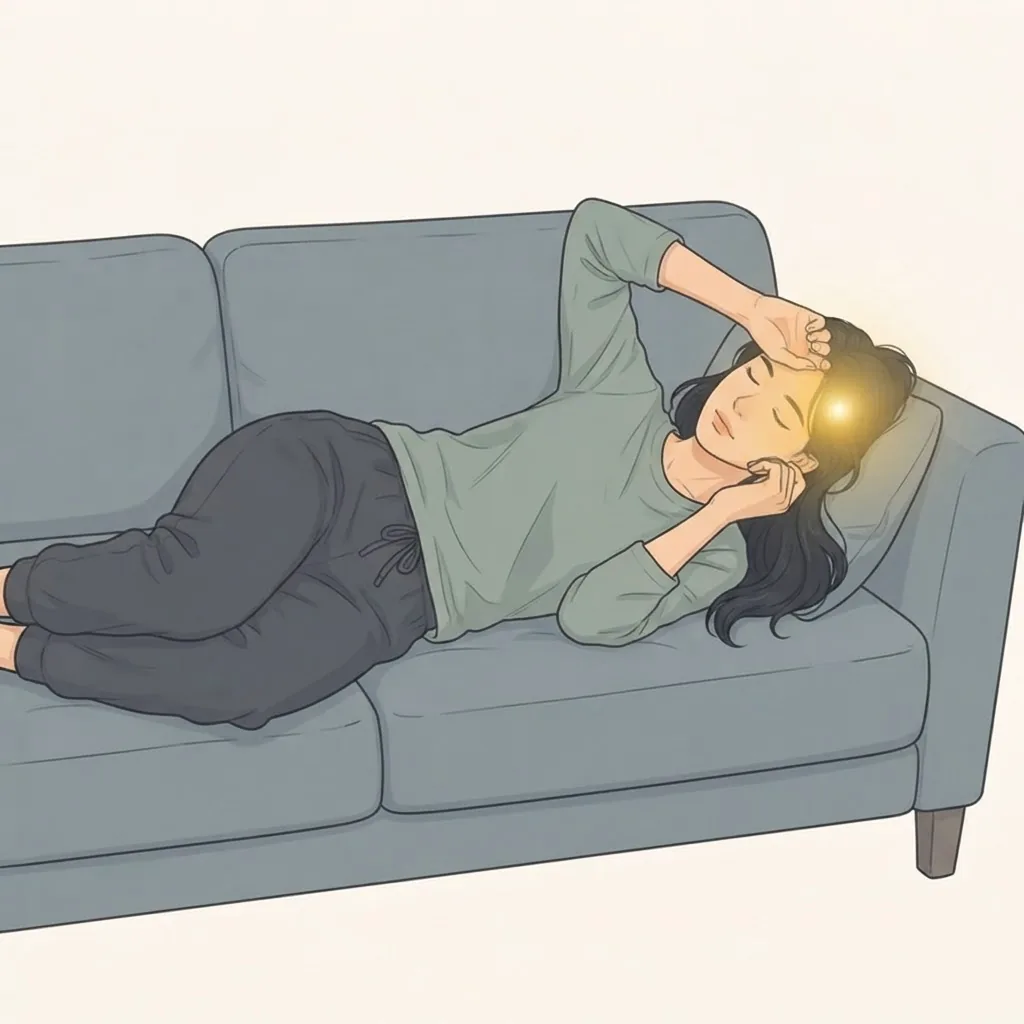
The other signs differ too. Cluster headache comes with changes on the same side as the pain: a red or watering eye, a smaller pupil, a drooping or puffy eyelid, a blocked or runny nostril, and sometimes a sweaty forehead. Migraine is more likely to bring nausea or vomiting, sensitivity to light and sound, and for some people an aura (visual changes such as zigzag lines or blind spots) in the half hour or so before the pain.
There is overlap. Some people with cluster headache feel sick or dislike bright light during an attack, and some people with migraine get a blocked nose. That overlap is one reason a doctor asks about the whole picture rather than any single symptom.
Why cluster headache and migraine both get mistaken for sinus headache
Both can bring a blocked or runny nose, a watering eye, or pressure around the eye and cheek, so many people reasonably assume their sinuses are to blame. The research suggests that assumption is often wrong. In a Dutch survey of more than 1,100 people with cluster headache, a third had seen a dentist and a third an ear, nose and throat specialist before getting the right diagnosis, and the median wait for that diagnosis was three years. In a separate study of almost 3,000 people with a history of "sinus headache" and no sign of infection, 88% turned out to meet the criteria for migraine-type headache.
A headache from a real sinus infection usually follows a cold and comes with thick, discoloured mucus and sometimes a fever. If you get "sinus headaches" again and again without any of that, it is worth asking your doctor whether migraine or cluster headache could be the actual cause.
Where a chiropractor fits with migraine, and why cluster headache is not one of them
To be plain about it, chiropractic does not treat cluster headache, and we would not book you in for it. Cluster headache is a neurological condition. The options with real evidence behind them, such as high flow oxygen and prescription medicine, come from a doctor, and there is no good evidence that working on the neck changes it. If your headaches sound like the cluster column in the table above, please see a doctor rather than a chiropractor.
Migraine is not ours to treat directly either. The diagnosis and medical management of migraine sit with your doctor. Where a chiropractic assessment can be relevant is a different kind of head pain: one that starts at the base of the skull, stays on one side, and tracks with neck position or long days at a desk. That is a headache coming from the joints and muscles of the upper neck, and it sometimes sits alongside a genuine migraine or a tension headache, adding to the overall load. If that sounds familiar, a consultation can check whether your neck is part of the picture, and we will tell you honestly if it is not.
Is this right for you?
Not sure if we can help with migraine headache and neck headache?
Tick anything that sounds like you. We will read it back honestly and tell you where to start, even if that is somewhere else.
Opens WhatsApp with your answers filled in. Nothing is sent until you press send there.
When to see a doctor about cluster headache or migraine
See a doctor about any headache you think might be cluster headache, and about any new pattern of severe headaches. Your GP is the usual first step and can refer you to a neurologist. There is no single test for cluster headache, so the diagnosis comes mostly from your description, sometimes with a brain scan to rule out other causes. Our guide on when to see a chiropractor or a doctor first covers the same question for back and neck pain.
Go to an emergency department straight away if you have:
- A drooping eyelid or a smaller pupil in one eye for the first time, even if you already have a cluster headache diagnosis
- A sudden, severe headache that reaches full strength within a minute or so, or the worst headache of your life
- A headache with weakness, numbness, confusion, difficulty speaking, or loss of vision
- A headache with fever and a stiff neck
- A headache after a blow to the head, a fall or a road accident
If you are over 50 and have a new headache with jaw pain when chewing, a tender scalp, or blurred or double vision, see a doctor urgently that same day.
Whatever the headache turns out to be, a simple diary makes the appointment far more useful. Note the time each attack starts, how long it lasts, which side it is on, any eye or nose changes, what you were doing, and whether you had alcohol. A phone photo of your eye during an attack can help too.
Frequently asked questions
Is a cluster headache a type of migraine?
No. Cluster headache is its own primary headache disorder, grouped with a family of headaches that cause eye and nose changes on the same side as the pain. Some people have both conditions, which is one reason a proper diagnosis matters.
Are cluster headaches dangerous?
Cluster headache itself is not considered life threatening, but the pain is severe and a few serious conditions can look similar. That is why a new pattern of one sided headaches with eye changes deserves a doctor’s assessment rather than a guess.
Does alcohol trigger cluster headaches?
Often, during a bout. Alcohol is one of the best known triggers while attacks are active, yet the same drink usually has no effect during the months between bouts.
Can a neck problem cause cluster headache?
There is no good evidence that it does. A headache coming from the neck is a separate, steadier pattern that starts at the base of the skull and follows neck position, and that is the kind of headache a neck assessment looks at.
What should I tell my doctor about my headaches?
When each attack starts, how long it lasts, which side it is on, any eye or nose changes, how often it happens, and what you were doing beforehand, including alcohol. A short diary and a photo of your eye during an attack make that much easier.
Cluster headache or migraine: the bottom line
Short attacks around one eye that come at the same time each day and leave you unable to sit still point towards cluster headache. Longer, throbbing attacks with nausea that make you want to lie down point towards migraine. Either way, the diagnosis belongs with your doctor, and cluster headache in particular needs one sooner rather than later. If your headaches start at the base of your skull and seem to follow your neck, that is a separate question, and you are welcome to message us about it.