
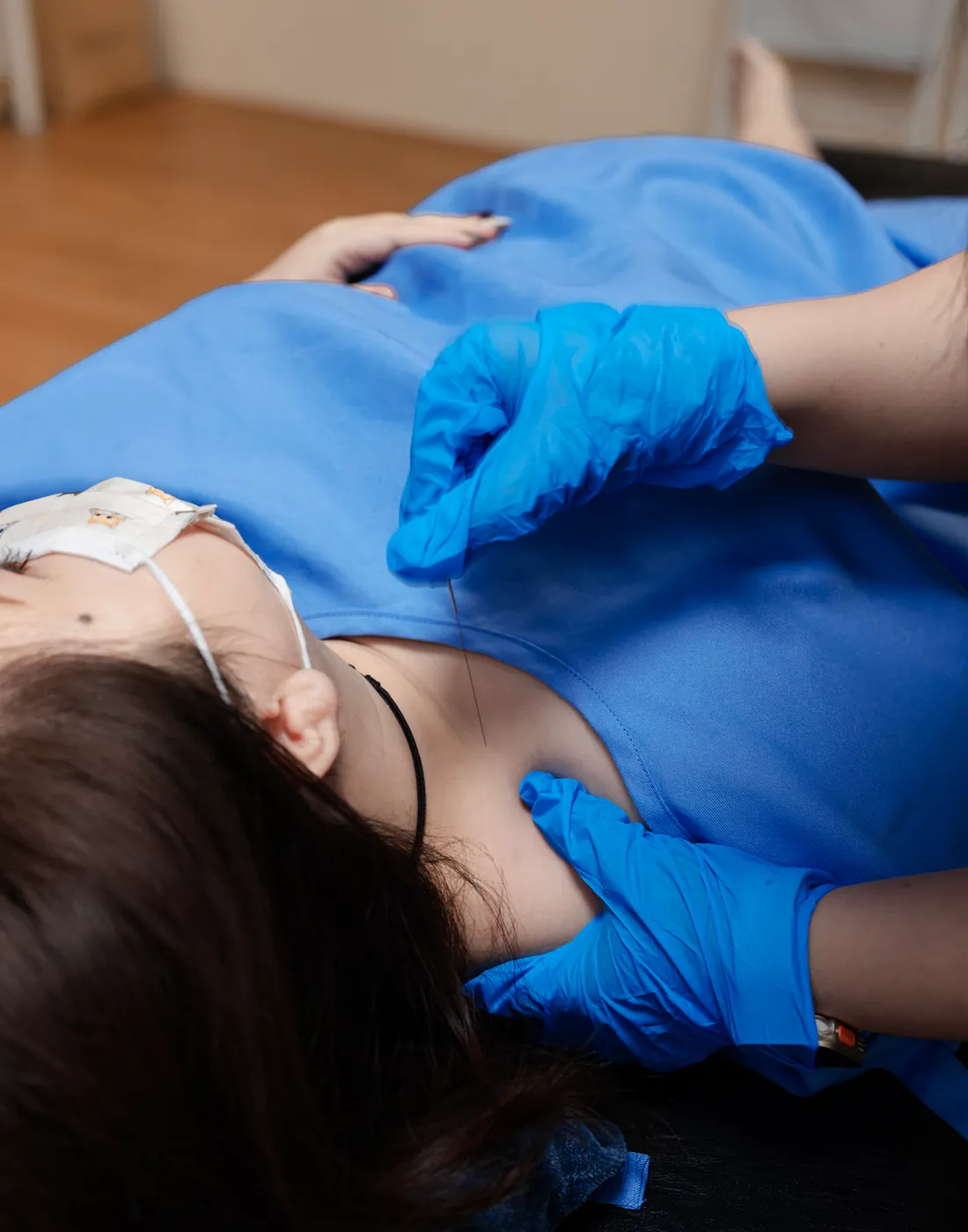
Dry needling usually hurts less than people expect, but it is not painless. Most people feel a small prick as the needle goes in, a deep dull ache when it reaches the tight spot, and sometimes a quick twitch of the muscle. Afterwards the area tends to feel bruised or tired, like the day after a hard gym session, for a day or two. This guide explains what each part of a session feels like, why some sessions hurt more than others, how long the soreness lasts according to the research, what helps it settle, and the rare kinds of pain that are not normal. It also covers the question behind the question: whether dry needling is worth it.
Key takeaways
- Does dry needling hurt?
- Usually a little. Most people feel a small prick, a deep dull ache when the needle reaches the tight spot, and sometimes a brief twitch. Sharp or lasting pain is uncommon.
- How long does soreness last after dry needling?
- Usually less than 72 hours. The needled area tends to feel bruised or tired, much like muscle soreness after exercise, and eases over one to three days.
- What makes dry needling hurt more?
- A very tender knot, thick muscles like the calf or buttock, a technique that brings on repeated twitches, more needles in one session, and feeling anxious beforehand.
- How can I ease soreness after dry needling?
- Firm pressure on the spot, gentle stretching and normal movement, and warmth all tend to help. In one trial, pressure straight after needling reduced both the soreness and how long it lasted.
- Is dry needling worth the discomfort?
- It can ease muscle pain in the short term, but works best as part of a plan with exercise and other care. On its own, the effect tends to fade.
Does dry needling hurt? The short answer
Dry needling causes some discomfort for most people, but sharp or lasting pain is uncommon. The needles are very fine, much thinner than the needle used for a blood test or an injection, because nothing is injected through them.
The two largest safety surveys give a sense of scale. In one, practitioners recorded pain during needling as a notable side effect in about 3% of more than 7,600 sessions. In another, covering over 20,000 sessions, the figure was about 6%. Those counts are for pain beyond the usual ache, so the ordinary deep discomfort most people describe is not included. Mild bleeding and bruising at the needle site were the most common side effects in both.
What dry needling feels like, moment by moment
The feeling changes through the session, and knowing the sequence makes it easier to relax into it.
| Moment | What you may feel | How long it lasts |
|---|---|---|
| Before the needle | Tenderness as the practitioner presses to find the tight spot | A minute or two |
| Needle going in | A small prick or tap, and some people feel nothing at all | A second |
| Needle reaching the knot | A deep, dull ache or cramp, a little like firm massage pressure | A few seconds |
| Twitch | A sudden jump or flicker in the muscle, which can feel strange more than painful | Under a second |
| Needle coming out | Little or nothing, sometimes a spot of blood | A second |
| Rest of the day | The area feels bruised, heavy or tired | Usually hours to a day or two |
The twitch surprises most people the first time. It is the muscle contracting briefly when the needle reaches an irritable spot, and many people say the area feels looser afterwards.
Why some dry needling sessions hurt more than others
How much dry needling hurts depends on the muscle, the technique and how you are feeling that day.
- How irritable the muscle is. A knot that is already very tender to press will usually be more uncomfortable to needle.
- Where it is. Thick, busy muscles such as the calf, the buttock and the top of the shoulder often ache more than smaller ones.
- The technique. Moving the needle gently in and out of the knot to bring on twitches tends to feel stronger than leaving a needle still for a few minutes.
- How many spots are needled. More needles in one session usually means more soreness afterwards.
- Stress and worry. In one study, people with higher levels of anxiety and other psychological distress reported more soreness after needling. Feeling tense going in tends to make everything feel sharper.
None of this is fixed. You can ask for fewer needles, a gentler technique, or a pause at any point, and a good practitioner will adjust without fuss.
How long does soreness last after dry needling?
Soreness after dry needling usually fades within three days, and often sooner. A research review describes post-needling soreness as very common after deep dry needling and usually lasting less than 72 hours.
A typical pattern looks like this:
- The first few hours: the area feels bruised or achy, sometimes with a heavy, tired feeling.
- The next day: similar to muscle soreness after exercise, often a little stiff in the morning.
- Day two to three: easing off for most people.
The same review notes that soreness bothers some people more than others, particularly if they did not notice any benefit after the first session. If the soreness is putting you off, tell your practitioner. It is useful information, and the next session can be lighter.
How to ease soreness after dry needling
Simple steps usually help, and a little research supports a couple of them.
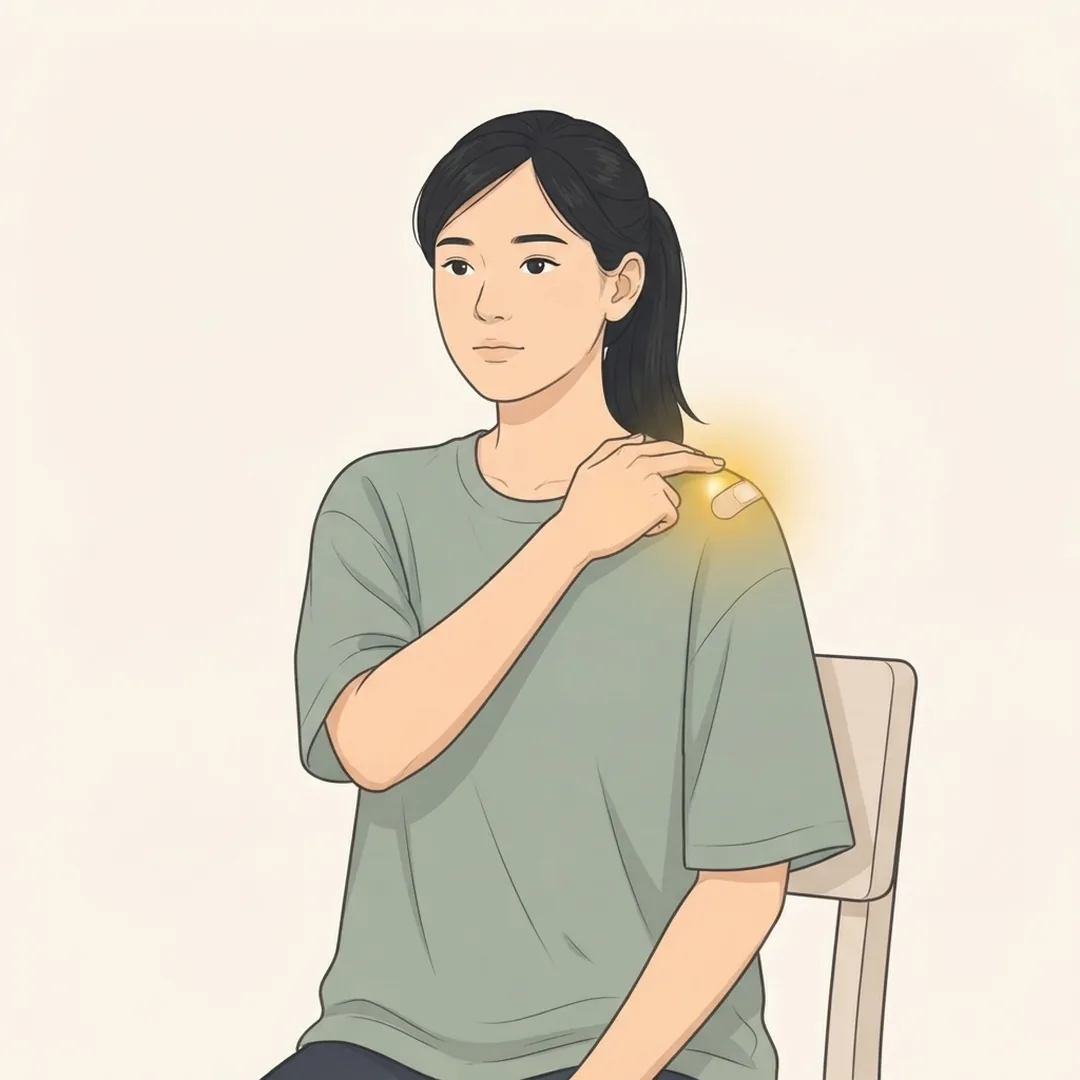
- Firm pressure on the spot. In a trial of 90 volunteers, steady pressure over the needled muscle straight after needling reduced how sore it felt and how long the soreness lasted, compared with sham pressure or nothing. Your practitioner may do this at the end of the session, and you can press gently yourself later.
- Gentle stretching and movement. Keep using the area normally. Light stretching and a walk tend to ease stiffness more than resting it completely. A cooling spray followed by a stretch reduced soreness for a few hours in another trial.
- Warmth. A warm shower or a heat pack on the area often feels good the evening after.
- Go easy on that muscle for a day. Normal activity is fine, but you may want to leave a heavy workout for the same muscle until the next day.
- Drink water as usual, especially on a hot day in KL. Feeling dehydrated makes most aches feel worse.
Is this right for you?
Not sure if integrative dry needling is right for you?
Tick anything that sounds like you. We will read it back honestly and tell you where to start, even if that is somewhere else.
Opens WhatsApp with your answers filled in. Nothing is sent until you press send there.
Dry needling pain that is not normal
Serious problems after dry needling are rare. In the survey of over 20,000 sessions, 20 major events were reported, about 1 in every 1,000 sessions, and the other large survey recorded none. Still, these are worth knowing:
- Breathlessness or sharp chest pain in the hours after needling around the upper back, chest or top of the shoulder. A needle can very rarely puncture the lining of the lung. Go to an emergency department straight away.
- Feeling faint, sweaty or sick during the session. Some people react to needles this way. It passes when you lie down, and you should tell your practitioner at once.
- Pain that is getting worse after three days, or new pain that is clearly different from a bruised ache.
- Redness, heat, swelling or fever around a needle site, which can mean infection.
- Numbness, tingling or weakness that spreads or does not settle.
If any of these happen, contact your practitioner, or your doctor if it is out of hours.
If you are nervous about needles
Plenty of people who try dry needling are nervous about needles, and that is worth saying at the start. It helps to:
- tell the practitioner before anything begins, so they can explain each step
- lie down rather than sit, which also helps if you tend to feel faint
- start with one or two needles to see how it feels
- breathe out slowly as each needle goes in
- remember you can stop at any point
If needles are not for you at all, there are other ways to work on a tight muscle, including manual therapy, massage and exercise. Our guide to dry needling vs acupuncture also explains how the two differ, which many people ask about at this point.
Is dry needling worth it?
Dry needling can ease muscle pain in the short term, but it works best as one part of a plan rather than on its own. That is the honest summary of the research, and it shapes when it is worth the discomfort.
- It helps in the short term. A review of 28 trials in people with neck pain linked to trigger points found dry needling reduced pain straight after and in the following weeks compared with sham needling or no needling. It did slightly better than manual therapy in the short term, and about the same as other physiotherapy approaches.
- The effect fades without the rest of the plan. That same review found no difference from the other approaches by the mid term.
- Adding it is not always better. In a trial of 77 adults with neck pain who were all getting manual therapy and exercise, adding real dry needling gave no extra benefit over sham needling, up to a year later.
So dry needling is most worth it when a muscle stays tight and tender despite stretching, exercise or massage, and when it gives you a window to do the strengthening and movement work that keeps the muscle from tightening again. It is less worth it as a stand alone fix for a problem driven by posture, weakness or a stiff joint. At our clinic it is used alongside other care where the assessment points that way, and you can read more on our dry needling page. If your main complaint is a stiff, sore neck, our neck pain page explains how we look at it.
Frequently asked questions
Does dry needling hurt more than an injection or a blood test?
Usually the needle going in hurts less, because dry needling needles are much thinner and solid, with nothing injected. The deep ache when the needle reaches a knot is a different feeling, more like firm massage pressure than a sharp jab.
Can I exercise after dry needling?
Yes, light activity and walking are fine and often help the soreness ease. Many people leave a hard workout for the needled muscle until the next day, since it can feel tired or weaker for a few hours.
Is it normal to feel tired after dry needling?
Some people feel drowsy or a little drained for a few hours afterwards, though in one large survey it was recorded in well under 1% of sessions. A rest and something to eat usually help. Feeling faint during the session is different, and you should say so straight away.
Can I drive or go back to work after dry needling?
Most people can. If you felt faint or very sore during the session, wait until you feel steady before driving. Desk work is fine, and short breaks to move the needled area can help it feel less stiff.
Does dry needling hurt less after the first session?
For many people, yes, partly because they know what to expect and partly because the muscle is often less irritable. It varies, and a later session in a different area can feel stronger. Tell your practitioner how the last one felt so they can adjust.
Does dry needling hurt? The bottom line
Dry needling usually means a brief prick, a deep ache and sometimes a twitch, followed by soreness that settles within about three days. Sharp or lasting pain is uncommon, and serious problems are rare. Pressure, movement and warmth help the soreness ease, and you can always ask for a lighter session. It is most worth it as part of a plan for a muscle that stays tight despite other efforts. If you are curious but nervous, message us on WhatsApp with your questions before you book.