
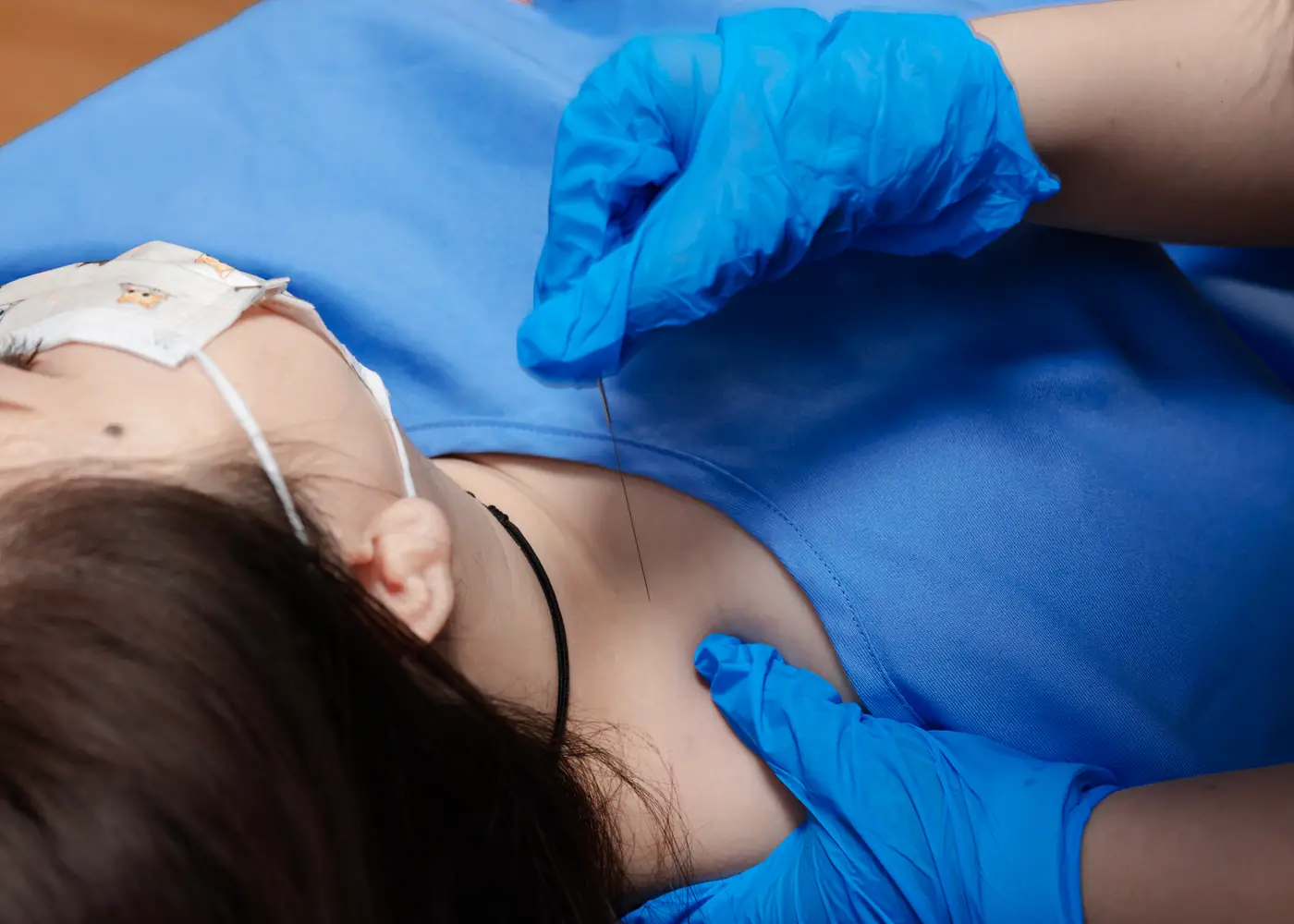
Both dry needling and acupuncture put a fine needle into the skin, and that is close to where the similarity ends. Dry needling is a Western, anatomy based technique aimed at a specific tight band of muscle. Acupuncture comes from traditional Chinese medicine and is built around a different model entirely. In Malaysia the two are even regulated differently, under separate Acts and separate councils, which is worth knowing before you book either one.
Key takeaways
- What is the core difference between dry needling and acupuncture?
- Dry needling is a Western, anatomy based technique that targets a specific tight band of muscle, a myofascial trigger point. Acupuncture comes from traditional Chinese medicine and selects points along meridians rather than by muscle anatomy.
- Are the two regulated the same way in Malaysia?
- No. Physiotherapists, who most commonly perform dry needling here, register under the Allied Health Professions Act 2016 (Act 774). Acupuncture falls under traditional Chinese medicine, one of the recognised practice areas of the Traditional and Complementary Medicine Act 2016 (Act 775), registered separately with the T&CM Council.
- Does one use more needles than the other?
- Generally yes. Dry needling typically uses somewhere between three and twenty needles placed directly into tight muscle. Acupuncture sessions can use eight to thirty needles placed along meridian points, which may sit well away from where discomfort is felt.
- What is each one generally used for?
- Dry needling is aimed at muscle and movement problems, a stubborn trigger point or tension that keeps returning. Acupuncture is used more broadly, including for things outside dry needling scope entirely, such as stress, sleep or nausea.
- Is one better than the other?
- Neither is inherently better. They are built for different problems, so which one fits depends on what an assessment finds is actually driving your case, not on which technique sounds more effective.
Dry needling vs acupuncture: the same needle, different reasoning
Both use a fine, solid filament needle, which is why the two get confused. Dry needling places that needle directly into a myofascial trigger point, a small hyperirritable knot within a tight band of muscle, aiming to release the tension held there. It is grounded in Western anatomy and physiology, and a practitioner chooses the point because that is where the tight muscle actually is.
Acupuncture selects points along meridians, pathways said to carry the body's energy, or qi. A point used in acupuncture is chosen for its position on that system, not necessarily because it sits over a tight muscle. Two practitioners can use a visually identical needle in a similar area of the body while working from theories that share almost nothing in common.
Who's allowed to perform dry needling or acupuncture in Malaysia
This is the part most comparisons skip, and it matters if you are choosing between the two. Physiotherapists, who are the practitioners most commonly trained in dry needling, register under the Allied Health Professions Act 2016 (Act 774) with the Malaysian Allied Health Professions Council. Acupuncture falls under traditional Chinese medicine, one of the recognised practice areas of the Traditional and Complementary Medicine Act 2016 (Act 775), and practitioners register separately with the T&CM Council.
Two different Acts, two different councils, and neither one automatically covers the other's practice. A physiotherapist registered to needle trigger points is not thereby qualified in acupuncture, and an acupuncturist registered under the T&CM Act is not thereby trained in dry needling. If you are checking credentials before booking either, ask which registration the practitioner actually holds rather than assuming a needle is a needle.
What a dry needling or acupuncture session actually feels like
Dry needling sessions tend to be shorter and use fewer needles, generally somewhere between three and twenty, placed directly into the muscles an assessment finds to be tight. It is usually one part of a longer visit rather than the whole appointment. Acupuncture sessions typically run thirty minutes to an hour and can use anywhere from eight to thirty needles, placed along meridian points that may sit well away from where discomfort is actually felt, with the needling itself making up the entire session.
Most people describe dry needling as a brief twitch response followed by a dull ache, with mild soreness sometimes settling in the next day. Acupuncture needles are generally described as producing a dull, heavy sensation rather than sharp pain, since they sit more superficially and are not aimed at provoking the same muscle response.
What dry needling and acupuncture are each generally used for
Dry needling is aimed squarely at muscle and movement: a stubborn trigger point, tension that returns after massage, or a muscle that has stayed guarded since an old injury. It sits inside an assessment led plan alongside exercise or hands on work rather than as a standalone approach.
Acupuncture is used more broadly, for muscle and joint complaints but also for things outside dry needling's scope entirely, such as stress, sleep or nausea, reflecting its basis in restoring balance across the body rather than targeting one muscle. If what brought you in is a specific tight spot a professional can find by feel, dry needling is the closer fit. If you are after something aimed at broader wellbeing, that sits squarely in acupuncture's territory, not ours.
Is this right for you?
Not sure if integrative dry needling is right for you?
Tick anything that sounds like you. We will read it back honestly and tell you where to start, even if that is somewhere else.
Opens WhatsApp with your answers filled in. Nothing is sent until you press send there.
Dry needling or acupuncture: which one is right for you
Neither approach is inherently better. They are built for different problems, which makes the honest answer "it depends what you are trying to solve" rather than a ranking. If a physical assessment finds a specific muscle driving your pain, dry needling gives a practitioner a direct way to work on that muscle as part of a wider plan. If your goal is broader than one identifiable tight spot, that is a reasonable case for acupuncture instead, and we would rather say so than needle you regardless.
Is dry needling or acupuncture safe, and what to expect afterwards
Both are generally considered safe when carried out by a properly registered practitioner using sterile, single use needles. Reviews of trigger point dry needling report that adverse events are usually minor and transient, such as soreness or a small bruise, settling within a day or two on its own. Tell your practitioner if you are pregnant, take blood thinners, or have a strong fear of needles, because there are situations where a different approach makes more sense than needling at all.
Frequently asked questions
Is dry needling the same as acupuncture, and why do they look so similar?
They look similar because both use a fine, solid filament needle, but the reasoning behind where it goes is different. Dry needling targets a muscle found to be tight during assessment. Acupuncture targets a point on a meridian, a pathway from traditional Chinese medicine, which is not necessarily anywhere near the muscle causing discomfort.
Does dry needling hurt more than acupuncture?
They tend to feel different rather than one being simply more painful. Dry needling is usually described as a brief twitch response followed by a dull ache, sometimes with soreness the next day. Acupuncture needles sit more superficially and are generally described as a dull, heavy sensation rather than sharp pain.
Is dry needling regulated the same way as acupuncture in Malaysia?
No, and this is worth checking before you book either one. Dry needling here is performed by physiotherapists registered under the Allied Health Professions Act 2016. Acupuncture is registered separately under the Traditional and Complementary Medicine Act 2016 through the T&CM Council. Neither registration covers the other technique.
Can a physiotherapist perform acupuncture, or an acupuncturist perform dry needling?
Not on the strength of their existing registration alone. The two sit under different Acts and different councils in Malaysia, so a practitioner would need separate training and registration to practise the other technique legitimately.
Which is better for a stubborn muscle knot versus general stress or wellness?
A stubborn, locatable muscle knot is generally the closer fit for dry needling, since it targets that specific tissue directly. A broader goal such as stress or general wellbeing sits more within what acupuncture is used for, and is not something dry needling is aimed at.
The bottom line
Dry needling and acupuncture share a needle and not much else: different theory, different training, different regulation in Malaysia. Which one suits you depends on what you are actually trying to solve, muscle and movement or something broader, and an honest assessment is a better way to decide than the label on the door. If you would like to know whether dry needling fits your case, our dry needling page covers what a session with us involves, and it is often paired with physiotherapy rather than used alone.
