
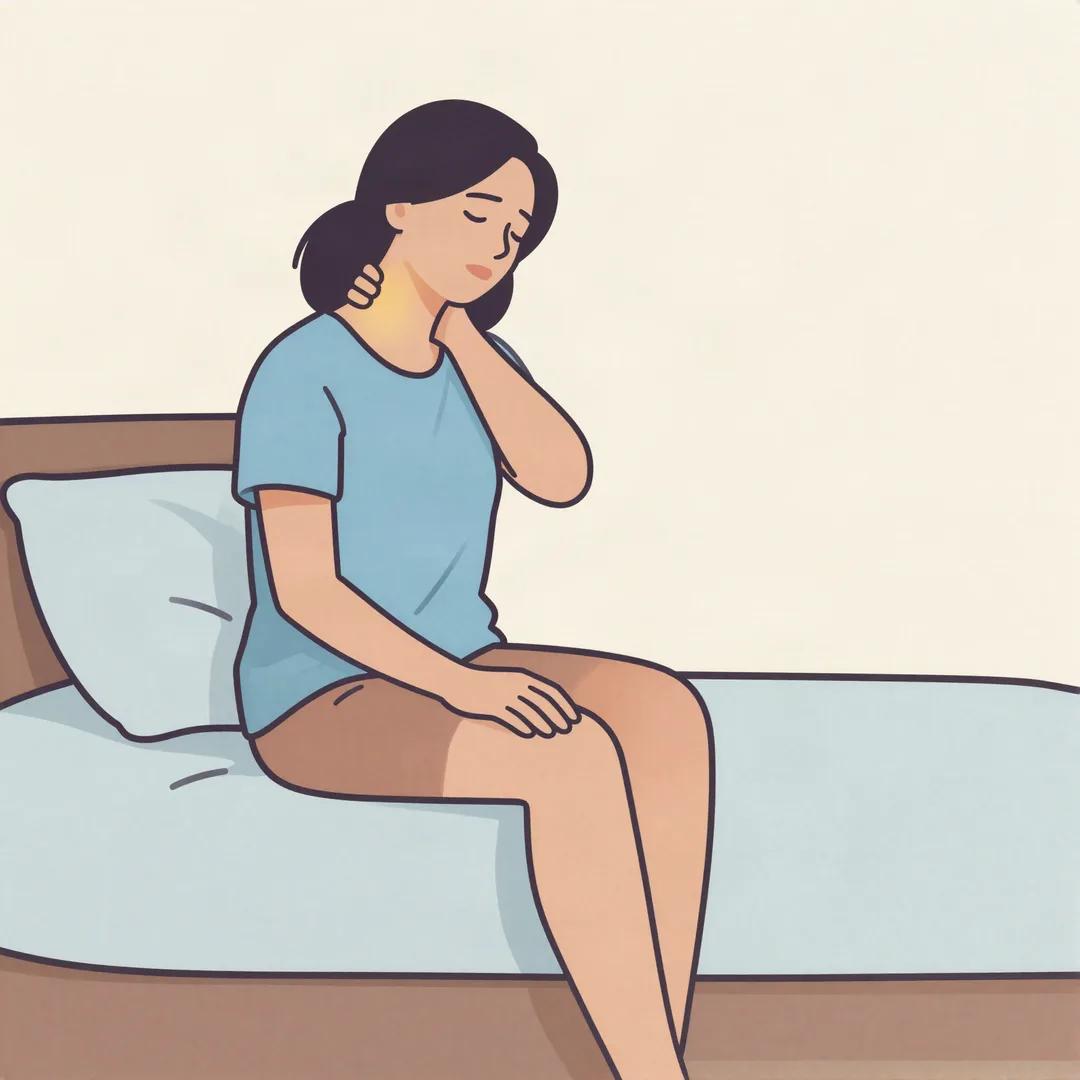
A stiff neck usually comes from the muscles and small joints of the neck tightening up after an awkward sleep, a long day in one position or a stressful week. It feels alarming when you cannot turn your head to reverse the car, but most stiff necks ease within a few days and settle within a few weeks. The most useful things you can do are keep the neck gently moving, use heat or cold for comfort, and avoid forcing it. This guide covers what usually causes a stiff neck, a simple plan for the first 48 hours, gentle movements to try, how to stop it coming back, and the signs that mean you should get it checked instead of waiting.
Key takeaways
- What causes a stiff neck?
- Usually the neck muscles and small joints tightening after an awkward sleep, long hours in one position, stress or an unusual effort. It is rarely a sign of anything serious on its own.
- How long does a stiff neck last?
- Many ease within two or three days, and most settle within a few weeks. A large population study found neck pain dropped sharply within the first month after it started.
- Is heat or cold better for a stiff neck?
- Either can ease pain for a while. A trial found heat and cold packs gave a similar mild benefit, so use whichever you prefer for 15 to 20 minutes, wrapped in a towel.
- Should I rest a stiff neck?
- Keep it moving gently instead. Slow turns and tilts within comfort, done every hour or two, usually help more than holding the neck still.
- When is a stiff neck serious?
- Go to an emergency department for a stiff neck with fever, a bad headache, light sensitivity, vomiting or a rash, or after an injury. Get it assessed if it has not eased after a week or spreads into your arm.
What is a stiff neck, and how long does it usually last?
A stiff neck is soreness and loss of movement in the neck, most often felt when you try to turn your head or look down. It is usually mechanical: the muscles that hold your head guard against movement, and the small joints at the back of the neck feel locked. It is very common, and on its own it is rarely a sign of anything serious.
Most people improve quickly. A large Norwegian population study that followed people after a new episode of neck pain found that pain dropped sharply within the first month, with little change after that. In practice, many stiff necks feel clearly better within two or three days, and most have settled within a few weeks.
The exceptions are worth knowing. People who already had pain in several parts of the body, or neck pain that kept coming back, were more likely to still have pain a year later. If your stiff neck is part of a longer pattern, the neck pain page explains what an assessment looks at.
Woke up with a stiff neck? Common causes, from salah bantal to stress
Most stiff necks have an ordinary cause. Waking up with one is so common in Malaysia that it has its own name: salah bantal, the wrong pillow.
| Cause | What usually happens | What tends to help |
|---|---|---|
| Sleeping awkwardly (salah bantal) | You wake with one side tight, often after sleeping on your front with your head turned, on a new pillow, or slumped on the sofa | Gentle movement and heat through the day. It usually eases within a few days |
| Long hours in one position | Neck feels tight by evening after a laptop day, a long drive or a phone scroll in bed | Breaks every 30 to 45 minutes. Our tech neck guide covers screen setup |
| Stress and tension | Shoulders creep up towards your ears and the neck and upper shoulders feel hard | Movement, breathing, sleep. Neck tension can also bring on a tension headache |
| Sudden or unusual effort | Carrying heavy shopping, painting a ceiling, a new gym exercise | Rest from that task for a few days, keep the rest of your routine |
| Air conditioning or a cold draught | Many people notice stiffness after a night with the aircond blowing on them | Point the vent away and keep the neck warm. Evidence here is anecdotal, but it is an easy change |
A stiff neck after a car accident or a fall is different. Our whiplash page explains what to watch for.
Easing a stiff neck in the first 48 hours
The first two days are about keeping the neck moving within comfort while the guarding settles. This plan suits a typical salah bantal morning.
| When | What to do |
|---|---|
| On waking | Roll onto your side and push up with your arms instead of lifting your head straight off the pillow. Take a warm shower and let the water run over the sore side |
| Through the morning | Do the gentle movements below every hour or two. Small, slow and pain free is the goal, not range |
| At work | Raise your screen so you are not looking down, and stand up every 30 minutes. Turn your whole body to look at someone instead of twisting your neck |
| Heat or cold | Use whichever feels better for 15 to 20 minutes at a time, wrapped in a towel. Many people prefer heat for stiffness |
| Pain relief | Ask a pharmacist or your doctor what suits you. The aim is to let you move more comfortably, not to push through sharp pain |
| Evening | Keep screen time on the sofa short. Lie down for a while with a pillow that keeps your head level |
| Day 2 | Most people feel some improvement. Keep moving, and slowly return to normal tasks |
On heat versus cold, a trial in people with neck and back strain found heat packs and cold packs gave a similar, mild improvement when added to an anti-inflammatory painkiller. The researchers suggested people choose whichever they prefer. So there is no wrong answer, as long as you protect your skin.
Gentle stiff neck movements to try
Gentle movement helps a stiff neck more than keeping it still. These two movements work the directions that usually feel most stuck. Do them sitting tall, slowly, and only as far as feels comfortable.
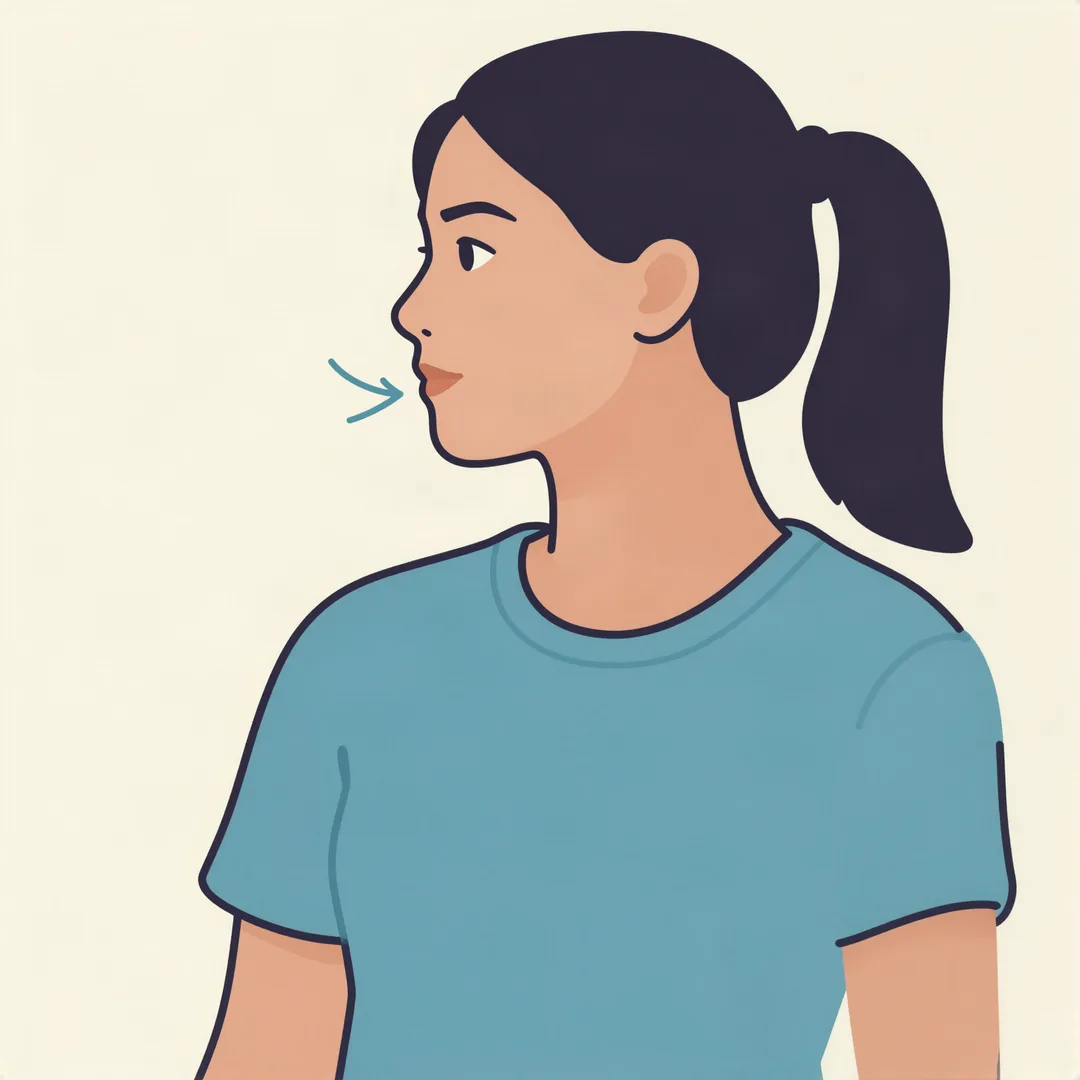
- Gentle turn. Sit tall with your shoulders relaxed. Turn your head slowly to one side until you feel the stiffness, pause for a breath, then come back to the middle. Repeat 5 times each side.
- Gentle side tilt. Let your ear drift towards your shoulder without hiking the shoulder up. Pause, return, and repeat 5 times each side.
- Look down and up. Nod your chin slowly towards your chest, then back to level. Go up only as far as is comfortable.
- Shoulder rolls. Roll both shoulders up, back and down 10 times. This often eases the muscles that hold the neck stiff.
A little stretch or ache is fine. Sharp pain, pain that spreads down the arm or tingling in the hand means stop that movement. Do not crack your own neck or ask someone untrained to pull or twist it for you while it is sore. If your neck feels stiff mostly from long days at a screen, the strength exercises in our tech neck guide are the next step once the stiffness settles.
Is this right for you?
Not sure if we can help with neck pain and stiffness?
Tick anything that sounds like you. We will read it back honestly and tell you where to start, even if that is somewhere else.
Opens WhatsApp with your answers filled in. Nothing is sent until you press send there.
Stopping a stiff neck from coming back
A stiff neck that keeps coming back usually points to a habit worth changing. Three areas make the most difference.
Sleep position and pillow. A small study of adults who woke with neck or back symptoms found they spent more of the night in twisted or awkward positions, and slept less well. Sleeping on your front with your head turned is the position most people with salah bantal recognise. Try sleeping on your back or side, with a pillow that keeps your head roughly in line with your spine. For side sleeping that usually means a firmer, higher pillow than for back sleeping.
Fewer long spells in one position. The neck copes with almost any posture for a while. It is the hours without moving that build stiffness. Set a reminder to stand, stretch or walk for a minute every half hour or so at your desk.
Strength and general activity. Regular exercise, even brisk walking, and some upper back and shoulder strength work tend to make the neck less easily irritated. Our neck hump guide has strength exercises for the upper back.
When a stiff neck needs checking
Most stiff necks are muscular and settle on their own. A few signs mean you should not wait.
Go to an emergency department straight away if you have:
- a stiff neck with fever, a bad headache, sensitivity to light, vomiting, confusion or a rash. These can be signs of meningitis, which needs urgent care
- a stiff neck after a fall, a car accident or a blow to the head
- sudden, severe headache unlike anything before, or weakness, slurred speech or problems with balance or vision
Book an assessment soon if:
- the stiffness has not started to ease after about a week
- pain, pins and needles or numbness spreads into an arm or hand, which can point to a pinched nerve in the neck
- your neck keeps locking up every few weeks
- the pain wakes you at night or is getting steadily worse
At our clinic in Cheras, an assessment looks at how each level of your neck and upper back moves, which muscles are guarding, and whether a nerve is involved. From there we can tell you what to keep doing at home, and whether gentle chiropractic adjustments, soft tissue work or a short rehab plan may help you move more freely. If anything suggests a doctor should see you first, we will say so.
Frequently asked questions
Why do I keep waking up with a stiff neck?
Most often it is the way you sleep. Sleeping on your front with your head turned, a pillow that is too high or too flat for your position, or falling asleep on the sofa can all leave the neck twisted for hours. Changing sleep position and pillow height is usually the first thing to try.
Can I crack my own neck to loosen it?
It is better not to while it is sore. Forcing a stiff neck, or letting someone untrained pull or twist it, can make the guarding worse. Gentle movement within comfort does the same job more safely. If you want hands on help, see someone trained who will assess the neck first.
Can stress cause a stiff neck?
Yes. When you are stressed, the muscles across the shoulders and neck tend to stay tense for long periods, which can leave the neck stiff and sore by evening. Movement breaks, sleep and anything that helps you unwind tend to ease it.
Is a stiff neck a sign of meningitis?
Rarely. Meningitis causes a stiff neck together with fever, a severe headache, sensitivity to light, vomiting or confusion, and the person usually feels very unwell. A stiff neck after a bad night, with no fever, is almost always muscular. If those other signs are present, go to an emergency department straight away.
Should I see a chiropractor or a physiotherapist for a stiff neck?
Most stiff necks do not need either and settle on their own within days. If yours has not eased after about a week or keeps coming back, both can assess it. At our clinic, chiropractors and physiotherapists work together, so the assessment decides which approach suits you.
Stiff neck: the bottom line
A stiff neck is common, usually muscular and usually short lived. Keep it moving gently, use heat or cold for comfort, ask a pharmacist about pain relief, and give it a few days. If it keeps coming back, look at how you sleep and how long you spend in one position. Fever with a stiff neck, an injury, or symptoms spreading into your arm are the signs to act on quickly. If your neck has not eased after a week, or you would like it assessed in Cheras, message us on WhatsApp.