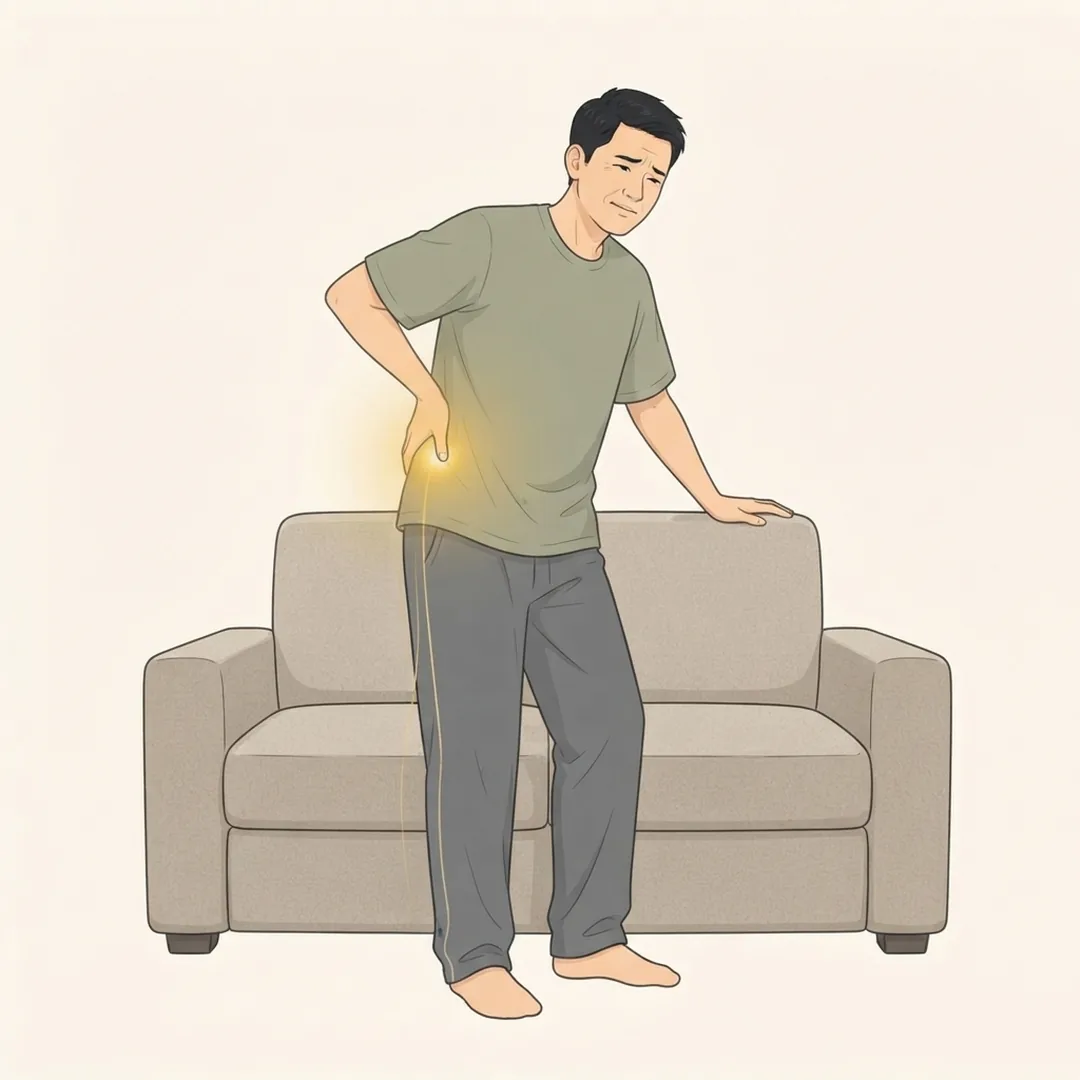
The most useful slipped disc remedy is often the least exciting one: keep moving gently, find the positions that ease the pain, and give your body time. Many slipped discs settle without surgery, and research on repeat scans shows the bulging part of the disc often shrinks on its own over months. What you do at home is mostly about getting through that time with less pain, and without doing anything that sets it back. This guide covers what tends to help, the positions and exercises to try at each stage, how common Malaysian remedies like urut, back belts and supplements fit in, how long recovery usually takes, and the signs that mean you should not wait it out.
Key takeaways
- What is the best remedy for a slipped disc?
- Gentle movement, positions that ease the pain, short walks, breaking up sitting and gradual exercise. Heat, cold and painkillers from a pharmacist can make that easier. There is no quick fix, but most people improve.
- Can a slipped disc heal on its own?
- Often. In a review of repeat scans, the disc material shrank in about half of protruded discs, 70% of extruded discs and 93% of sequestered discs. Pain often eases before a scan would look different.
- Should I rest in bed with a slipped disc?
- Only briefly during the worst of a flare. Guidelines recommend staying as active as you can, because long bed rest tends to slow recovery.
- How long does a slipped disc take to heal?
- Most people feel clearly better within six weeks to three months, though leg pain can take longer. Flare ups along the way are common.
- When should I see someone about a slipped disc?
- Straight away for bladder or bowel changes or weakness in both legs. Soon if leg pain or numbness is spreading, a foot drags, or there is no improvement after two to three weeks.
Can a slipped disc heal on its own?
Often, yes. A slipped disc is not a bone out of place. Part of the soft centre of a disc pushes through or bulges against its tough outer wall, and that bulge can press on or irritate a nearby nerve. Over time, the body can break down and reabsorb some of that disc material.
A review of repeat scans in 360 people with a lumbar slipped disc, followed for about a year on average, found the disc material had shrunk in:
| Type of slipped disc on the scan | How often it shrank on its own |
|---|---|
| Bulging disc | About 13% |
| Protruded disc | About 53% |
| Extruded disc | About 70% |
| Sequestered disc (a piece has broken off) | About 93% |
The surprise for most people is that the larger, more dramatic looking herniations were the ones most likely to shrink. A scan that looks alarming is not, by itself, a reason to give up on recovering without surgery. Pain and scan findings also do not always match: disc bulges are common in people with no back pain at all, and many people feel much better long before a scan would look different.
If your scan report uses words like protrusion or extrusion, our guide to bulging vs herniated discs explains what they mean.
Slipped disc remedies that tend to help at home
These are the things that help most people get through a slipped disc flare. None of them works fast, but together they make the weeks easier.
- Stay as active as you can. Clinical guidelines recommend staying active over prolonged bed rest for back pain and sciatica. A day or two of taking it easy during a bad flare is fine, but long spells in bed tend to leave you stiffer and weaker.
- Walk little and often. Five to ten minutes a few times a day usually suits a sore disc better than one long walk.
- Break up sitting. Sitting, especially slumped in a soft sofa or a car seat, is often the hardest position for a lower back disc. Get up every 20 to 30 minutes, even for a minute. If you drive to work through KL traffic, a small rolled towel behind your lower back can help.
- Use positions of relief (see below) to rest in, rather than whatever position you happen to collapse into.
- Heat or cold for comfort. Either can ease pain for a while. Use whichever feels better, wrapped in a towel, for 15 to 20 minutes.
- Painkillers, with advice. Ask a pharmacist or your doctor what suits you. The aim of pain relief is to let you keep moving, not to push through activities that make your leg worse.
- Pause the things that flare it. Heavy lifting, long forward bending (mopping, gardening, picking up children from low positions) and sit ups usually wait until the leg pain settles.
Positions that ease slipped disc pain
The right position can take the edge off disc pain within a few minutes. Try these and keep whichever eases your leg or back pain most.
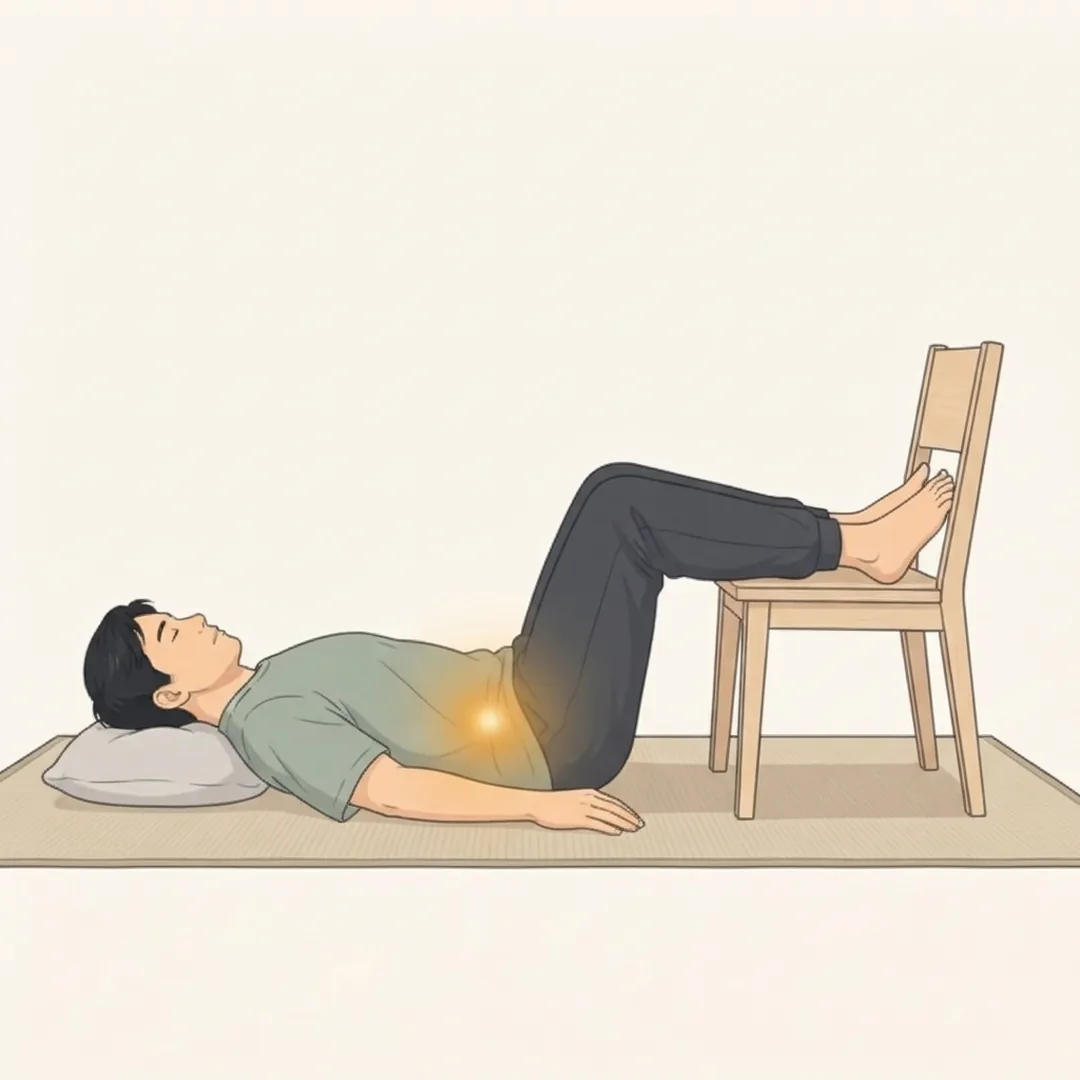
Legs up on a chair
Lie on your back with your lower legs or feet supported on a chair seat or a stack of pillows.
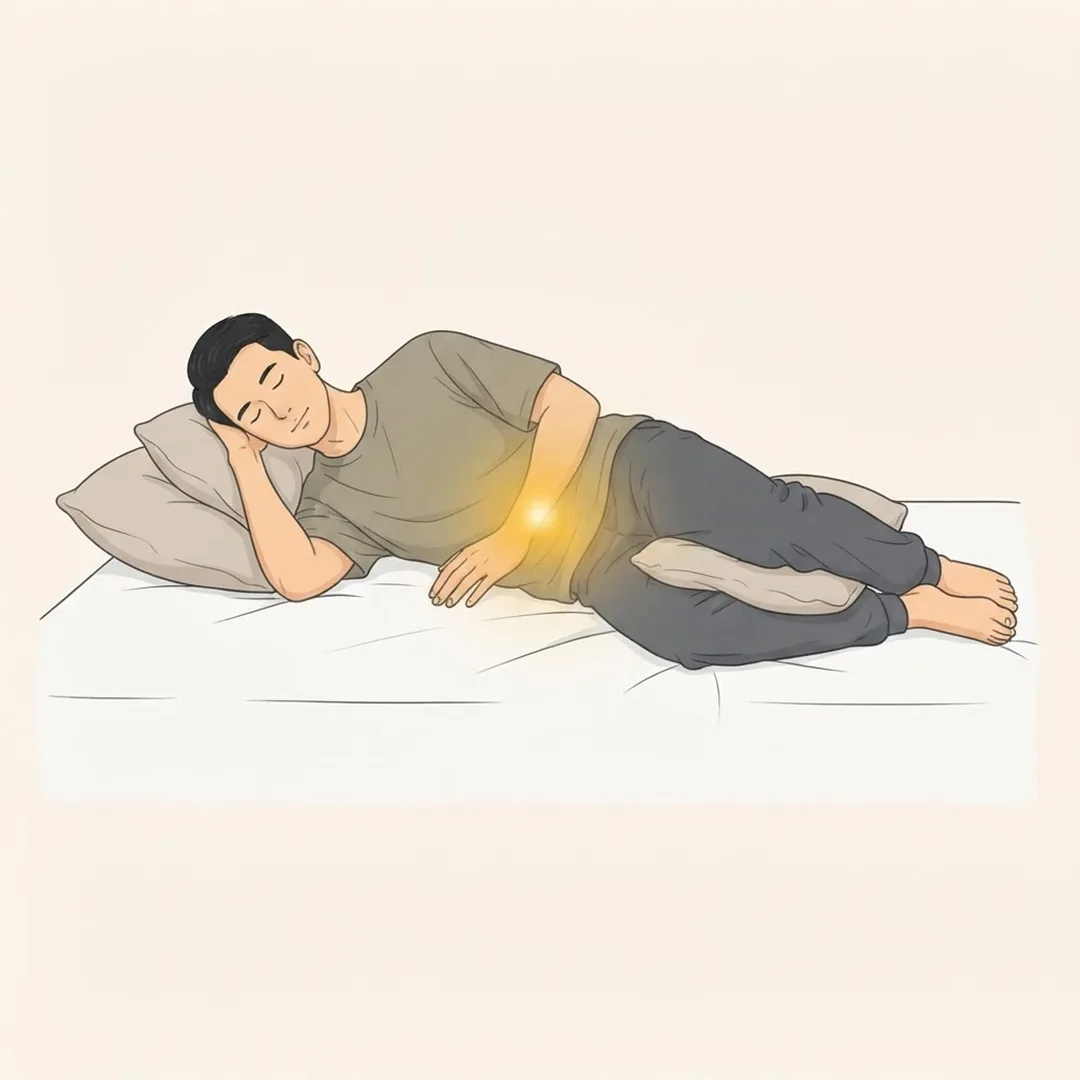
Side lying with a pillow
Lie on the less painful side with your knees bent and a pillow between them.
- Lying on your back with your legs up on a chair or pillows takes load off the lower back and suits many people in the first days.
- Side lying with a pillow between your knees keeps the pelvis level and is often the easiest way to sleep.
- Lying on your front over a pillow under the hips, then without it, suits some people whose pain eases when they arch slightly. If it sends more pain down your leg, stop.
Watch where the pain goes. If leg pain eases or moves up towards your back, that position is usually a good one for you. If pain spreads further down the leg, change position.
Slipped disc exercises: which ones, and when
The right slipped disc exercises depend on the stage you are at, so start gently and build. We have already written step by step guides, so this table points you to the right exercises for each stage rather than repeating them.
| Stage | What it feels like | What to try | Where to find it |
|---|---|---|---|
| First days of a flare | Sharp pain, hard to stand straight, leg pain may be strong | Walking little and often, positions of relief, the prone press up if it eases your leg | Sciatica exercises |
| Settling (roughly weeks 1 to 6) | Pain eases with movement, leg pain comes and goes | Knee rolls, pelvic tilts, gentle nerve glides | Lower back pain exercises and sciatica exercises |
| Rebuilding (after about 6 weeks) | Mostly back stiffness, leg pain rare | Glute bridge and bird dog, then dead bug, side plank from the knees and the hip hinge for lifting | Sciatica exercises, then lower back pain exercises |
Two rules apply at every stage. Exercise should not send pain further down your leg, and any increase in pain should settle within an hour or so. Exercises that load a sore disc heavily, such as sit ups, toe touches with straight legs and heavy lifting, are best left until much later. If you enjoy yoga, our yoga for back pain guide lists the poses to skip while a disc is sore.
Is this right for you?
Not sure if we can help with slipped disc?
Tick anything that sounds like you. We will read it back honestly and tell you where to start, even if that is somewhere else.
Opens WhatsApp with your answers filled in. Nothing is sent until you press send there.
Common Malaysian slipped disc remedies: what to know
Many people in Malaysia try a traditional or over the counter remedy before seeing anyone. Here is a fair view of the common ones.
| Remedy | What it may do | What to watch for |
|---|---|---|
| Urut (traditional massage) | Gentle massage of the muscles around the back may ease spasm for a while | Strong pressure or forceful cracking over a fresh disc flare can aggravate it. Tell the masseur if pain goes down your leg |
| Minyak angin, balms and heat rubs | Warmth and a distracting sensation that can ease pain briefly | Comfort only. They do not reach the disc |
| Back belt or brace | Can make standing and working feel steadier during a bad flare | Fine for a few days of heavy tasks. Relying on it for weeks can leave the back muscles doing less |
| Supplements (glucosamine, collagen and similar) | There is no good evidence they help a slipped disc | Check with your pharmacist or doctor, especially if you take other medicines |
| Inversion tables and hanging | Some people feel brief relief while stretched | Little evidence of lasting benefit, and not suitable with high blood pressure, glaucoma or heart problems |
| Rest in bed for days | A short rest during the worst flare is fine | Long bed rest tends to slow recovery |
Whoever you see for a slipped disc, whether a masseur, a physiotherapist, a chiropractor or a doctor, they should ask about leg symptoms, numbness and bladder or bowel changes before working on your back.
How long does a slipped disc take to recover?
Most people feel noticeably better within six weeks to three months, though it varies a lot. Leg pain often takes longer to settle than back pain, and occasional flare ups during recovery are normal rather than a sign of failure.
A useful reference comes from a trial of 283 people with severe sciatica from a slipped disc that had lasted six to twelve weeks. Half were offered early surgery and half were offered continued non surgical care, with surgery later if needed. After a year, both groups had similar results. Surgery brought faster relief of leg pain, and about 4 in 10 of the non surgical group did go on to have an operation. So surgery is a reasonable choice for some people, especially when leg pain is severe and not improving, but most people with a slipped disc have time to see whether it settles first.
Slipped disc in the neck: what helps
The same principles apply to a slipped disc in the neck. Keep moving gently, find positions that ease the arm pain, and avoid long spells looking down at a phone or laptop. Many people find relief by resting the arm on their head for a few minutes, or with a supportive pillow that keeps the neck level. Avoid heavy lifting and long overhead work while it is sore. Get checked promptly if your hands feel clumsy, your balance changes or an arm becomes weak. Our slipped disc page compares neck and lower back discs in more detail.
When a slipped disc remedy is not enough
Home remedies are a good first step, but some symptoms need a professional, and a few need emergency care.
Go to an emergency department straight away if you have:
- loss of bladder or bowel control, or numbness around the groin, buttocks or inner thighs
- weakness in both legs, or weakness that is quickly getting worse
Book an assessment soon if:
- pain is spreading further down the leg, or numbness is increasing
- a foot drags or you cannot lift it properly
- the pain is not improving at all after two to three weeks
- the pain is so severe you cannot sleep or move despite painkillers
- the slipped disc followed a fall, an accident or a sports injury
At our clinic in Cheras, an assessment checks which level is involved, whether a nerve is irritated and how your spine moves. From there we can tell you what to keep doing at home, what to leave out, and whether a few weeks of chiropractic care or physiotherapy would help you get moving sooner. If anything points to a doctor or a scan first, we will say so. You can read more on our slipped disc page.
Frequently asked questions
Is walking good for a slipped disc?
For most people, yes. Short walks of five to ten minutes a few times a day keep the back moving without loading it for long. If walking sends pain further down your leg, shorten the walks and build up slowly.
Is urut good for a slipped disc?
Gentle massage of the muscles around the back may ease spasm and help you feel looser. Strong pressure or forceful cracking over a fresh disc flare can make it worse, so tell the masseur about any leg pain or numbness first.
Should I wear a back belt for a slipped disc?
A belt can make a few days of standing or heavy tasks feel steadier. Wearing it for weeks is not recommended, because the back muscles you need for recovery do less work while it is on.
Is heat or ice better for a slipped disc?
Either can ease pain for a while, and neither changes the disc itself. Use whichever feels better for 15 to 20 minutes, wrapped in a towel so it does not burn or chill the skin.
What should I avoid with a slipped disc?
Long spells of slumped sitting, heavy lifting, repeated forward bending, sit ups and toe touches with straight legs, until the leg pain settles. Long bed rest is also best avoided.
Slipped disc remedy: the bottom line
The best slipped disc remedy is usually a mix of gentle movement, the right positions, patience and gradual exercise. Many slipped discs shrink on their own, and most people improve without surgery, though leg pain can take months to settle fully. Urut, balms and back belts can help you feel more comfortable but are not a substitute for staying active. Watch for spreading leg symptoms, weakness or bladder changes, and get help early if they appear. If you would like your back assessed in Cheras, message us on WhatsApp.