
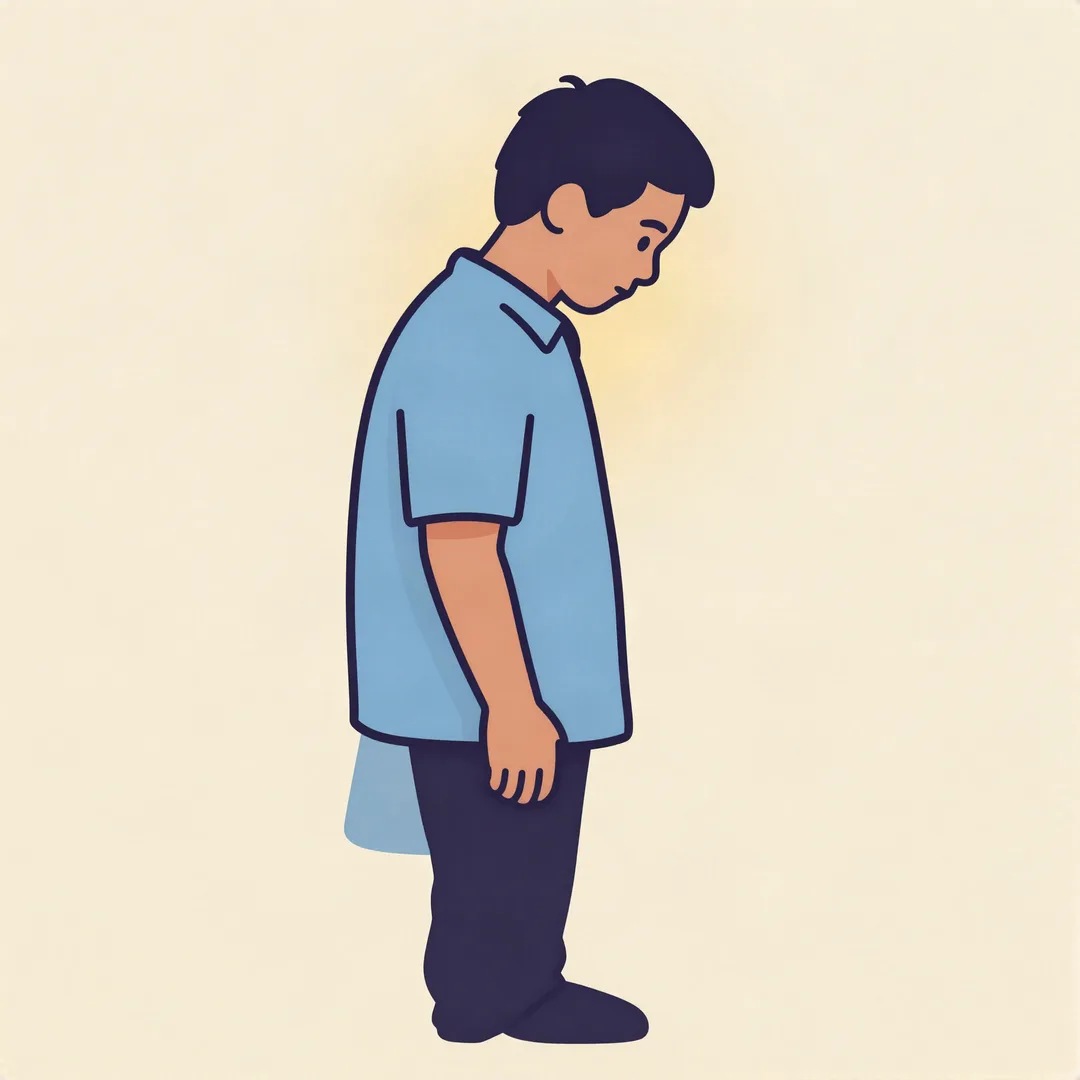
Forward head posture is when your head sits in front of your shoulders instead of balanced on top of them, so that from the side your ear lines up ahead of the middle of your shoulder. It is very common in people who spend long hours at screens, behind the wheel or looking down at work, and in many people it comes and goes with what they are doing. It is linked with neck pain in adults, though not as strongly or as simply as many websites suggest, and exercise can shift it, slowly and by a modest amount. This guide covers a quick way to check your own posture, what tends to cause it, what the research actually says about pain, five exercises that build the muscles that hold your head up, and when to get it looked at.
Key takeaways
- What is forward head posture?
- When the head sits in front of the shoulders instead of balanced on top. From the side, the ear lines up ahead of the middle of the shoulder.
- How can I check for forward head posture at home?
- Ask someone to take a side photo of you standing relaxed, with the phone at shoulder height. If your ear sits clearly in front of the middle of your shoulder, your head is carried forward.
- Does forward head posture cause neck pain?
- It is linked with neck pain in adults, but the studies are snapshots that cannot show cause, and there is no link in teenagers. Many people with a forward head have no pain.
- Can exercise fix forward head posture?
- Exercise can improve it, modestly. Trials in people with neck pain found about 3 degrees of change in the head and neck angle, with programmes of eight weeks or more doing better.
- Do posture correctors help forward head posture?
- They hold the shoulders back while worn but do not build the muscles that hold posture afterwards. Use one only as a short reminder, alongside exercise.
What is forward head posture?
Forward head posture means the head has drifted forward of the line of the body. Seen from the side, a balanced head has the ear roughly above the middle of the shoulder. With forward head posture, the ear sits in front of that line, the chin often pokes forward, and the top of the neck tilts back so you can still see ahead.
Clinicians measure it with the craniovertebral angle, the angle between a horizontal line and a line from the bony bump at the base of your neck to the small flap in front of your ear canal. The smaller the angle, the further forward the head. You do not need to measure angles at home, but it helps to know that this is what a posture assessment is looking at.
Forward head posture is not a fixed shape for most people. It is a position you settle into, often for many hours a day. Our post on tech neck covers how screen use drives it, and the neck hump guide covers the rounded upper back that often comes with it.
Do you have forward head posture? A quick side photo check
The simplest home check is a side photo, because you cannot see your own profile in a mirror without turning your head.
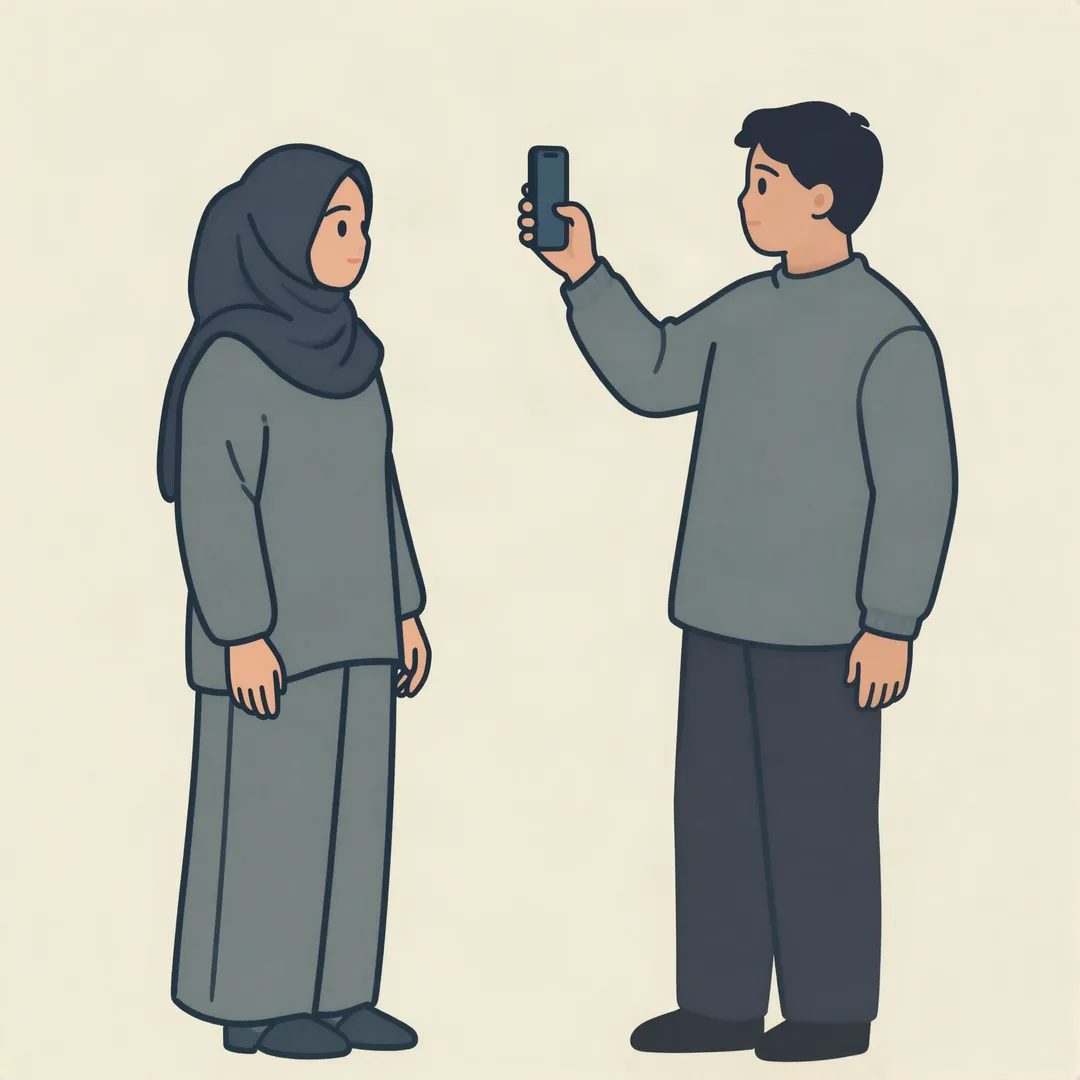
- Stand side on to a plain wall in your usual relaxed posture. Do not stand up straighter than normal.
- Ask someone to take a photo from about two metres away, with the phone at shoulder height.
- Look at the photo and imagine a vertical line up from the middle of your shoulder.
- If your ear sits clearly in front of that line, your head is carried forward. The further in front, the more forward the head.
Take a second photo at the end of a long working day. Many people find their head sits further forward then, which tells you how much of it is habit and fatigue rather than fixed shape. This is a rough guide only, not a diagnosis, and it does not tell you whether your posture has anything to do with any pain you have.
What causes forward head posture, beyond screens
Screens get most of the blame, but forward head posture usually has more than one cause.
| Cause | What happens |
|---|---|
| Long hours looking down | Laptops, phones, paperwork and close detailed work all pull the head forward for hours at a time. Our tech neck guide covers screen setup |
| Tired deep neck muscles | The small muscles at the front of the neck that hold the head back tire quickly in many people, so the head drifts forward as the day goes on |
| A stiff upper back | When the middle of the back is rounded and stiff, the head has to come forward to keep your eyes level |
| Weak muscles between the shoulder blades | The shoulders roll forward and the head follows |
| Driving and commuting | Long drives in KL traffic with the seat too far back or reclined often leave the head reaching forward |
| Habit | Some people simply carry their head forward when they walk or talk, without any stiffness or weakness |
Does forward head posture cause neck pain? What the research says
Forward head posture is linked with neck pain in adults, but a link is not the same as a cause. A review that pooled 15 studies found adults with neck pain tended to have more forward head posture than adults without it, and the more forward the head, the higher the pain and disability scores in adults and older adults. In teenagers, there was no link at all.
All the studies in that review were snapshots, measuring posture and pain at one moment. They cannot show whether the posture led to the pain, the pain led people to hold their head differently, or something else drove both. A large study of 17 year olds that grouped them by neck posture found no difference in neck pain or headache between the groups.
You may have seen figures saying every few centimetres of forward head adds many kilos of load to your neck. Those numbers come from a computer model of the neck bending forward, not from measuring real people standing. They are a useful way to picture leverage, but they overstate how much an everyday forward head matters. The practical message is calmer: forward head posture is worth working on if you have neck pain or stiffness, and plenty of people with a forward head have no pain at all.
5 exercises to improve forward head posture
These exercises build endurance in the muscles that hold the head and shoulder blades back, and ease tight muscles at the back of the neck. They are different from the chin tucks, shoulder squeezes and wall angels in our tech neck and neck hump guides, so you can add them to those routines once the basics feel easy.
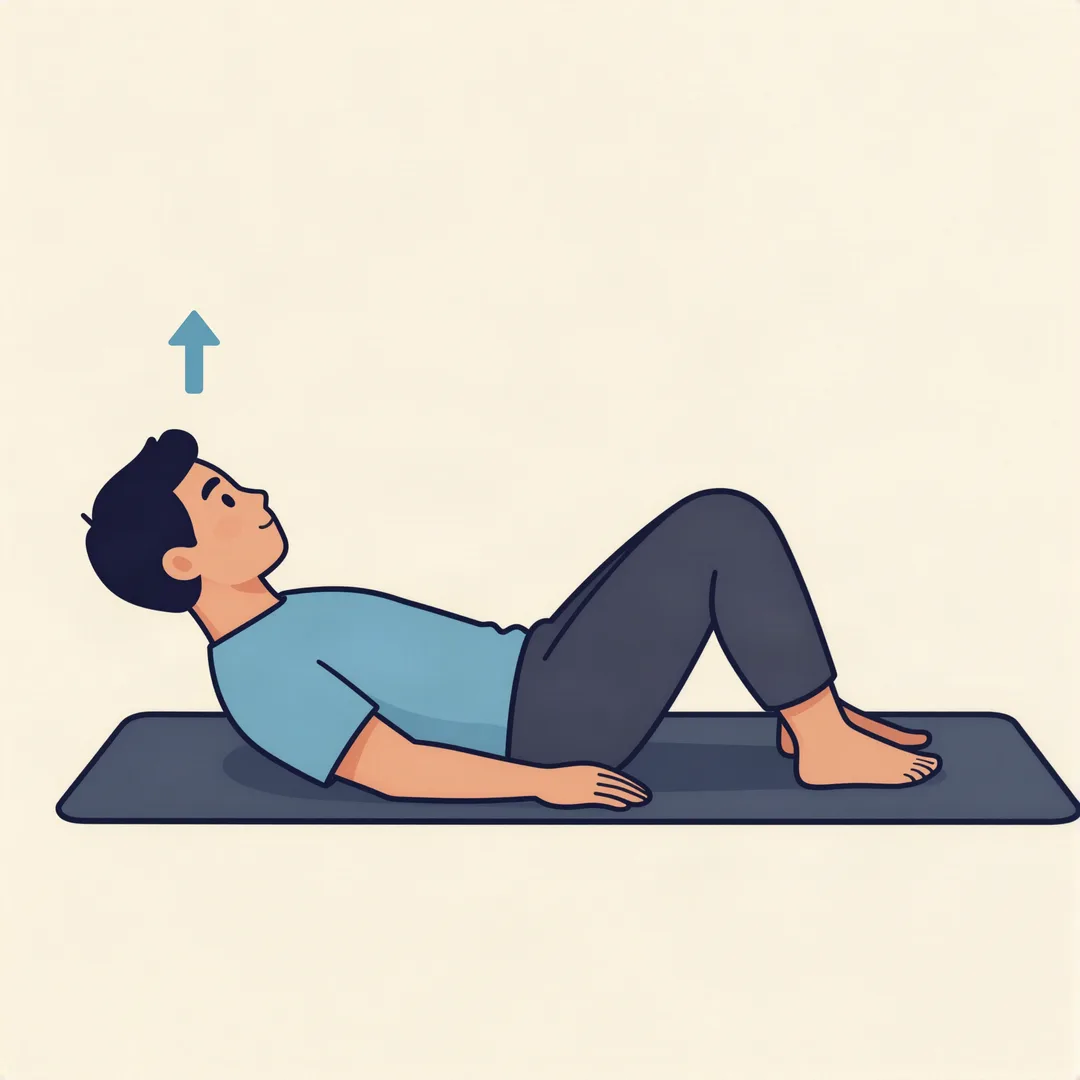
1. Lying head lift hold. Lie on your back with knees bent. Gently nod your chin as if saying yes, keeping the back of your head on the floor, then lift your head just a few centimetres. Hold for 5 to 10 seconds while breathing normally, then rest. Build to 10 holds. Stop if your chin pokes up or your neck shakes.
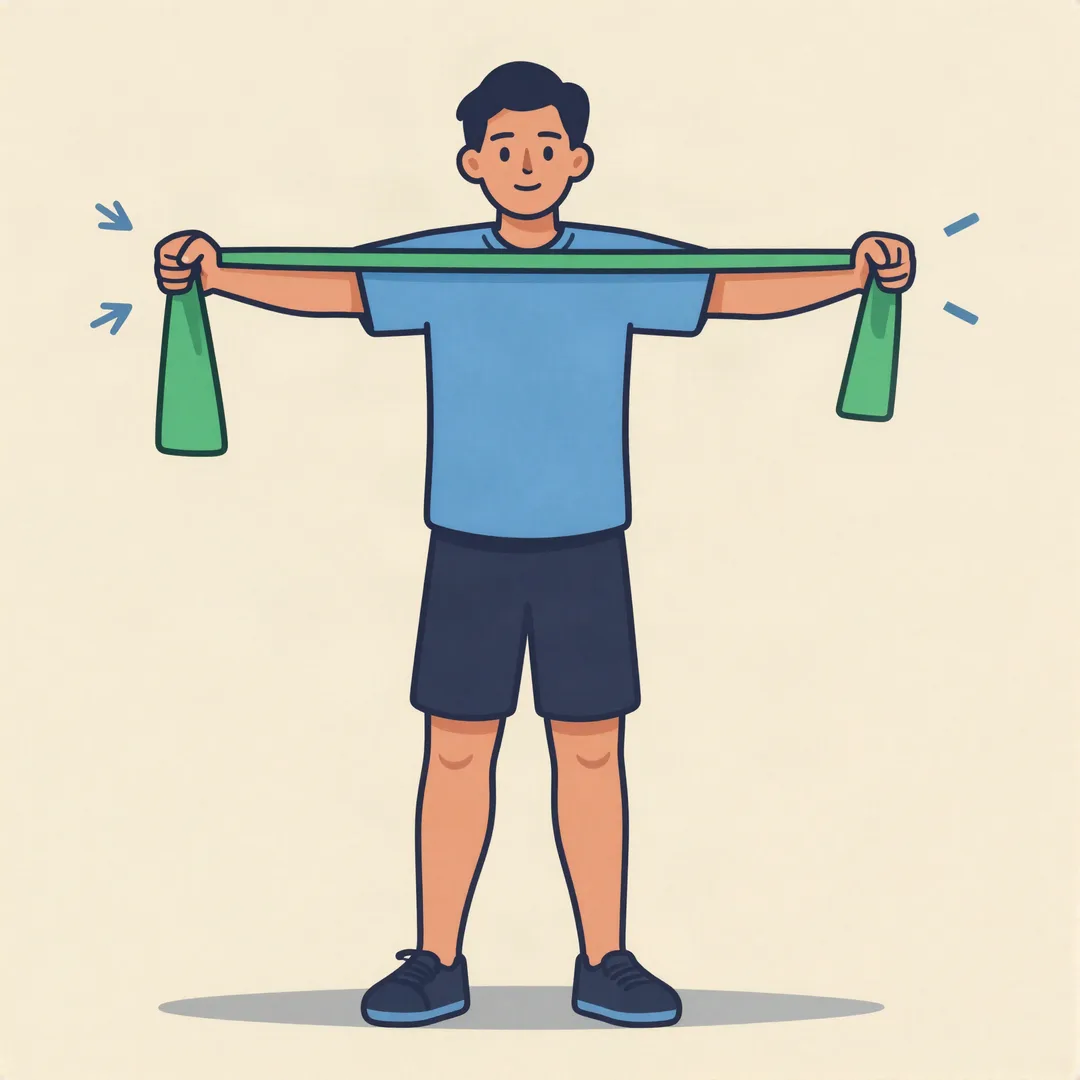
2. Lying Y raise. Lie face down with your forehead on a folded towel. Reach both arms overhead in a Y shape with thumbs up, then lift them a few centimetres off the floor by drawing your shoulder blades down and back. Hold for 3 seconds and lower. Do 2 sets of 10. 3. Band pull apart. Hold a light resistance band at chest height with straight arms. Pull the band apart until your hands are level with your shoulders, squeezing your shoulder blades together, then return slowly. Do 2 sets of 12 to 15.
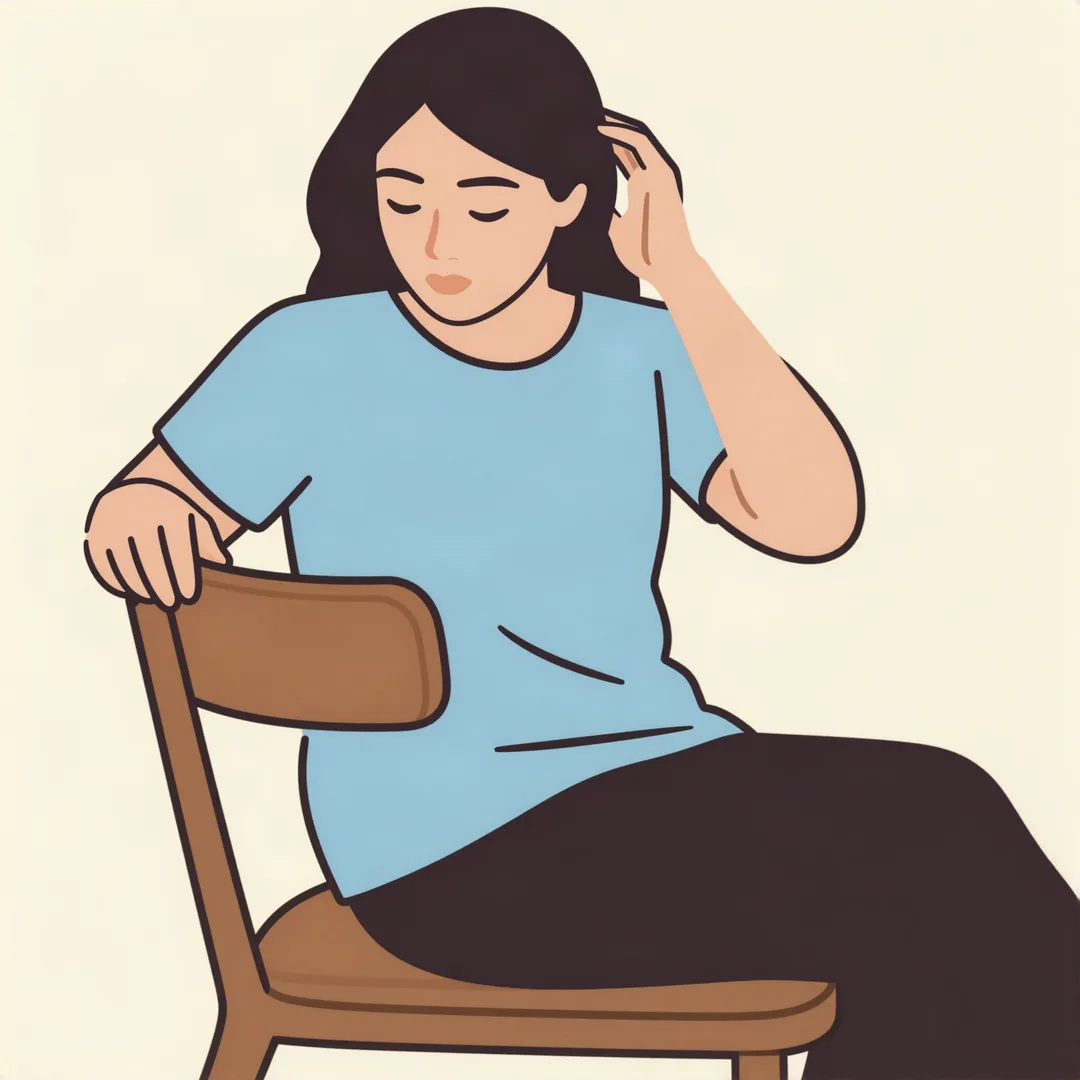
4. Levator scapulae stretch. Sit tall and hold the side of the chair seat with your right hand. Turn your head about 45 degrees to the left and look down towards your left armpit. Rest your left hand on the back of your head and let its weight add a gentle stretch at the back of the right neck. Hold for 30 seconds, twice each side. Do not pull.
5. Suboccipital release. Lie on your back and place two tennis balls in a sock, or a rolled hand towel, under the ridge at the base of your skull. Let your head rest on it for one to two minutes while you breathe slowly, nodding gently a few times. This eases the small muscles that tighten when the head juts forward.
A little muscle effort or stretch is normal. Pain that spreads into your arm, dizziness, or a headache that builds during the exercises means stop and get it checked.
Is this right for you?
Not sure if posture correction is right for you?
Tick anything that sounds like you. We will read it back honestly and tell you where to start, even if that is somewhere else.
Opens WhatsApp with your answers filled in. Nothing is sent until you press send there.
How long does it take to improve forward head posture?
Expect weeks to months, and a modest change. A 2026 review of 10 trials in people with neck pain found that exercise programmes improved the craniovertebral angle by about 3 degrees on average, with programmes of eight weeks or longer tending to do better. The authors rated the certainty of the evidence as low to moderate. An earlier review of seven trials reached a similar view and noted that how much a better posture changes pain is still not settled.
Three degrees is small, but for many people it is enough to notice the head feels lighter and the neck less tired at the end of the day. Consistency matters more than intensity: a few minutes most days, plus breaking up long spells at a screen, tends to beat a big session once a week.
Posture correctors and braces pull the shoulders back while you wear them, but they do not build the muscles that hold your posture once they come off, and there is little good evidence that they change forward head posture on their own. If you use one, wear it as a reminder for short periods and pair it with exercise.
When forward head posture needs checking
Most forward head posture is a habit and fitness issue, not a medical one. Get it looked at if:
- you have neck pain or tension headaches that keep coming back despite exercise and better habits
- pain, tingling or numbness spreads into an arm or hand, which can point to a pinched nerve in the neck
- you notice a hump at the base of your neck that is new or getting bigger
- one shoulder sits clearly higher than the other, or your head tilts to one side
- you feel dizzy, or have trouble with balance or walking
At our clinic in Cheras, a posture assessment looks at your neck, upper back and shoulder blades together, measures where you start, and shows you which exercises suit your body. Our posture correction page explains how the programme works, combining chiropractic care for stiff joints with physiotherapy led strength work.
Frequently asked questions
How long does it take to improve forward head posture?
Most trials ran for six to twelve weeks, and longer programmes tended to show more change. Expect to notice your neck tiring less within a few weeks, and a measurable change in posture over two to three months of regular exercise.
Is forward head posture permanent?
Usually not. For most people it is a position they settle into rather than a fixed shape, which is why it often looks worse at the end of the day. A long standing rounded upper back with stiff joints changes more slowly, and an assessment can tell you how much of yours is habit.
Can forward head posture cause headaches?
It may contribute in some people, because the muscles at the base of the skull work harder when the head juts forward. The research link is not strong, though, and headaches have many causes. Headaches that are new, severe or changing should be checked by a doctor.
What is the best sleeping position for forward head posture?
Sleep has less effect on forward head posture than how you spend your waking hours. A pillow that keeps your head roughly level with your spine is sensible, but daytime habits and exercise matter more.
Can a chiropractor help with forward head posture?
A chiropractor can assess your posture, help free stiff joints in the neck and upper back that make it harder to sit tall, and give you an exercise plan. Changing posture still depends on the exercises and habits you keep up between visits, so we will not promise a corrected posture from adjustments alone.
Forward head posture: the bottom line
Forward head posture is common, usually changeable, and linked with neck pain in adults without being the whole story. A side photo is the easiest way to check yours. Strength and endurance work for the deep neck and upper back muscles, done most days for at least two months, is the approach with the best evidence, and the honest expectation is a few degrees of change and a neck that tires less. If you would like your posture assessed in Cheras, message us on WhatsApp.