
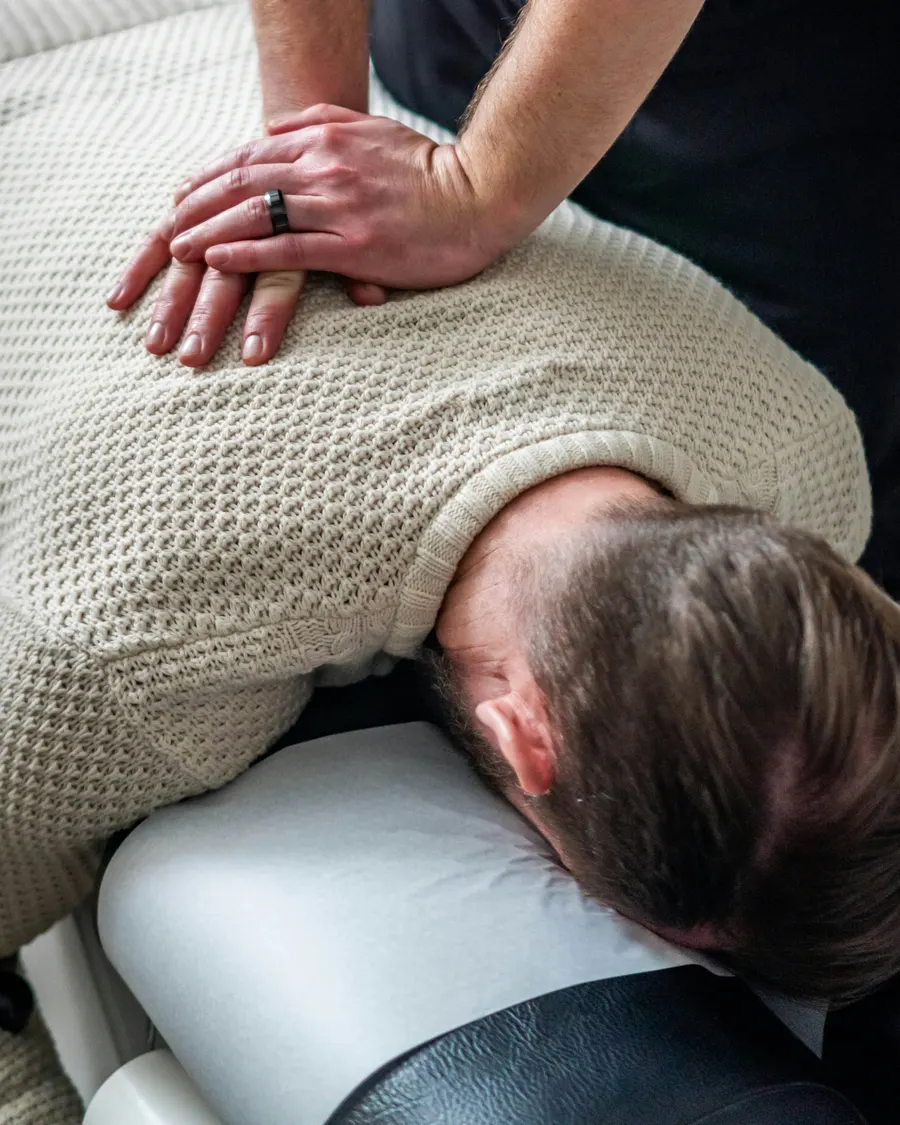
"Gonstead" is not a generic word for chiropractic. It is a specific chiropractic technique, built around a detailed spinal analysis that comes before any adjustment. If you have seen the word in a clinic's name or on a diploma on a wall in Kuala Lumpur and wondered what actually separates it from any other chiropractor, this is what it means in practice: a six-step assessment used to find precisely which spinal segment is behind a problem, followed by a specific adjustment delivered by hand rather than a general one applied across the whole spine. It has a real history behind it, and it is what our chiropractors in Cheras use with every patient. We would rather explain what it involves than simply claim it works, so that is what the rest of this covers.
Key takeaways
- What is the Gonstead technique?
- A chiropractic system built around a thorough, structured assessment, history taking, visual and instrument checks, hands on palpation and X-ray analysis where indicated, used to find the exact spinal segment behind a problem before it is adjusted.
- Who created it?
- Dr Clarence Gonstead, an American chiropractor who developed and refined the system over several decades of practice in Mount Horeb, Wisconsin, beginning in the 1920s.
- How is it different from a general adjustment?
- A general adjustment can move through the spine broadly. Gonstead is built to identify one specific segment first, so the adjustment that follows is aimed precisely rather than applied generally.
- Is Gonstead better than other chiropractic techniques?
- There is no good evidence that any one chiropractic technique outperforms the others for most people. What Gonstead offers is a particularly structured, repeatable process for finding where to work, which is why our chiropractors use it.
- Is it safe, and who is it suitable for?
- Assessment comes first specifically so an adjustment is only used where it is appropriate. Where it is not, or a case would be better served elsewhere, that is exactly what the assessment is for.
Where the Gonstead technique comes from
Gonstead traces back to one chiropractor. Dr Clarence Selmer Gonstead developed the system over decades of practice in Mount Horeb, Wisconsin, refining it out of frustration with adjusting approaches that worked across the whole spine similarly regardless of where a patient's problem actually sat. His approach became known for its emphasis on finding the precise segment involved before doing anything about it, and for the amount of clinical observation that went into building it.
It is sometimes described as a "gold standard" within chiropractic circles, largely because of how methodical the underlying assessment is. We would rather you take that as a description of the process than a promise about outcomes: no chiropractic technique, Gonstead included, can honestly claim to outperform the others for every patient, and we say more about that below.
Gonstead is taught at selected chiropractic universities, with further training available through specialised seminars run mainly in the US and Australia. That extra step is part of why practitioners who have completed it are less common than you might expect, in Malaysia and elsewhere.
The six-step Gonstead assessment
Every Gonstead visit follows the same structure, in the same order, because each step feeds the next.
History Taking
We ask where the problem sits, what makes it better or worse, and what it has stopped you doing. The history narrows the search before anything is touched.
Visualisation
We watch how you stand and move: the curve of your spine, and whether your head, shoulders, hips and knees sit level. How you walk narrows it further.
Instrumentation
A nervoscope reads skin temperature down either side of your spine. Spinal nerves regulate blood flow to the skin, so a difference between the two sides points to the level involved.
Palpation
Your chiropractor feels along the spine for swelling, tenderness and tight muscle, then moves each spinal and pelvic joint to find the ones not moving as they should.
X-Ray Analysis
Where it is indicated, an X-ray rules out pathology and shows the discs and joints themselves. If it points to something that belongs with another provider, we refer you rather than adjust you.
Adjustments
Only then do we adjust. Everything gathered so far decides which segment is worked on and how, and the adjustment is delivered precisely and skilfully by hand alone.
That order matters. Skipping steps to get to the adjustment faster is exactly what the system is built to avoid.
How Gonstead differs from other chiropractic techniques
Chiropractic covers a range of techniques, from Diversified, the broadest and most commonly taught approach, to instrument based methods like the Activator, to Gonstead. The honest answer to "which is best" is that no published evidence puts one ahead of the others for outcomes across the board. What genuinely differs between them is the process used to decide where and how to adjust.
Gonstead's distinguishing feature is the weight it puts on locating one specific segment before doing anything, using visual, instrument and hands on findings together rather than any single one alone. Some other techniques adjust more broadly, on the reasoning that spinal restriction is rarely isolated to just one level. Neither approach is wrong. They reflect different philosophies about how precisely a problem needs to be located before it is worked on, and a chiropractor's training shapes which one they use.
If a clinic tells you Gonstead definitively outperforms another named technique, that claim is not one we would make ourselves, and it is worth treating with some scepticism wherever you hear it.
| Gonstead | Diversified | Activator | |
|---|---|---|---|
| Primary tool | Hands, guided by a nervoscope and X-ray analysis | Hands only | A spring-loaded handheld instrument |
| Assessment before adjusting | A fixed six-step process every visit | Varies by practitioner | Leg-length and reflex checks guided by the instrument |
| Adjustment scope | One specific segment, identified first | Often several segments in one session | One specific segment, delivered by instrument rather than by hand |
| Typical training path | Taught at selected universities, with further training through specialised seminars, mainly in the US and Australia | Commonly included as a core technique in university chiropractic programmes | May be introduced at some universities, with further training usually done through specialised courses |
Who Gonstead suits, and when we would refer you elsewhere
Gonstead is used across a wide age range. At our clinic the youngest patient so far was a four month old baby and the oldest a 96 year old auntie, which is possible because the assessment adapts to the person rather than applying a fixed protocol. It is commonly used for mechanical back and neck pain, sciatica, and recurring problems where working out precisely what is driving things matters.
It is not the right starting point for everyone. Where the assessment points to something beyond a mechanical spinal problem, such as infection, fracture, or disease affecting an organ, a Gonstead chiropractor refers rather than adjusts. Certain presentations call for imaging or a medical opinion before any hands on care. Finding those cases is a normal part of what the six steps above are for, not an exception to them.
Is this right for you?
Not sure if chiropractic care is right for you?
Tick anything that sounds like you. We will read it back honestly and tell you where to start, even if that is somewhere else.
Opens WhatsApp with your answers filled in. Nothing is sent until you press send there.
What a Gonstead visit at our Cheras clinic involves
A first visit follows the six steps above in order: history, visualisation, instrumentation, palpation, X-ray analysis where it is indicated, and only then an adjustment, delivered by hand. Your chiropractor will explain what they have found and what they intend to do before anything happens, and if the assessment points somewhere other than an adjustment, they will tell you rather than adjust anyway.
If you are weighing up whether chiropractic is the right starting point at all, our chiropractic care page covers what a course of care generally looks like, and what to expect on your first visit walks through the practical details, what to bring, how long it takes, and what happens afterwards. Back pain is one of the more common reasons people come in for a Gonstead assessment, and our page on back pain goes into that specifically.
Frequently asked questions
Does Gonstead chiropractic hurt?
The assessment itself does not, beyond ordinary palpation. The adjustment is usually described as brief pressure followed by release rather than pain, though any tenderness already present in the area can make it feel more noticeable.
Do I need an X-ray for a Gonstead assessment?
Not for every patient. It is used where it is clinically indicated, particularly where it would change the plan, and it is generally avoided for pregnant women and children unless there is a clear reason.
Is Gonstead suitable for children?
Yes. Our patients have ranged from a four month old baby to a 96 year old, because the assessment adapts to the person rather than following a fixed protocol, and the approach for a child differs from the approach for an adult accordingly.
How long does a Gonstead assessment take?
A first visit usually takes longer than a routine follow up, because it works through all six steps rather than going straight to an adjustment. Expect to spend more time than a quick, general session.
Can I request Gonstead specifically when I book?
Yes. It is worth mentioning if you have a preference, though your chiropractor will still start with the same assessment either way, since that is what decides whether and how an adjustment happens.
The bottom line
Gonstead is a specific, structured chiropractic system built around finding exactly where a problem sits before doing anything about it, not a marketing label. It has a real history, a defined six-step process, and genuine training behind it, which is why it is worth understanding rather than taking on faith. If you are in Cheras or elsewhere around Kuala Lumpur and want to see what a Gonstead assessment actually involves, our chiropractors are happy to walk you through it.
